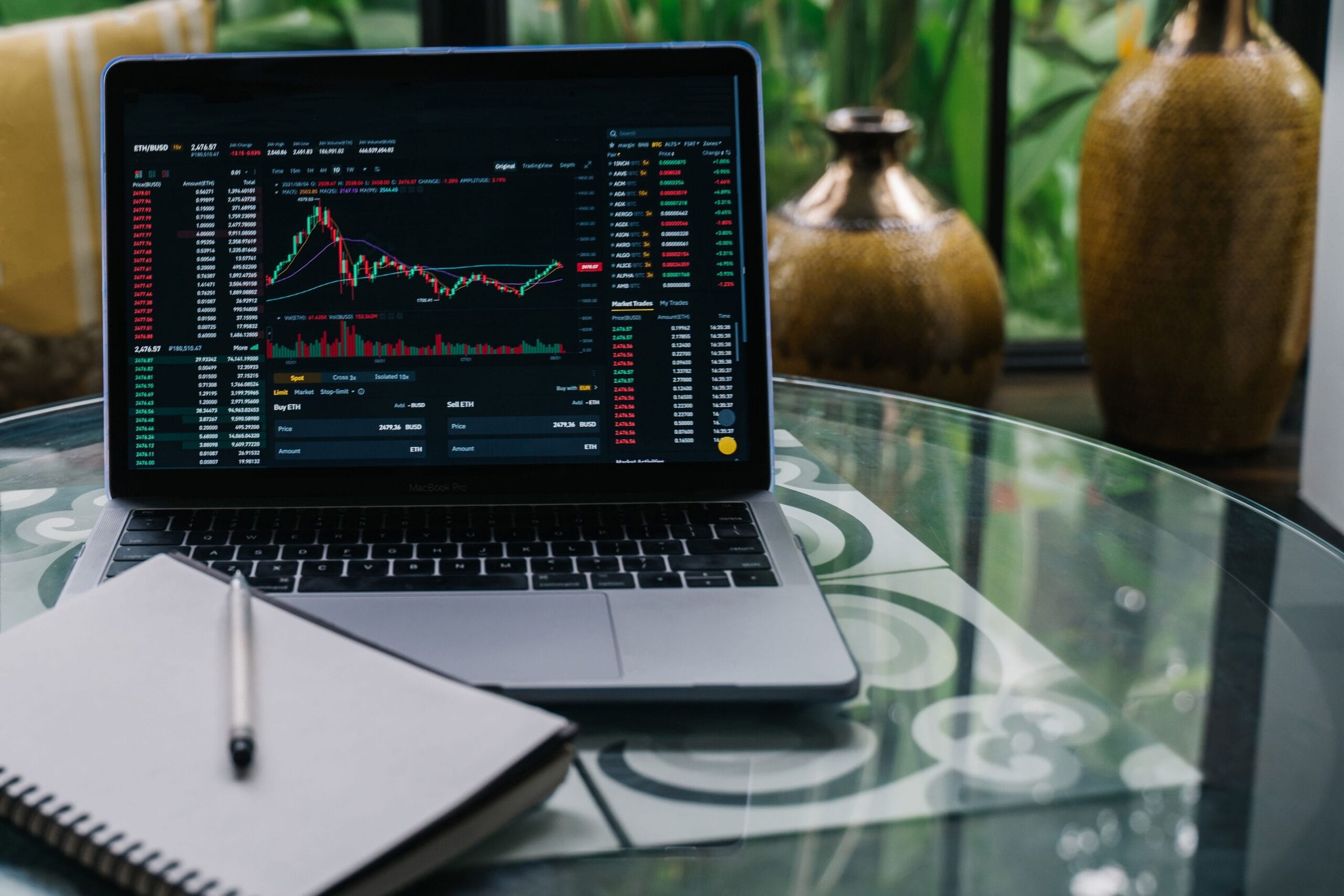
Quick answer: Ethereum micro-trading can be profitable in theory, but very small trades can be difficult to make profitable once you include gas fees, trading fees, spread, slippage, and price impact.
On Ethereum mainnet, fixed transaction costs can be especially painful for small DEX trades. Lower-cost Layer 2 networks or centralized exchanges can change the calculation, but they do not remove market risk or guarantee a profit.
Last reviewed: October 9, 2026
Gas prices, exchange fees, DEX fees, liquidity, and network conditions change over time, so the calculations in this guide are illustrative rather than live trading quotes or promises of returns.
For a broader introduction to digital assets, wallets, earning methods, and cryptocurrency risks, see our practical cryptocurrency guide.
What Is Ethereum Micro-Trading?
Ethereum micro-trading is a general term for making very small, frequent trades involving ETH or tokens on the Ethereum ecosystem. It is not a formally defined trading category, so there is no universal trade size that qualifies as “micro.”

In practice, the idea usually involves trying to capture small price movements with relatively small amounts of capital. A trader might buy ETH or an Ethereum-based token and sell it minutes, seconds, or hours later when the price moves in the desired direction.
Micro-trading can overlap with crypto scalping, but the terms describe slightly different things. Micro-trading usually emphasizes the small size of the positions, while scalping describes a very short-term trading style. A trader can therefore use small positions without scalping, or scalp using larger positions.
It is also important to distinguish Ethereum from ETH. Ethereum is the blockchain network and ecosystem. ETH, or ether, is its native cryptocurrency and is used for transaction fees and other functions within the network.
Is Ethereum Micro-Trading Profitable?
There is no reliable profit simply because a trade is small or because it involves ETH.
The basic challenge is straightforward: your price advantage has to be larger than the total cost of entering and exiting the position. The smaller the trade, the more significant fixed costs become.
| Trading method | Main costs to consider | Why small trades can struggle |
|---|---|---|
| Ethereum mainnet DEX | Gas, DEX fee, slippage, price impact | Network costs can represent a large percentage of a small trade |
| Ethereum Layer 2 DEX | L2 transaction fee, DEX fee, slippage, price impact, bridging costs | Lower transaction costs help, but liquidity and other costs still matter |
| Centralized exchange | Trading fee, spread, possible withdrawal costs | Fees and spread can consume small price movements |
That means the right question is not simply, “Can ETH move enough for me to make money?” The better question is:
Can ETH move enough to cover every cost of the complete trade and still leave a worthwhile net profit?
The Real Cost of a Small ETH Trade
1. Ethereum gas fees
Gas is the fee mechanism used to pay for computation and transactions on Ethereum. The amount you pay depends on how much gas the transaction uses and the effective gas price at the time.
Ethereum’s current fee model separates the network’s base fee from the priority fee, or tip. The base fee is burned, while the priority fee is paid to the validator that includes the transaction. :contentReference[oaicite:3]{index=3}
The basic calculation is:
Gas cost = gas used × (base fee + priority fee)
This matters because different transactions use very different amounts of gas.
A simple ETH transfer is commonly illustrated using 21,000 gas. A smart-contract interaction such as a DEX swap can require substantially more. Ethereum’s gas documentation gives 184,523 gas as an illustrative example for a Uniswap swap. :contentReference[oaicite:4]{index=4}
Using 21,000 gas for a DEX swap can therefore make a small-trade strategy look much cheaper than it really is.
2. DEX trading fees
Gas is not the only cost when using a decentralized exchange.
A DEX can also charge a liquidity-provider or protocol fee on the swap. The exact fee depends on the protocol, trading pair, pool, network, and version being used.
For example, Uniswap v3 supports multiple pool fee tiers rather than a universal 0.3% fee. Its documented v3 tiers include 0.01%, 0.05%, 0.3%, and 1%. :contentReference[oaicite:5]{index=5}
That distinction is important when calculating whether a small ETH trade is actually profitable.
3. Spread, slippage, and price impact
Even when a trading platform shows a small fee, the quoted price may not be the price you ultimately receive.
Spread is the difference between the price available to buy and the price available to sell.
Slippage is the difference between the price you expected and the price at which the trade actually executes.
Price impact is the effect your own order can have on the market price, particularly in a pool or order book with limited liquidity.
These costs become especially important for micro-trading because a potential gain of only a fraction of a percent does not leave much room for execution costs.
4. Withdrawals, bridges, and other costs
The trade itself is not necessarily the end of the calculation.
Depending on how you move funds, you may also encounter deposit or withdrawal charges, blockchain transaction fees, bridge costs, currency conversion costs, or other platform-specific charges.
Taxes can also affect your final result depending on your country and how your local rules treat cryptocurrency transactions. Check the rules that apply to you rather than assuming that a small trade is automatically too small to matter for tax purposes.
A $50 Ethereum Micro-Trading Example
Let’s use a deliberately simple hypothetical example to see why the math matters.
Assume:
- Trade size: $50
- ETH price: $2,000
- Illustrative gas used: 100,000 gas per swap
- Illustrative effective gas price: 10 gwei
- DEX fee: 0.3% per swap
At 10 gwei, a 100,000-gas transaction costs:
100,000 × 10 gwei = 1,000,000 gwei = 0.001 ETH
At an illustrative ETH price of $2,000, that is about $2 per swap.
If you buy and later sell, the two transactions would therefore cost about $4 in gas under these assumptions.
The 0.3% DEX fee would add roughly another $0.15 on a $50 swap. Across the two sides of the trade, you would be looking at approximately $0.30 in DEX fees, ignoring changes in the trade amount.
That gives an illustrative round-trip cost of roughly:
$4.00 gas + $0.30 DEX fees = $4.30
Before considering spread, slippage, or price impact, the trade would need to generate more than $4.30 just to cover those assumed costs.
On a $50 position, that is approximately 8.6% of the original trade value.
In other words, a 1% price move would not be remotely enough under these assumptions.
This is why a strategy can appear profitable when looking only at the ETH price chart while losing money after actual trading costs are included.
Ethereum Mainnet vs. Layer 2 for Small Trades
Ethereum Layer 2 networks can significantly change the economics of small on-chain trades by moving transaction execution away from Ethereum Mainnet while using Ethereum as the underlying settlement and data availability layer.
Layer 2 is a broad term for Ethereum scaling solutions that handle transactions separately from Ethereum Mainnet. Rollups, for example, bundle many transactions together and submit transaction data to Ethereum, allowing the underlying Layer 1 costs to be distributed across multiple transactions and reducing the cost per user. Ethereum.org explains how Layer 2 and rollups work.
Arbitrum One is an example of an Ethereum Layer 2 built as an Arbitrum Rollup. Transactions are executed on Arbitrum, while Ethereum is used for settlement and data availability. This allows Arbitrum to offer lower transaction costs than performing the same activity directly on Ethereum Mainnet, although the actual cost varies with network and application conditions. Arbitrum’s official documentation describes how this architecture works.
For a micro-trader, lower transaction costs can make small trades more practical. However, moving to a Layer 2 does not automatically make a trading strategy profitable.
You still need to consider:
- the Layer 2 transaction fee;
- the DEX or application fee;
- spread, slippage, and price impact;
- liquidity for the trading pair;
- the cost and risks of moving assets between networks; and
- the possibility that the expected price movement disappears before the trade executes.
Ethereum’s documentation identifies Layer 2 as a way to scale Ethereum and reduce the cost impact of congestion on Mainnet. For small trades, that lower transaction cost can be important because network fees represent a larger percentage of a small position. See Ethereum’s Layer 2 overview.
It is also worth remembering that not every Ethereum-related network is a Layer 2. Ethereum distinguishes Layer 2 rollups from sidechains and other scaling approaches because they have different security and trust assumptions. Ethereum.org provides a comparison of these approaches.
Centralized Exchange vs. DEX Micro-Trading
Not every ETH micro-trade happens directly on the blockchain.
On a centralized exchange, trades can be matched within the exchange’s own order book instead of creating an Ethereum transaction for every buy and sell. This means the economics are different from an on-chain DEX trade.
Instead of paying Ethereum gas for every internal trade, the trader must consider the platform’s trading fees, spread, execution quality, withdrawal costs, and other applicable charges.
This can make centralized exchanges more practical for some small trading strategies, but it introduces a different set of considerations, including custody and counterparty risk.
The important lesson is that “Ethereum micro-trading” does not automatically mean paying Ethereum gas on every trade. Your choice of trading venue has a major effect on the cost structure.
How to Calculate Your Break-Even Point
Before placing a micro-trade, calculate the minimum price movement required to cover the full cost of the round trip.
A useful simplified approach is:
Break-even gain = gas + trading fees + spread + slippage + other costs
As a percentage of your position:
Break-even percentage = total estimated costs ÷ trade size × 100
For example, if the complete estimated cost of a $50 round trip is $1, you need more than a 2% gross gain just to cover that $1 before considering taxes or other costs.
This is why the same trading strategy can behave very differently with a $50 position and a $5,000 position. A fixed transaction cost takes up a much larger percentage of a tiny trade.
How to Make Small Crypto Trades More Efficient
Check the complete cost before trading
Do not look only at the displayed ETH price.
Check the expected network cost, DEX fee, spread, slippage, and any other charges before confirming the transaction.
Use liquid trading pairs
Liquidity matters. A market with thin liquidity can produce greater price impact and slippage, making a small theoretical edge disappear during execution.
Do not depend on a fixed “cheap gas” time
Ethereum fees change with network demand. There is no permanently reliable time of day when gas will always be cheap.
Real-time fee information is more useful than blindly following a fixed schedule. Ethereum’s documentation explains how gas prices respond to network demand and how the base fee changes over time. :contentReference[oaicite:9]{index=9}
Consider Layer 2 when the application supports it
If the trading activity does not need to occur on Ethereum mainnet, an appropriate Layer 2 can reduce transaction costs. Compare the complete cost rather than assuming every L2 is equally suitable.
Keep slippage under control
A low advertised fee does not help if poor liquidity or excessive slippage costs more than the fee itself.
Track actual results
Record the entry price, exit price, fees, gas, slippage, and net result for every trade.
After enough trades, you can see whether the strategy actually has an edge or whether apparent gains are being consumed by costs.
Do You Need a Trading Bot?
No. A bot is not a requirement for micro-trading.
Automation can help with repetitive tasks, monitoring, order execution, and consistent rules, but it does not create a profitable trading strategy by itself.
A bot that executes a losing strategy faster simply loses money faster.
Automated trading can also introduce additional risks. These include software bugs, incorrect parameters, compromised credentials, bad API permissions, failed transactions, and unexpected market conditions.
Anyone experimenting with automation should treat security as seriously as the trading strategy itself.
MEV and Sandwich Attacks
On decentralized exchanges, small traders also need to understand maximal extractable value (MEV).
One form of MEV is a sandwich attack. A searcher can observe a pending DEX transaction and place transactions before and after it in an attempt to profit from the price movement caused by the victim’s trade. Ethereum’s documentation specifically describes sandwich trading as an MEV strategy that can result in worse execution and increased slippage for users. :contentReference[oaicite:10]{index=10}
This is another reason why simply finding a small price movement is not enough. Your actual execution price matters.
Using appropriate slippage limits and, where available, transaction-routing options designed to reduce exposure to public transaction ordering can help, but they do not eliminate all trading risks.
Other Risks of Ethereum Micro-Trading
Gas fees are only one part of the risk equation.
Market volatility
ETH can move against you much faster than a micro-profit target can be reached. A strategy that relies on repeatedly collecting tiny gains can be vulnerable to a single larger losing trade.
Smart-contract risk
When using a DEX or DeFi application, you are interacting with software. Bugs, malicious contracts, compromised applications, and poorly designed tokens can create losses that ordinary trading fees cannot explain.
Our guide on how to safeguard your cryptocurrency holdings covers wallet security, private keys, authentication, phishing, and other practical precautions.
Scams and fake platforms
Crypto trading attracts fake exchanges, impersonation schemes, phishing websites, malicious wallet applications, and unrealistic profit promises.
Our guide to common cryptocurrency scams provides a broader checklist for identifying suspicious crypto opportunities.
As an additional reference, the U.S. Securities and Exchange Commission warns that crypto-asset investments can involve substantial volatility, illiquidity, fraud, hacking, and other risks. :contentReference[oaicite:11]{index=11}
Bridge risk
Moving assets between Ethereum and another network can introduce an additional layer of technical and security considerations. A cheaper transaction on another network is not necessarily a better transaction if the cost or risk of getting your funds there and back is too high.
Custody risk
Keeping funds on a centralized platform means relying on that provider. Using a self-custody wallet gives you more direct control, but it also makes you responsible for securing your keys and recovery information.
Is Ethereum Micro-Trading a Good Side Hustle?
For most people looking for predictable extra income, Ethereum micro-trading is difficult to classify as a dependable side hustle.
The potential return is uncertain, the capital is at risk, and the amount of time required to monitor markets can be disproportionate to the amount earned.
That does not mean short-term crypto trading is impossible. It means you should treat it as speculative trading rather than as a guaranteed way to make a few extra dollars.
If your objective is simply to earn small amounts of cryptocurrency without repeatedly buying and selling, a different approach may be more suitable. Our guide to legitimate cryptocurrency faucets covers reward-based methods that do not depend on predicting short-term ETH price movements.
You can also explore our guide to Radiant Capital to learn how a DeFi money-market protocol differs from short-term trading. DeFi lending and trading are separate activities with their own risks, so neither should automatically be viewed as easy passive income.
Common Ethereum Micro-Trading Mistakes

Using 21,000 gas for every trade
That figure is commonly associated with a basic ETH transfer. Smart-contract transactions such as DEX swaps generally require more gas.
Looking only at the buy side
A profitable entry does not mean a profitable round trip. Include the cost of exiting the position.
Assuming every DEX charges 0.3%
DEX fee structures vary by protocol, pool, version, and trading pair. Check the actual fee before trading.
Ignoring slippage
The price shown before confirming a trade is not always the final effective price.
Believing a bot guarantees an advantage
Automation improves speed and consistency. It does not guarantee that the underlying strategy has an edge.
Chasing tiny profits
If your expected gross profit is only a few cents but your possible fees and execution costs are also measured in cents or dollars, the margin may be too small to justify the risk.
Frequently Asked Questions About Ethereum Micro-Trading
Can I start Ethereum micro-trading with $10?
You can make a small crypto trade with a small amount of capital where the platform allows it, but that does not mean the strategy is economically viable. On Ethereum mainnet, transaction costs can consume a large percentage of a very small position. A Layer 2 or an appropriate centralized exchange may have a different fee structure, but you still face trading risk and other costs.
Is Ethereum good for micro-trading?
Ethereum offers deep liquidity and a large ecosystem, but that does not automatically make tiny trades profitable. For on-chain DEX trading, gas, swap fees, slippage, and price impact can be significant relative to a small position. Layer 2 networks can improve the cost structure for some strategies.
Is micro-trading the same as crypto scalping?
Not exactly. Micro-trading usually refers to small trade sizes, while scalping refers to a short-term trading style. They can overlap, but they are not identical concepts.
Do I need a bot for Ethereum micro-trading?
No. Manual trading is possible, although automation can help with monitoring and execution. A bot does not guarantee profits and can add software and security risks.
How much does ETH need to move for a micro-trade to be profitable?
There is no universal percentage. It depends on your trade size and the combined cost of gas, trading fees, spread, slippage, price impact, withdrawals, and any other applicable expenses.
A useful starting point is:
Required gross gain % ≈ total round-trip costs ÷ trade size × 100
Your target should be comfortably above the break-even point rather than barely above it, because actual execution can differ from your estimate.
Are Layer 2 networks better for small crypto trades?
They can be more economical because Layer 2 networks are designed to process transactions at lower costs than Ethereum mainnet. However, the best choice depends on available liquidity, DEX support, fees, bridge requirements, and the network’s own security and trust assumptions. :contentReference[oaicite:12]{index=12}
Final Words
Ethereum micro-trading sounds attractive because the idea of repeatedly collecting small gains feels accessible. The hard part is that the market does not care how small your target profit is.

Every trade still has costs. On Ethereum mainnet, those costs can make very small DEX trades particularly difficult. Layer 2 networks can improve the arithmetic, while centralized exchanges use a different fee structure, but neither approach turns short-term crypto trading into reliable income.
The safest way to evaluate a strategy is to calculate the complete round-trip cost first, test the assumptions with small amounts or paper trading, record actual results, and never confuse a possible profit with a guaranteed one.
For more cryptocurrency education, start with our Cryptocurrency: A Practical Guide. For security, see our guide on protecting your cryptocurrency holdings, and for non-trading ways to earn small amounts of crypto, see our cryptocurrency faucets guide.
Important: This article is for educational purposes only and is not individualized financial or investment advice. Cryptocurrency trading can result in the loss of capital. Always verify current fees, network conditions, platform availability, and applicable laws before trading.
Sources and Further Reading
- Ethereum.org: Network fees and gas
- Ethereum.org: Gas and fees technical documentation
- Ethereum.org: Maximal Extractable Value (MEV)
- Ethereum.org: What is Layer 2?
- Uniswap Labs: What are fee tiers?
- Ethereum Improvement Proposal 1559
- SEC Investor.gov: Exercise Caution with Crypto Asset Securities
Well, what do you think about the article?
Did you enjoy reading “Ethereum Micro-Trading: Is It Profitable After Fees?”? We really hope that you have enjoyed.
If you have any thoughts or comments about this post, please feel free to share them in the comment section below. We appreciate your feedback and would be glad to hear from you.
To see more content like this check the Beermoney section of Money For My Beer.

Chief Editor and Website Owner.
Hi, I’m Ryan. I write and edit everything on this site, which means I’m the last set of eyes on every post before it goes live. By day I’m a technical architect. I design and build enterprise systems, apps, websites, and the occasional game.
This site started because I wanted one place where money advice for regular people doesn’t read like it was written by a finance robot. My goal is simple: every article should be genuinely useful, actually tested against what real people are searching for, and written in plain English. No jargon, no “get rich quick,” no advice I wouldn’t follow myself.
You’ll see a lot of topics here that lean on my engineering background: software reviews, tools, and tech-adjacent money stuff. Where a topic needs real financial expertise, I say so plainly and point you to qualified sources rather than pretending.