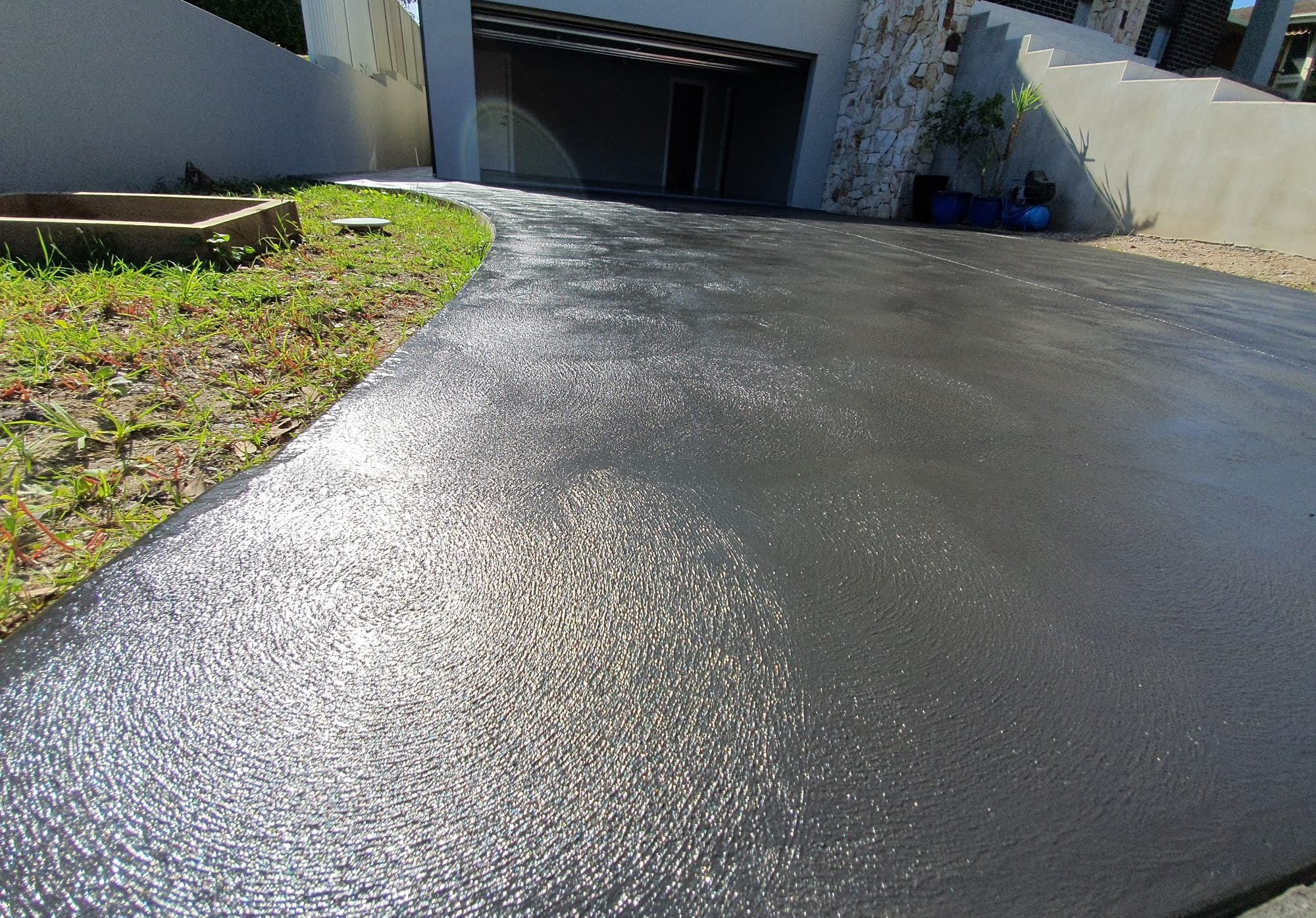
Thinking about coating a garage, workshop, basement, or another concrete floor with epoxy? One of the biggest decisions is whether to install the floor yourself or hire a professional epoxy flooring installer.
A DIY epoxy kit can cost less upfront and give you more control over the project. Professional installation costs more, but the service may include detailed surface preparation, moisture assessment, specialized equipment, a more complete flooring system, application experience, and a workmanship warranty.
The better choice depends on the condition of your concrete, the coating system you choose, how the floor will be used, your budget, and how comfortable you are doing the preparation and application yourself.
Quick answer: DIY epoxy flooring can be a reasonable choice for a small, straightforward concrete floor that is clean, sound, and suitable for the product you choose. Hiring a professional makes more sense when the slab has moisture problems, damaged concrete, old coatings, difficult contamination, heavy traffic, or performance requirements that call for a more specialized flooring system.
Choosing flooring is also about matching the material to how the space will be used. For another perspective on comparing flooring options, see our guide to commercial carpet, durability, traffic ratings, and maintenance.
Editorial note: This article was substantially revised in October 2026 to replace promotional claims with source-backed guidance and to give readers a more balanced DIY-versus-professional comparison.
DIY Epoxy Flooring vs. Professional Installation
The simplest comparison is this:
| Factor | DIY Epoxy Flooring | Professional Installation |
|---|---|---|
| Upfront cost | Usually lower | Usually higher |
| Your time | You handle preparation, application, cleanup, and project management | Most of the work is handled by the installer |
| Surface preparation | You need to determine and perform the preparation required by the product | May include mechanical preparation, repairs, and moisture assessment |
| Product selection | Usually limited to the kit or system you purchase | Installer may offer several coating systems and topcoat options |
| Finish consistency | Depends heavily on preparation and application technique | Usually more predictable when performed by an experienced installer |
| Complex floors | More challenging | Generally better suited |
| Warranty | Typically limited to the product manufacturer’s terms | Some installers provide separate workmanship or system warranties |
There is also an important distinction that gets lost in many online comparisons: epoxy flooring is not a single standardized product. Consumer garage kits and professional multi-coat resin flooring systems can differ substantially in formulation, thickness, preparation requirements, curing characteristics, and intended use.
What Is Epoxy Flooring?
Epoxy flooring generally refers to a resin-based coating or flooring system applied over a suitable substrate, commonly concrete. Depending on the system, it can include a primer, one or more epoxy coats, decorative flakes or aggregate, and a protective topcoat.
Epoxy coatings are commonly used in garages, workshops, warehouses, commercial spaces, and other areas where a seamless, cleanable, and durable surface is desirable. For a closer look at these advantages, see our guide to the benefits of epoxy flooring.
However, the performance of an epoxy floor depends on more than the resin. The condition and preparation of the concrete, moisture, product compatibility, application conditions, coating thickness, mixing, and curing can all affect the result.
Why Concrete Preparation Matters
Surface preparation is one of the most important parts of an epoxy flooring project.
Depending on the existing floor and the chosen system, preparation can involve:
- Removing oil, grease, dirt, dust, and other contaminants
- Removing loose or poorly bonded coatings
- Repairing unsuitable cracks, pits, voids, spalling, or other surface defects
- Removing sealers or other materials that can interfere with adhesion
- Creating the surface profile required by the coating manufacturer
- Checking substrate moisture and other environmental conditions
Sika’s flooring documentation, for example, calls for concrete substrates to be clean, sound, and suitably prepared. Some of its systems specify mechanical preparation to remove weak surface material and produce an open-textured surface suitable for bonding. Sika also specifies checking substrate moisture, relative humidity, and dew point for relevant systems.
This is why simply sweeping a garage and rolling epoxy onto the concrete can produce disappointing results. A surface can look clean and still be unsuitable for coating.
Do You Have to Grind a Concrete Floor Before Epoxy?
Not necessarily. The correct preparation method depends on the product and the condition of the existing floor.
Some consumer epoxy products are supplied with a concrete etching product and instructions for preparing bare concrete. Other professional systems specify mechanical preparation such as grinding, abrasive blasting, or scarifying.
Do not assume that grinding or chemical etching is automatically required for every epoxy product. Read the product’s label, technical data sheet, and application instructions before choosing a preparation method.
This is similar to other home installation projects, where the manufacturer’s instructions can determine whether a job is appropriate for DIY work. Our DIY air conditioner installation guide provides another example of why planning, equipment, and following technical installation requirements matter.
What Is Involved in a DIY Epoxy Floor?
A DIY kit can make the application look straightforward, but preparation usually accounts for a significant part of the project.
1. Clear and inspect the floor
Remove vehicles, shelving, storage items, mats, dirt, oil, and anything that prevents access to the entire floor.
Inspect the concrete for cracks, spalling, previous coatings, stains, damaged areas, and possible moisture problems. Coating a damaged slab does not fix the underlying concrete problem.
2. Clean and degrease the concrete
Oil, grease, dirt, and other contaminants can interfere with adhesion. Follow the cleaning and degreasing procedure specified by the product manufacturer.
3. Prepare the surface correctly
Use the preparation method required by the specific coating. Depending on the product, this may involve etching, grinding, sanding, abrasive blasting, or another approved preparation method.
Do not skip this stage because the concrete looks clean. Surface texture and contamination are not always obvious from visual inspection alone.
4. Check moisture and compatibility
Moisture can be a major concern for concrete coatings. Sika’s technical documentation for various epoxy systems specifies limits or test requirements for substrate moisture and calls for attention to relative humidity and dew point.
Existing coatings can create another problem. A new coating needs a suitable surface to bond to, so loose paint, failing coatings, sealers, or other incompatible materials may need to be removed.
5. Mix and apply the coating correctly
Two-component epoxy products have specific mixing ratios, working times, temperature limits, and application requirements.
Do not alter the mixing ratio or continue using material beyond the manufacturer’s stated working time. Pot life can change with temperature.
6. Allow the floor to cure
Dry to the touch does not necessarily mean ready for vehicle traffic.
For example, Rust-Oleum states that its EPOXYSHIELD Garage Floor Coating can be walked on in about one to two days and driven on in three days. These are product-specific instructions, not a universal epoxy cure time.
When Does DIY Epoxy Flooring Make Sense?
DIY can be a reasonable option when most of these conditions apply:
- The concrete is generally sound and stable.
- The floor can be cleaned and prepared properly.
- There is no unresolved moisture problem.
- The area is relatively straightforward to work on.
- You have enough time to complete the preparation and application correctly.
- You are comfortable following technical instructions and using the required tools.
- You understand that the final appearance depends on your preparation and application technique.
DIY can be particularly attractive when the project is small and your priority is minimizing the initial cash cost. However, the value of DIY depends on what you already have available. Equipment, preparation materials, safety gear, and your time all belong in the calculation.
When Should You Hire a Professional Epoxy Floor Installer?
Professional installation becomes more attractive when the floor presents problems that make preparation or application difficult.
Moisture problems
If moisture is moving through the concrete or the slab does not meet the coating manufacturer’s moisture requirements, applying another layer of epoxy may not solve the problem.
Old coatings or contamination
Old paint, sealers, adhesives, heavy oil contamination, or a failed previous coating can require substantial preparation. Professional installers may have equipment better suited to removing difficult materials.
Cracked or damaged concrete
Epoxy is a coating system, not a replacement for repairing an unsuitable concrete slab. Significant cracking, spalling, or other damage should be evaluated before coating.
Heavy or demanding use
Commercial areas, workshops, warehouses, and heavily used garages may require a system selected for abrasion, chemical exposure, impact, traffic, or other specific conditions.
Complex decorative finishes
Decorative flake systems, broadcast aggregate, multiple coats, seamless transitions, and other finishes can require more precise timing and application technique.
You want less project risk
Hiring a professional does not guarantee that a floor will never fail, but an experienced installer can reduce some of the practical challenges associated with substrate preparation, product selection, and application.
How Much Does Epoxy Flooring Cost?
Epoxy flooring prices vary widely by country, location, floor size, concrete condition, coating system, preparation requirements, and labor.
For a current U.S. benchmark, This Old House reports approximately $2 to $5 per square foot for DIY epoxy flooring and approximately $3 to $12 per square foot for professional installation, including materials and labor. These figures are useful for comparison, but they are not universal prices and should not be treated as a local quote.
Cost comparisons should also account for what is actually included. A low quote that covers only the coating may not be comparable with a quote that includes concrete grinding, repairs, primer, multiple coats, a topcoat, and labor.
| Cost consideration | DIY | Professional |
|---|---|---|
| Coating materials | Paid directly by the homeowner | Usually included in the project price |
| Preparation materials | Homeowner purchases them | Usually included or separately itemized |
| Equipment | May need to be purchased or rented | Usually supplied by the installer |
| Labor | Your time | Included in the installation quote |
| Concrete repairs | Additional cost when required | May be included or quoted separately |
The lowest upfront price is not automatically the lowest total cost. A failed coating can require removal, additional surface preparation, replacement materials, and another application.
On the other hand, professional installation is not automatically the better financial choice. A straightforward floor that can be prepared and coated correctly may be a perfectly reasonable DIY project.
The same principle applies when comparing other installation services. Our guide to choosing an air conditioner installation service discusses comparing estimates, experience, references, insurance, and the scope of work rather than looking at price alone.
Why Professional Epoxy Flooring Can Cost More
A professional quotation is not simply paying someone to roll coating onto concrete.
Depending on the installer and system, the price can include:
- Surface inspection and preparation
- Mechanical grinding or other preparation equipment
- Concrete repairs
- Primer and multiple coating layers
- Decorative flakes or aggregate
- Protective topcoats
- Application labor
- Cleanup and project management
- Warranty coverage
Some professional systems are considerably more involved than a consumer one-coat garage kit. That does not automatically make them better for every homeowner, but it explains why comparing prices without comparing the actual flooring system can be misleading.
Does Professional Epoxy Flooring Last Longer Than DIY?
It can, but there is no universal lifespan for either DIY or professionally installed epoxy flooring.
Service life depends on the coating system, film thickness, concrete condition, surface preparation, traffic, chemical exposure, sunlight, maintenance, and installation quality.
A professional installer may use a multi-layer system designed around the conditions of the floor, while a homeowner may choose a simpler consumer kit. Those are not necessarily equivalent systems.
The better question is not simply, “How many years will epoxy last?” It is, “What flooring system is appropriate for how I will use this floor?”
That approach is useful when comparing other flooring materials too. Our commercial carpet buying guide looks at traffic levels, material types, budget, and maintenance rather than treating one flooring material as universally best.
Can Epoxy Be Applied Over Old Concrete?
Yes. Existing concrete can be a suitable substrate for an epoxy coating, provided that it meets the requirements of the selected system.
The important questions are whether the concrete is sound, suitably clean and prepared, sufficiently dry for the product, and free from conditions that would prevent adhesion.
Old concrete may also contain previous sealers or coatings that need to be removed or properly prepared before the new system is installed.
New concrete has its own requirements. For example, some Rust-Oleum EPOXYSHIELD instructions specify a minimum curing period for newly poured concrete. Always use the requirements for the exact product you are installing rather than relying on a generic waiting period.
Can Epoxy Go Over Old Paint?
Sometimes, but you should not assume that an epoxy coating can simply be rolled over any existing paint.
The existing coating needs to be sufficiently bonded and compatible with the new system. Loose, peeling, or otherwise unsuitable coatings may need to be removed first.
Follow the manufacturer’s preparation instructions and test questionable existing coatings before committing to the full floor.
Does Epoxy Flooring Get Slippery When Wet?
It can. A coated floor may have a relatively smooth surface, and water or other liquids can reduce traction.
Some flooring systems allow an anti-slip additive or aggregate to be incorporated into the finish. Rust-Oleum, for example, offers an anti-skid additive for some EPOXYSHIELD products.
The appropriate level of slip resistance depends on the environment and how the floor will be used.
What About UV Exposure?
Sunlight is another reason to look beyond the word “epoxy.” Some epoxy products are intended only for covered or indoor areas, while particular flooring systems may use a different protective topcoat for better UV resistance.
For example, Rust-Oleum’s EPOXYSHIELD Garage Floor Coating is listed for indoor use only, while other flooring systems may be designed differently.
Before using an epoxy coating in an area exposed to direct sunlight, check the manufacturer’s UV and exterior-use requirements.
Epoxy Floor Safety for DIY Projects
DIY epoxy work requires more care than ordinary painting.
Uncured epoxy resin systems and hardeners can expose workers to skin and other chemical hazards. CDC/NIOSH guidance recommends reducing exposure, using appropriate ventilation and engineering controls where possible, and wearing suitable PPE when working with epoxy resins.
Before starting a project:
- Read the product label and Safety Data Sheet.
- Use the gloves, eye protection, clothing, and other PPE specified for the product.
- Provide appropriate ventilation for the product and application area.
- Avoid unnecessary skin contact with uncured resin and hardener.
- Follow additional safety requirements for solvents, grinding dust, and other materials involved in the project.
Do not use odor as a measure of safety when working with epoxy. CDC/NIOSH notes that smelling or not smelling a chemical is not a reliable indicator of whether exposure is safe, because harmful levels cannot always be detected by smell.
Safety is also a recurring consideration in DIY installation work. Our DIY antenna installation guide is another example of why preparation, understanding the work environment, reading instructions, and recognizing when a project is beyond your comfort level matter.
How to Choose a Professional Epoxy Flooring Installer
If you decide to hire an installer, do not compare companies using only the lowest price per square foot.
Ask what is actually included in the flooring system and installation.
- What preparation method will you use? Ask whether the floor will be ground, blasted, etched, or prepared another way.
- What products are being installed? Ask for the product names and technical documentation where appropriate.
- How will you deal with cracks and damaged concrete? Make sure repairs are included or clearly excluded.
- How will moisture be evaluated? This is especially important for slabs with known moisture problems or floors below grade.
- How many coats are included? Ask whether primer, base coats, decorative flakes, and topcoats are part of the quote.
- How long before the floor can be used? Ask specifically about foot traffic, vehicles, and full cure.
- What warranty is provided? Get the warranty terms in writing, including exclusions.
A detailed written quotation is much more useful than a generic promise of “industrial-grade epoxy.” Different systems can have very different specifications.
It is also useful to verify a contractor’s experience, references, insurance, and scope of work. Our professional installation service checklist covers these general questions in more detail, even though the specific technical requirements differ between air-conditioning and flooring work.
Common DIY Epoxy Flooring Mistakes
Skipping surface preparation
A coating cannot compensate for a contaminated or unsuitable substrate. Preparation is part of the flooring system, not an optional extra.
Coating over a sealer
Some sealers can interfere with adhesion. Identify what is already on the concrete and follow the new coating manufacturer’s requirements.
Ignoring moisture
Moisture problems can affect adhesion and the long-term performance of some coating systems. Check the requirements for the specific product rather than assuming a visually dry floor is automatically suitable.
Mixing the components incorrectly
Two-component products need the correct ratio and mixing procedure. Guessing the ratio can affect curing and performance.
Working outside the application conditions
Temperature, humidity, substrate temperature, and dew point can matter. Follow the manufacturer’s specified conditions.
Assuming all epoxy products are equivalent
A consumer garage coating and a multi-layer professional flooring system can be very different products despite both being described as epoxy flooring.
Forgetting slip resistance
A smooth coating can become slippery when wet. Consider an appropriate anti-slip option when the floor’s use requires additional traction.
DIY or Professional Epoxy Flooring: Which Is Better?
DIY is usually worth considering when the floor is straightforward, the concrete is sound and suitable, the project is within your skill level, and minimizing upfront cost matters.
Professional installation is usually more attractive when the floor has moisture concerns, damaged concrete, old coatings, difficult contamination, heavy traffic, demanding performance requirements, or a complex decorative finish.
The important point is that professional installation is not automatically superior and DIY is not automatically inferior. A carefully prepared DIY floor can perform well when the product is appropriate and the installation follows the manufacturer’s requirements. Conversely, even an expensive professional system can perform poorly if the substrate is unsuitable or preparation is inadequate.
Choose the system based on the floor you actually have and how you intend to use it.
Frequently Asked Questions
Is epoxy flooring difficult to install yourself?
The rolling or application step may be manageable for many DIYers, but the preparation can be considerably more demanding. Cleaning, repairing, profiling, checking moisture, mixing, timing the application, and allowing the coating to cure all affect the final result.
Can a beginner install an epoxy garage floor?
Yes. Some consumer garage-floor products are specifically designed for DIY use. A beginner-friendly project is most likely to be successful when the concrete is sound, clean, suitably prepared, and compatible with the selected product.
Is DIY epoxy flooring cheaper?
Usually in terms of upfront labor cost, because you are doing the work yourself. However, the real cost can include preparation supplies, equipment rental, repairs, wasted material, and the value of your time.
Is professional epoxy flooring worth the extra money?
It can be, especially when professional preparation, specialized equipment, a more complex flooring system, or warranty coverage is valuable to you. A straightforward floor may still be a good DIY candidate.
How long does an epoxy floor last?
There is no single reliable lifespan for every epoxy floor. The coating system, preparation, substrate, traffic, chemical exposure, sunlight, maintenance, and installation quality all affect service life.
Can I put epoxy over old concrete?
Yes, provided that the concrete and surface condition meet the requirements of the selected product. Old concrete may require cleaning, repair, profiling, moisture evaluation, or removal of existing coatings before installation.
Do I need to grind a garage floor before applying epoxy?
Not always. Some products use concrete etching, while other systems require mechanical preparation. Follow the instructions for the exact coating system you are using.
Can epoxy go over old paint?
Sometimes, but the existing paint must be sufficiently bonded and compatible with the new coating. Loose or unsuitable coatings may need to be removed before installation.
Does epoxy get slippery when wet?
It can. Some coating systems support anti-slip additives or aggregate to increase traction. Choose the appropriate option for the floor’s environment and use.
How long before I can drive on epoxy flooring?
It depends on the product and environmental conditions. As one current example, Rust-Oleum states that its EPOXYSHIELD Garage Floor Coating can be driven on after about three days. Always follow the exact product instructions.
Related Flooring Guide
Epoxy is only one flooring option. Our commercial carpet guide covers another flooring material and explains how factors such as traffic, fiber type, budget, and maintenance affect a flooring decision.
Sources and References
- This Old House: How Much Does Epoxy Flooring Cost?. U.S. benchmark for DIY and professionally installed epoxy flooring costs.
- Rust-Oleum EPOXYSHIELD Garage Floor Coating. Current product information covering application, intended use, and product-specific walk and vehicle traffic times.
- Sika Sikafloor Epoxy Flooring System. Example of professional substrate preparation requirements.
- Sika Sikafloor-161 HC. Guidance on substrate moisture, relative humidity, dew point, and application conditions.
- CDC/NIOSH: Preventing Skin Disease Guidelines and Recommendations. Guidance on minimizing occupational skin exposure and using appropriate PPE when handling epoxy resins.
- CDC/NIOSH: About Epoxies and Resins. Guidance on reducing exposure, ventilation, PPE, and following product safety documentation.
Also Read: Benefits of Having a Professional Antenna Installer
Well, what do you think about the article?
Did you enjoy reading “DIY vs. Professional Epoxy Flooring: Which Is Better?“? If so, please comment down below. We would love to hear your thoughts about these.
To see more content like this check the Business section of Money For My Beer.

“Epoxy Flooring Brisbane has been transforming new and old concrete floors into durable, high-performance surfaces for years.”
Specialties
Industrial Environment Coating System • Garage Flooring Coating • Warehouse Flooring Coating • Residential Flooring Area • Workshop Flooring Coating • Concrete Resurfacing • Food Processing Area • Epoxy Cutting Board • Glow in Dark Epoxy Floor • Workshop Epoxy Floor Coating • Concrete Floor Polishing in Sydney • Shot Blasting: An Efficient Surface Preparation • Industrial Epoxy Coating • Line Marking • Tile Glue Removal
History
Established in 2005.
We started our business, Epoxy Flooring Brisbane to add durability and spark to homes and businesses. Our clients are impressed with our epoxy flooring system which is gaining in popularity and versatility in Brisbane. Selecting the right installer is important and our team at Epoxy Flooring Brisbane is meticulous in their preparation and application. Our combined experience in the flooring industry has seen us undertake jobs of all sizes and challenges. You can count on us to get the job done right. When you contact us, you can feel confident that we will find the right solution for your flooring needs. We are reliable and efficient, and deliver professional results every time.
Meet the Business Owner
Business owner information

Darius Soltani has been in the flooring and restoration business for the past 20 years. He has an amazing and very hard-working team that can help you do something amazing.
Nice! An expert epoxy flooring contractor will finish the task immediately and at a lower cost. They will also have knowledge that will result in a higher grade finish to the job. Furthermore, an expert epoxy flooring contractor will put epoxy floors more quicker than a beginner.