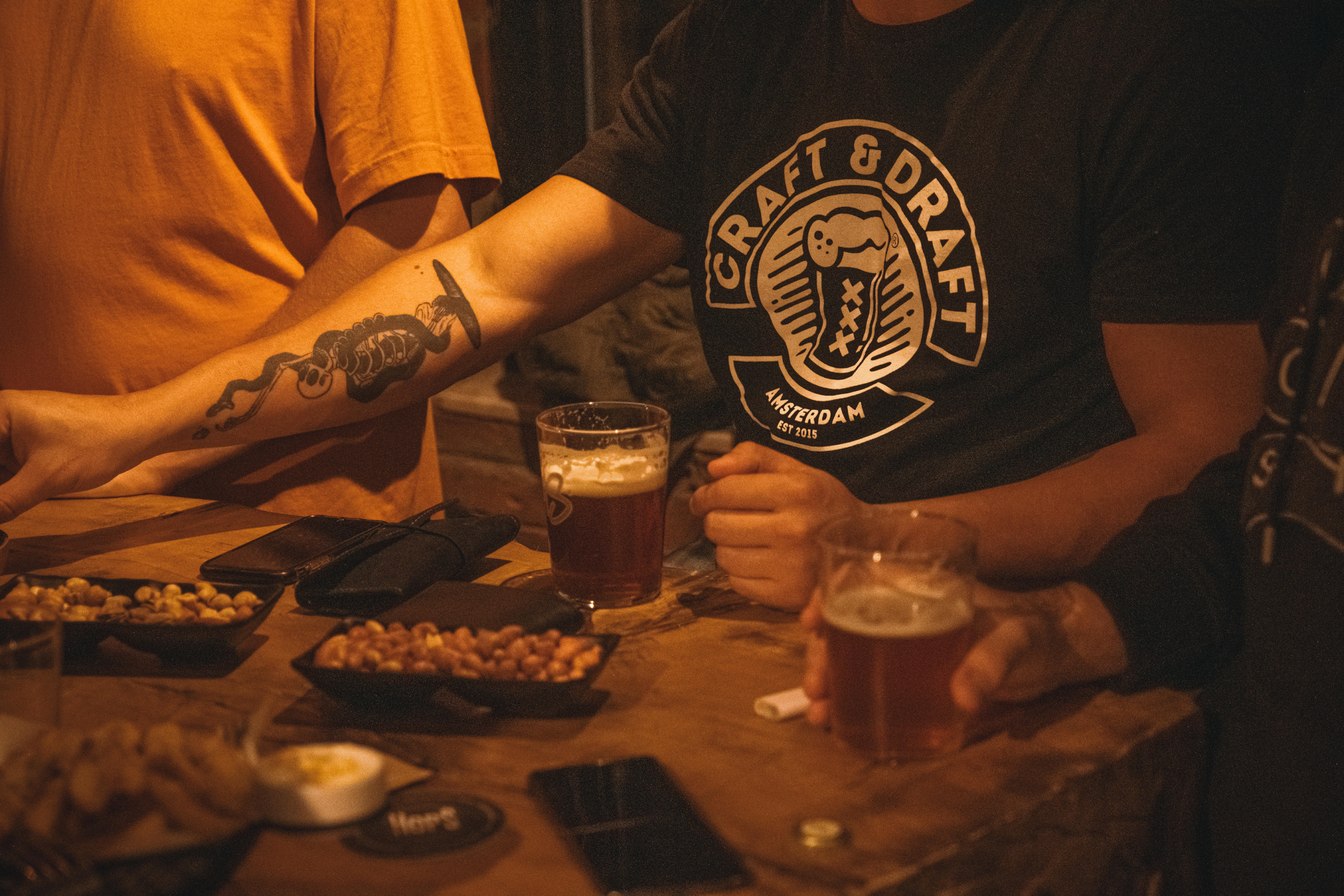
Selling craft beer merch online can turn an interest in beer culture, brewing, or graphic design into a potential side business. You could sell original T-shirts for homebrewers, stickers for craft beer fans, posters inspired by beer styles, or gifts for people who enjoy visiting breweries.
You do not necessarily need to manufacture products yourself or buy inventory in bulk. With print-on-demand, a supplier produces an item after a customer places an order. However, production costs, shipping, marketplace fees, and marketing can all affect your profit. Having a good design is only one part of building a business that attracts paying customers.
This guide explains how to sell craft beer merchandise online, choose a selling platform, find a niche, calculate profit, promote your products, and avoid common intellectual property and marketplace-policy mistakes.
Last reviewed: November 3, 2026
How Selling Craft Beer Merch Online Works
There are two main ways to sell merchandise featuring your original designs: print-on-demand and traditional inventory.
Print-on-Demand Merchandise
Print-on-demand, often shortened to POD, means a product is manufactured after a customer orders it. Depending on the platform and fulfillment arrangement, a supplier can print the design, package the product, and ship it directly to the customer.

The basic process looks like this:
- Create original artwork for a specific audience.
- Upload the artwork to a marketplace or connect it to an online store.
- Choose the products you want to sell and set your prices.
- Promote your listings and attract potential customers.
- When someone orders, the supplier produces and fulfills the product under your chosen arrangement.
- Account for production, shipping, platform fees, and other expenses to determine your actual profit.
This model reduces the need to purchase inventory upfront. You also avoid managing printing equipment and storing large quantities of finished products.
The trade-off is that print-on-demand products can cost more per unit than merchandise ordered in bulk. You also have less direct control over production and shipping when a third party handles fulfillment.
For a fuller explanation of the model, read Printful’s guide to how print-on-demand works.
Buying Inventory in Advance
Another option is to order merchandise in bulk from a manufacturer or printer, then sell and ship the products yourself or through a fulfillment service.
Bulk ordering can reduce the cost per item, but it requires more upfront money. You must also account for storage, unsold inventory, packaging, shipping, and the time needed to fulfill orders.
For beginners who have not yet validated their designs, print-on-demand is often a more manageable way to test demand. Bulk production can make sense later when you have reliable sales data and understand which products your customers want.
Find a Craft Beer Merchandise Niche
Craft beer is a broad subject. A design that appeals to a homebrewer may not interest someone who collects brewery merchandise or simply enjoys trying different beer styles.
Instead of making designs for everyone, start with an audience whose interests you understand. A focused collection can make it easier to develop a consistent style, write relevant product descriptions, and reach potential buyers.
Homebrewing and Brewing Equipment
Homebrewers may appreciate original illustrations of fermenters, brewing kettles, hop cones, malt, or other equipment. Designs featuring brewing humor, fermentation terminology, and homebrewing milestones may also appeal to people who enjoy the hobby.
Potential products include T-shirts, stickers, posters, tote bags, and gifts featuring original brewing-themed artwork.
Beer Styles and Craft Beer Culture
Beer enthusiasts often have preferences for particular styles, flavors, and brewing traditions. You could develop artwork around the characteristics of IPAs, stouts, lagers, wheat beers, or sour beers.

Understanding the terminology helps you create more relevant designs. Our guide to different types of beer, including lager, IPA, stout, and wheat beer, provides a starting point for researching beer styles.
A design should offer more than a generic beer reference. Original illustrations, thoughtful typography, distinctive color combinations, or humor that resonates with a specific audience can give a collection a recognizable identity.
Brewery Visits and Beer Tourism
Some beer fans enjoy merchandise that reminds them of a brewery visit, tasting event, or trip. Original travel-inspired illustrations, fictional brewery concepts, and designs celebrating beer tourism could appeal to this audience.
Be careful when creating products associated with a real brewery, festival, or event. Names, logos, mascots, and branded artwork may be protected by intellectual property rights. Obtain permission or an appropriate license before using protected material commercially.
Beer-Themed Humor and Gifts
Humorous designs may work well for gifts, especially when they appeal to a recognizable group, such as homebrewers, beer enthusiasts, or people who enjoy visiting taprooms.
Rather than relying entirely on generic slogans, think about what makes your audience distinctive. A design aimed at experienced homebrewers, for example, might use terminology or imagery that would not mean much to a casual beer drinker.
How to Validate a Craft Beer Merch Idea
Before making dozens of products, check whether people appear interested in the concepts you plan to sell. This can save time and reduce the temptation to spend money on designs that have no clear audience.
- Research competing products. Browse marketplaces for similar designs. Compare their presentation, pricing, product types, and customer feedback without copying their artwork.
- Look for specific audiences. Research homebrewing discussions, craft beer communities, gift searches, and other places where your potential customers already spend time.
- Ask for feedback. Share original design concepts with potential buyers or conduct a small social media poll. Treat positive responses as preliminary feedback, not proof that people will purchase the products.
- Test a small collection. Publish a manageable number of related designs and observe how people interact with the listings.
- Review actual results. When available, examine product views, clicks, orders, customer feedback, and profit per sale before deciding what to expand.
Search interest and social media engagement can help you identify possible opportunities, but neither guarantees purchases. A small test is more useful than assuming a particular beer-related phrase or design will sell simply because it is popular online.
Where to Sell Craft Beer Merchandise Online
Your selling platform influences how customers discover your products, what fees you pay, and how much of the business you manage yourself. The best option depends on your budget, technical skills, existing audience, and willingness to handle marketing and customer service.
1. Print-on-Demand Marketplaces
A print-on-demand marketplace lets you upload original artwork and offer it on eligible products without purchasing inventory or arranging your own production for every order.
Redbubble is one example. Artists upload designs, choose available products, and can earn money when customers buy eligible products featuring their artwork.
The advantages include a relatively simple setup and less direct involvement in manufacturing and fulfillment. The disadvantages include competition, platform rules, fees, and limited control over the customer experience.
To understand the setup process, read our step-by-step guide on how to sell on Redbubble. For a broader look at its business model, account fees, fulfillment, and earning considerations, see our Redbubble review.
A marketplace can be a reasonable starting point if you want to test your artwork without building a standalone ecommerce store. However, you still need to create original designs and give potential customers a reason to find them.
2. An Online Marketplace With a Print-on-Demand Supplier
Another option is to list your products on an online marketplace and connect it to a print-on-demand supplier. The marketplace provides the selling platform, while the supplier produces and fulfills eligible orders.

Etsy is one marketplace sellers may consider, subject to its current seller requirements and product policies. Etsy prohibits the sale of alcohol itself, but you should not assume that every beer-themed merchandise listing is automatically permitted or prohibited based on the theme alone.
Check Etsy’s current Prohibited Items Policy and any other applicable listing and seller requirements before publishing products. Confirm that your merchandise, artwork, and production arrangement comply with the rules.
Marketplace fees, competition, and listing requirements can change. Review the current terms rather than relying on an older tutorial when deciding whether a platform suits your business.
3. Your Own Ecommerce Store
You can also create a standalone store using an ecommerce platform such as Shopify or WooCommerce and connect it to a print-on-demand provider.
This option gives you more control over your branding, product pages, store design, and promotional strategy. It also means you must work harder to attract visitors.
Depending on the setup, expenses can include hosting, an ecommerce subscription, payment processing, apps, advertising, and other operating costs. You also need to manage store policies, customer communications, and order-related issues according to your business arrangement and applicable requirements.
An independent store may be a better fit if you already have an audience, operate a website, or have a practical plan for attracting customers through search engines, social media, partnerships, or email marketing.
For a new seller, starting with one platform and expanding when the numbers justify it is generally more manageable than trying to operate several stores at once.
Which Craft Beer Products Should You Sell?
Start with products that suit your audience and the artwork you have created. A design that looks good on a sticker may not translate well to a sweatshirt or poster, so review each product individually.
- T-shirts and sweatshirts: Suitable for original illustrations, typography, brewing humor, and beer-culture designs.
- Stickers: Useful for smaller graphics and designs that remain clear at a compact size.
- Mugs and drinkware: Potential gift items for homebrewers and beer enthusiasts, depending on your supplier’s available products.
- Posters and wall art: Options for detailed illustrations, brewing diagrams, and beer-inspired designs.
- Tote bags and accessories: Additional products for designs that work beyond apparel.
These are possible product categories, not a verified ranking of bestsellers. Demand varies with the design, audience, competition, product quality, and price.
Before promoting a product heavily, order a sample when practical. Check the print quality, colors, material, sizing, packaging, and delivery experience. Product mockups can help present your listings, but they are not a substitute for checking the finished product.
Enable only the products on which the design looks good. A smaller, well-presented collection is easier to maintain than a large catalog filled with unsuitable product variations.
How to Price Craft Beer Merch for Profit
One of the most important decisions in a merchandise business is setting a price that covers your costs while remaining reasonable for your intended customers.
The difference between the selling price and the supplier’s base price is not necessarily your final profit. You may also need to account for shipping, platform fees, payment processing, discounts, advertising, and other expenses.
Use this formula as a starting point:
Profit before taxes and fixed overhead = Product revenue − Production cost − Shipping paid by you − Platform and payment fees − Marketing cost − Other variable expenses
Consider this hypothetical T-shirt sale:
- Revenue from the T-shirt: $28
- Production cost: $13
- Shipping paid by the seller: $5
- Platform and payment fees: $3
- Marketing cost attributed to the order: $2
In this example, the amount remaining is $5 before taxes, fixed overhead, refunds or chargebacks, and other costs not included in the calculation.
These figures are illustrative only. They are not current quotes from a print-on-demand provider or marketplace. Actual fees and production costs depend on the product, supplier, selling channel, order destination, and other factors. If the customer pays shipping separately, account for the shipping revenue and expense consistently.
Check the Full Cost Before Setting Your Price
Before publishing a listing, calculate what you expect to retain from each sale. Then compare your price with similar products and consider whether your design, product quality, and presentation give customers a reason to choose it.
A price that looks competitive may leave little room for profit after fees. On the other hand, setting a high price does not guarantee better earnings if customers do not consider the product worth buying.
Do not rely on a universal markup percentage. Calculate costs for each product category and review the results when your supplier, marketplace, or advertising expenses change.
For more detail, see Printify’s guide to pricing print-on-demand products. It covers production costs, shipping, platform fees, and other factors that influence pricing.
How to Start Selling Craft Beer Merch Online
You do not need a large store or an extensive catalog to begin. Use a simple process that lets you test your ideas before making a bigger commitment.

Step 1: Research Your Audience
Decide who you want to reach, then research their interests and purchasing habits. Look at competing products, relevant search queries, customer comments, and communities where promotion is allowed.
Use this research to identify design ideas and product types worth testing. Do not copy another seller’s artwork, branding, or protected material.
Step 2: Create Original Designs
Make a small collection around one theme, such as homebrewing, beer-style illustrations, or craft beer humor.
Keep the artwork clear and appropriate for the products you intend to sell. Check that you own the necessary rights to every design element, including images, fonts, and other materials used in the finished artwork.
Step 3: Choose a Selling Platform
Compare marketplaces and independent stores based on their fees, fulfillment arrangements, product options, seller requirements, and customer reach.
Read the current terms before committing. If you use a print-on-demand provider, check product costs, shipping rates, production estimates, return arrangements, and the available integrations.
Step 4: Prepare Your Listings
Write clear product titles and descriptions that tell customers what they are buying. Include relevant details such as material, size, fit, design, and shipping expectations.
Use accurate product images and mockups. Select relevant search terms naturally rather than repeating the same phrase throughout the listing. Make sure the finished design is suitable for the product and that the description matches what customers will receive.
Step 5: Publish a Small Collection
Start with a manageable number of listings. Check the price, production cost, shipping arrangement, and product previews before publishing each one.
Keep records of your costs and sales. This will help you determine which designs deserve more attention and which products may need different pricing or presentation.
Step 6: Review Results and Improve
Use actual results to guide your decisions. If the platform provides relevant data, review impressions, visits, clicks, purchases, and customer feedback.
A listing that gets visits but no orders may need clearer images, better product information, a different price, or a more suitable audience. Low traffic, however, may point to a discovery problem rather than a product problem.
Test meaningful changes when possible, and avoid expanding your costs until your results support doing so.
How to Promote Your Craft Beer Merchandise
Publishing a listing does not guarantee that customers will find it. Promotion helps you reach people who are likely to be interested in your products.
Use Search-Friendly Product Listings
Think about the words a customer might use to find your product. Someone looking for a homebrewing gift may search differently from someone looking for a beer-themed graphic T-shirt.
Use clear, specific titles and relevant tags where your platform supports them. Describe the product accurately and explain the design instead of filling the description with repetitive keywords.
Visual platforms can be useful for showing the design process, finished products, and examples of how merchandise looks when worn or displayed.
Focus on channels where your audience is active. Share useful or interesting content rather than repeatedly posting the same sales link.
If you participate in beer communities, follow their rules on self-promotion. Contribute to discussions and provide value instead of treating every community as an advertising channel.
Use Your Existing Website or Blog
If you already publish beer-related content, relevant articles can help readers discover merchandise that genuinely fits their interests.
For example, a homebrewing article could naturally refer to a collection of original brewing-themed designs. A beer-style guide may provide context for an original illustration, provided the merchandise is relevant to the reader’s needs.
Keep the main purpose of each article clear. Product links should add value rather than distract readers from the information they came to find.
Consider Brewery Collaborations
Working with a brewery can provide an opportunity to create authorized merchandise for a specific audience. However, a collaboration is a business arrangement, not a guaranteed source of sales.
Prepare a concise proposal that explains your design concept, intended products, production process, pricing, and promotional plan. If the project involves the brewery’s logo, name, or other protected branding, agree on the required permissions before producing or selling the merchandise.
Put the financial arrangements in writing. Clarify who owns the artwork, how the designs may be used, who covers production costs, how revenue or royalties are calculated, and who handles customer service and fulfillment.
Start with a small collaboration or limited test when practical. Use actual results to decide whether a larger collection makes sense.
Beer-themed merchandise can also be promoted through in-person events and competitions. For example, authorized tournament merchandise may appeal to players and spectators at a beer pong competition. See our guide to hosting and monetizing beer pong tournaments for more ideas on combining event sponsorships, merchandise, and team registrations.
Legal and Marketplace Rules to Check
Beer-themed merchandise can involve intellectual property and platform-policy questions. Checking these issues before publishing products can help reduce the risk of rejected listings, takedown requests, account restrictions, or disputes.
Use Original Artwork and Authorized Branding
A brewery’s logo, label, mascot, or distinctive branding may be protected by trademark, copyright, or other intellectual property rights. Do not assume that an image is available for commercial use simply because it appears online.
For branded merchandise, obtaining permission or an appropriate license is often the safest approach. A disclaimer, small design alteration, or different color scheme does not automatically eliminate intellectual property concerns.
Beer-style terminology can help describe a product, but a name, slogan, illustration, or overall design may raise separate rights issues. Check the material you plan to use rather than assuming every phrase related to beer is available for commercial use.
The United States Patent and Trademark Office’s explanation of trademark protection is a useful starting point for understanding trademarks in the United States. Trademark protection is tied to the goods or services associated with a mark, and other countries may have different laws and procedures.
For an overview of the differences between copyright, trademark, and trade dress, see Shopify’s intellectual property guide. This material is educational information, not legal advice.
Check Marketplace Requirements Before Listing
Each marketplace has its own content rules and seller requirements. Alcohol-themed artwork, physical merchandise, and the sale of alcoholic beverages are not necessarily treated the same way.
For example, Etsy prohibits the sale of alcohol itself. Its current policy also includes examples of certain alcohol-related items that are permitted, but those examples should not be interpreted as blanket approval for every beer-themed listing.
Before listing a product, review Etsy’s current Prohibited Items Policy and any other rules that apply to the item, design, and production arrangement. Do not assume that a product is permitted solely because it is merchandise rather than a beverage.
If you operate your own store, you are still responsible for understanding the laws and requirements that apply to your business, customers, and sales locations. When a proposed design or collaboration raises a substantial legal question, seek advice from a qualified professional.
Other Ways to Monetize a Beer-Focused Website
Merchandise is one way to earn from a beer-focused audience, but it is not the only option. Depending on your content, audience, and the opportunities available, you may also explore affiliate partnerships or other relevant business models.
Our guide to affiliate marketing for craft breweries explains how affiliate arrangements work and what publishers should consider before promoting products or services.
These approaches have different cost structures. Selling merchandise involves product costs, fees, fulfillment, and customer-related responsibilities. Affiliate marketing generally involves referring customers through tracked links under a program’s terms. Compare the options based on your audience, resources, and actual results rather than assuming one will automatically outperform the other.
Frequently Asked Questions
Can I sell craft beer merchandise online without buying inventory?
Yes. Print-on-demand platforms and suppliers can produce eligible products after customers place orders. You still need to create or license the designs, prepare listings, check product quality, promote your products, and account for production, shipping, platform fees, and other expenses.
Is selling craft beer merch profitable?
It can be, but profitability depends on customer demand, design quality, pricing, costs, fees, and marketing. Some products may attract customers, while others may generate little interest. Calculate the amount you retain per order and evaluate actual sales before investing more money in the business.
What is the easiest way to start selling beer-themed designs?
A print-on-demand marketplace can be a relatively straightforward starting point because you can test original artwork without purchasing inventory in advance. Compare current platform fees, product options, policies, and artist requirements before choosing where to sell.
What craft beer merchandise should I sell first?
Start with products that suit your audience and artwork. T-shirts, stickers, posters, mugs, and accessories are possible options, but there is no universally best product. Check the available production options, compare costs, and test your designs before expanding the collection.
Can I put a brewery’s logo on my merchandise?
Do not assume that a brewery’s logo, name, label, or other branding is available for commercial use. These elements may be protected by intellectual property rights. Obtain appropriate authorization or use original artwork that does not improperly use another party’s protected material.
Should I use a marketplace or create my own online store?
A marketplace may offer a simpler way to start and a potential source of product discovery, but you face competition and platform fees. Your own store gives you more control over branding and customer experience, but you must invest effort in attracting visitors and managing the business. Choose the option that fits your budget, skills, and existing audience.
How much money do I need to start?
The amount depends on your selling platform, design tools, product samples, subscriptions, and marketing plans. A print-on-demand marketplace can reduce the need for upfront inventory, but it does not mean every part of the business is free. Work out the initial and ongoing costs before launching.
Sources and Further Reading
- Printful: What Is Print on Demand?. An overview of the model and how made-to-order fulfillment works.
- Printify: How to Price Print-on-Demand Products. A guide to production costs, shipping, platform fees, and retail pricing.
- Etsy: Prohibited Items Policy. Check current restrictions before listing products.
- USPTO: Trademark Scope of Protection. An introduction to trademark protection in the United States.
- Shopify: Copyright, Trademark, and Trade Dress. An overview of common intellectual property concepts.
Editorial Note: Selling craft beer merch online is best approached as a business experiment. Start with original designs for a specific audience, choose a platform that matches your resources, calculate your costs carefully, and use real customer and sales data to decide what to improve. A focused collection and realistic expectations will serve you better than a large catalog built on assumptions about what will sell.
Also Read: Beermoney: How to Earn Extra Money Online
Well, what do you think about the article?
Did you enjoy reading “How to Make Money Selling Craft Beer Merch Online”? We really hope that you have enjoyed.
If you have any thoughts or comments about this post, please feel free to share them in the comment section below. We appreciate your feedback and would be glad to hear from you.
To see more content like this check the Beermoney section of Money For My Beer.

Chief Editor and Website Owner.
Hi, I’m Ryan. I write and edit everything on this site, which means I’m the last set of eyes on every post before it goes live. By day I’m a technical architect. I design and build enterprise systems, apps, websites, and the occasional game.
This site started because I wanted one place where money advice for regular people doesn’t read like it was written by a finance robot. My goal is simple: every article should be genuinely useful, actually tested against what real people are searching for, and written in plain English. No jargon, no “get rich quick,” no advice I wouldn’t follow myself.
You’ll see a lot of topics here that lean on my engineering background: software reviews, tools, and tech-adjacent money stuff. Where a topic needs real financial expertise, I say so plainly and point you to qualified sources rather than pretending.