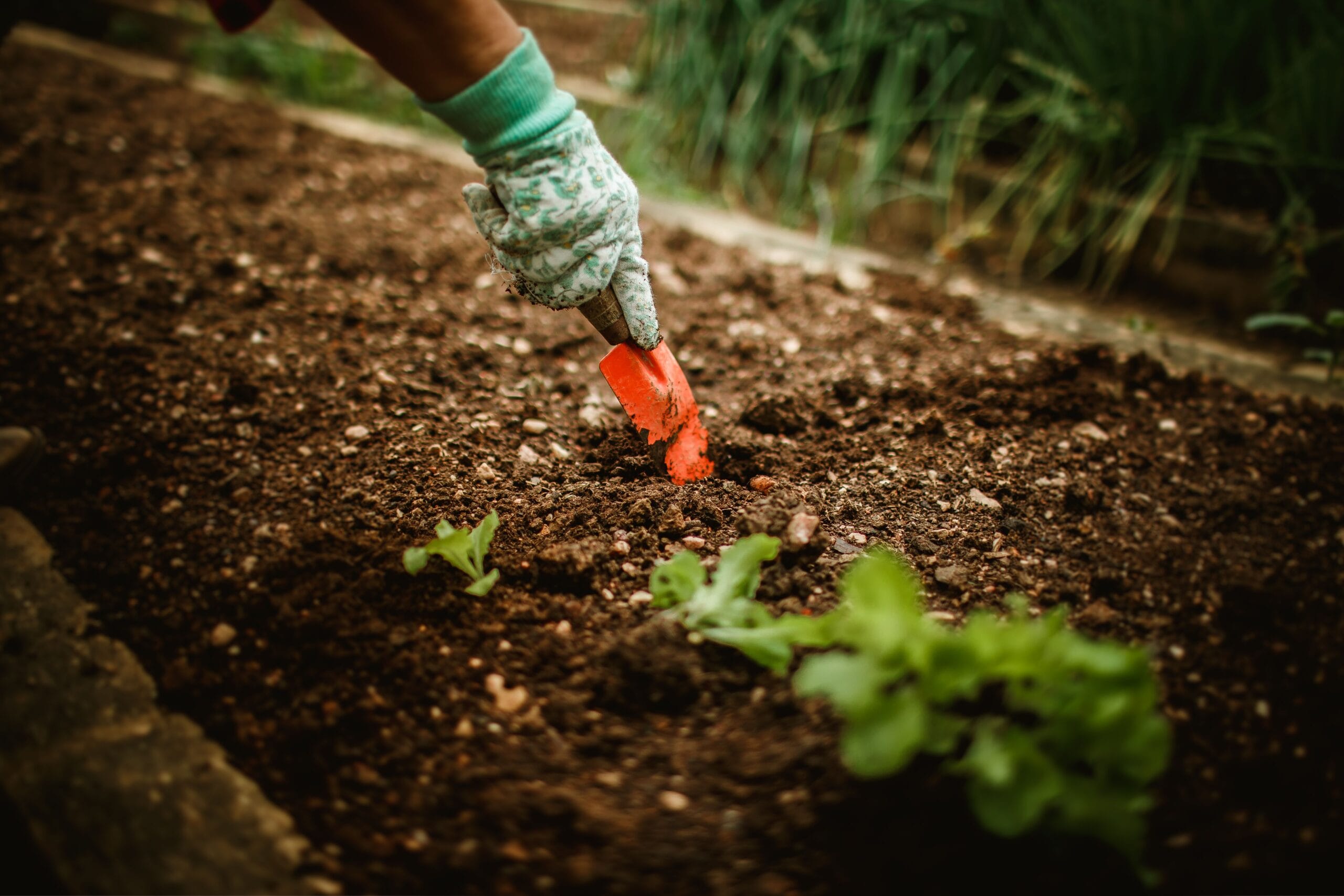
Looking for a simple compost tea recipe? Compost tea is a liquid extract made by steeping mature compost in water. Gardeners use it as a soil or plant application, but its benefits are often overstated online.
Compost tea is not a magic fertilizer, a guaranteed disease treatment, or a replacement for finished compost. Its properties can vary depending on the compost, water, preparation method, brewing conditions, and storage.
For most home gardens, the sensible approach is to start with mature compost, use potable water, keep the preparation simple, and use it promptly. If your main goal is improving soil health, applying appropriate finished compost directly to the soil is generally more important.
Quick Answer: How Do You Make Compost Tea?
A simple compost extract can be made by steeping mature plant-based compost or vermicompost in potable water at a ratio of 5 parts water to 1 part compost by volume for 1 to 3 days. Strain the liquid before use and apply it promptly.
This method is based on University of Maryland Extension guidance. Do not add molasses or other microbial foods simply because an online recipe recommends them. Added food sources can change microbial growth and create additional food-safety concerns.
There is no universally proven compost tea recipe that guarantees faster growth, higher yields, improved nutrient density, or disease control.
Compost Tea Recipes at a Glance
| Method | Compost | Water | Brewing or Steeping | Aeration | Best For |
|---|---|---|---|---|---|
| Basic compost extract | 1 part mature plant-based compost | 5 parts | 1 to 3 days | No | Beginners |
| Vermicompost tea | 1 part mature vermicompost | 5 parts | 1 to 3 days | No | Garden experimentation |
| Actively aerated compost tea | Mature compost or vermicompost | Method-dependent | Method-dependent | Yes | Experienced gardeners |
The first two methods use the same simple extraction principle. The main difference is the source material. Actively aerated compost tea uses continuous aeration and requires additional equipment.
What Is Compost Tea?
Compost tea is made by soaking or steeping compost in water and then separating the liquid from the solid material.
The resulting liquid can contain some dissolved organic compounds, nutrients, and microorganisms from the original compost. However, its composition is not standardized in the way a commercial fertilizer is.
The University of Florida IFAS Extension explains that compost tea is made by steeping mature compost in water and notes that claims about its nutritional and disease-suppressing effects can be overstated.
The term compost tea is also used for several preparation methods. A simple compost extract and actively aerated compost tea are different processes.
Compost Tea vs. Compost Extract
Gardeners sometimes use “compost tea” and “compost extract” interchangeably, but distinguishing them can make recipes easier to understand.
Compost Extract
A compost extract is made by soaking or mixing compost in water and then straining the liquid. It requires little equipment and is the easiest approach for most home gardeners.
Actively Aerated Compost Tea
Actively aerated compost tea, often called AACT, uses continuous aeration while compost is suspended or steeped in water.
The extra equipment does not automatically make AACT more effective. Research has found substantial variability between compost tea batches and preparation methods.
For most beginners, there is little reason to start with an elaborate brewing system. A simple compost extract is easier to prepare and reproduce.
Does Compost Tea Actually Work?
Compost tea is a real liquid compost extract, but that does not mean every benefit commonly claimed online has been established.
Some studies have reported disease-suppressive effects under particular experimental conditions. Other studies have found weak or inconsistent results.
For example, research published in Phytopathology found that compost teas used against cucumber damping-off ranged from not suppressive to consistently suppressive depending on how they were produced. Read the study.
A study examining gray mold on geranium found substantial variation between compost tea batches, with most teas not significantly suppressing the disease. Continuous aeration also did not consistently improve disease suppression. Read the research.
Another field study found no clear improvement in crop performance or soil bacterial communities from compost tea under the conditions tested. See the study.
The practical takeaway is simple: compost tea may be useful in some situations, but its results are not predictable enough to treat one homemade recipe as a guaranteed fertilizer or disease-control treatment.
1. Basic Compost Tea Recipe
This is the simplest compost tea recipe for gardeners who want to make a homemade compost extract without specialized equipment.
Ingredients
- 5 parts potable water
- 1 part mature plant-based compost or vermicompost
- A clean bucket or container
- A clean mesh bag, cheesecloth, muslin, or fine strainer
The 5:1 water-to-compost ratio and 1-to-3-day steeping period are based on University of Maryland Extension guidance.
How to Make Compost Tea
- Clean the bucket and all equipment.
- Add potable water to the container.
- Measure mature compost and add it at a ratio of 1 part compost to 5 parts water by volume.
- Place the compost directly in the water or inside a clean mesh bag.
- Allow the mixture to steep for 1 to 3 days.
- Stir gently if desired.
- Strain the liquid thoroughly before application.
- Use the finished extract promptly.
How to Apply It
For a home garden, a soil drench around the root zone is the simplest application method.
Pour the strained extract onto the soil around the plant rather than unnecessarily soaking the foliage.
There is no universal scientifically established dose for every crop and soil. Do not assume that more compost tea will produce better results.
2. Vermicompost Tea Recipe
Vermicompost tea is a compost extract made using mature vermicompost, or worm-processed organic material.
Ingredients
- 5 parts potable water
- 1 part mature vermicompost
- A clean bucket or container
- A mesh bag or fine strainer
How to Make Vermicompost Tea
- Add potable water to a clean container.
- Add mature vermicompost at a 5:1 water-to-vermicompost ratio by volume.
- Allow the material to steep for 1 to 3 days.
- Strain out the solid material.
- Use the liquid promptly.
Vermicompost can have different properties from conventional compost, so the resulting liquid may also vary from batch to batch.
Vermicompost Tea vs. Worm-Bin Leachate
Do not automatically treat liquid collected from the bottom of a worm bin as compost tea.
Vermicompost tea is deliberately made by extracting mature vermicompost in water. Worm-bin leachate is liquid that drains from the worm bin and can contain a different mixture of soluble materials and microorganisms.
For a home garden experiment, start with mature vermicompost rather than unidentified liquid collected from the bottom of a worm bin.
3. Actively Aerated Compost Tea
Actively aerated compost tea uses an air pump to continuously oxygenate the water while compost is being extracted.
Equipment
- A clean brewing container
- Potable water
- Mature plant-based compost or vermicompost
- A suitable aquarium-style air pump
- Air tubing
- Air stones or diffusers
- A mesh bag or fine strainer
Basic Method
- Fill the container with potable water.
- Add mature plant-based compost or vermicompost.
- Start the air pump and maintain continuous aeration during the extraction.
- Avoid adding molasses, sugar, or other microbial food, particularly when preparing tea for edible crops.
- Use a consistent preparation method and note the compost source, ratio, brewing time, and conditions.
- Strain the finished tea.
- Use it promptly rather than storing it for an extended period.
Unlike the basic 5:1 method, there is no single standardized AACT recipe that can reasonably be called the best formula for every garden.
Research has found that compost source, aeration, additives, extraction time, and storage can all affect the properties of the resulting liquid. See research on compost tea extraction variables.
Should You Add Molasses to Compost Tea?
Many online recipes add molasses, sugar, or another carbohydrate source to stimulate microbial growth.
That does not mean these ingredients make compost tea more effective.
For edible gardens, adding an easily available microbial food source can create additional food-safety concerns. UF/IFAS cautions that sugar-added compost tea can increase pathogen numbers.
Current food-safety guidance also identifies agricultural tea containing additives such as molasses, yeast extract, or algal powder as a particular category of biological soil amendment under relevant produce-safety rules. See the 2026 Penn State Extension guidance.
For a simple home-garden recipe, there is no need to add molasses.
What Compost Should You Use?
Use mature, finished compost from a properly managed composting process.
Finished compost should be relatively stable, well decomposed, and free from obvious foul odors. It should no longer be undergoing intense heating or active decomposition.
For compost tea, plant-based compost made from suitable yard or garden materials is the most straightforward choice.
Can You Use Manure to Make Compost Tea?
For the recipes in this article, do not use manure-based compost, especially when the tea will be used around edible crops.
Animal-derived materials introduce additional food-safety considerations because improperly processed biological material can contain pathogens.
UF/IFAS also warns that compost tea made from raw manures can contain microorganisms that are harmful to human health. See the guidance.
The simpler option for a home compost tea experiment is mature plant-based compost or vermicompost.
What Water Should You Use?
Use potable water, particularly when preparing compost tea for edible crops.
A common online recommendation is to leave tap water sitting overnight to remove chlorine. That should not be treated as a universal water-treatment method because municipal water systems can use different disinfectants.
Using water known to be suitable for the intended purpose is the simpler and more dependable approach.
How Long Should Compost Tea Brew?
For the simple compost extract described above, 1 to 3 days is the University of Maryland Extension recommendation.
Actively aerated compost tea is different. Brewing times vary by method and equipment, and there is no single duration that guarantees a superior result.
Research has found that extraction time affects the chemical and microbial characteristics of compost tea. One study examined the effects of extraction time, compost-to-water ratio, storage duration, and storage temperature.
Do not assume that leaving compost tea for longer will automatically make it stronger or more beneficial.
How Long Does Compost Tea Last?
Fresh compost tea is not a shelf-stable fertilizer.
Its microbial and chemical characteristics can change after preparation. Research has found that storage can reduce microbial populations in compost tea. See the research.
For home use, the practical approach is to make only what you can use promptly.
Do not prepare a large batch and assume that it will remain unchanged for a week.
Should Compost Tea Be Aerated?
Not necessarily.
A simple compost extract does not require an air pump. Aeration is specifically used for actively aerated compost tea.
Adding aeration makes the preparation more equipment-intensive, but it does not guarantee better plant growth or disease control. In one study of gray mold suppression, continuous aeration did not consistently improve disease suppression compared with nonaerated preparations. Read the study.
For beginners, the simple steeping method is easier to prepare and understand.
How Should You Apply Compost Tea?
Soil Drench
A soil drench is the simplest application method for most home gardeners.
Strain the tea well and apply it to the soil around the plant’s root zone.
Normal watering and drainage requirements still apply. Do not saturate the soil simply because the liquid is a compost extract.
Foliar Spray
Some gardeners spray compost tea directly onto leaves because of claims that it can suppress fungal diseases.
The evidence for this use is inconsistent. The University of Maine Cooperative Extension says there is no scientific research supporting compost tea as an effective treatment for fungal diseases or insects.
For edible crops, foliar application also brings the liquid into direct contact with plant surfaces, creating additional food-safety considerations.
For a simple home-garden application, a soil drench is the more conservative option.
Can Compost Tea Fertilize Plants?
Compost tea can contain soluble material from the starting compost, but it is not a standardized fertilizer.
University of Maryland Extension describes compost tea as low in a wide range of nutrients, while UF/IFAS states that compost tea does not provide a measurable amount of nutrition to plants.
That means compost tea should not be used as a substitute for a fertilizer program when a plant has a documented nutrient deficiency.
If a soil test shows a deficiency, use an appropriate nutrient source at a rate suited to the crop and soil.
Can Compost Tea Improve Soil Health?
Compost tea may introduce microorganisms and soluble organic material into the soil, but it is not the primary way to build healthy soil.
If your goal is better soil structure, organic matter, water management, and long-term soil function, focus first on established practices such as:
- Adding appropriate finished compost
- Keeping soil covered with mulch or living plants
- Preventing compaction
- Minimizing unnecessary soil disturbance
- Maintaining living roots
- Using crop rotation and plant diversity
- Managing irrigation and drainage
Our guide on how to improve soil health covers these practices in greater detail.
You can also learn how to evaluate changes in your soil through our guide to soil health indicators.
Can Compost Tea Prevent or Treat Plant Diseases?
Do not treat compost tea as a fungicide or guaranteed disease-prevention product.
Some studies have reported disease suppression under particular experimental conditions, but results vary substantially between compost sources, preparation methods, plant diseases, and growing environments.
For example, research on cucumber damping-off and gray mold demonstrates substantial variability between compost tea preparations. Read the cucumber study and read the gray-mold study.
For disease management, start with practices appropriate to the specific problem, such as resistant varieties, crop rotation, sanitation, adequate spacing, good airflow, proper irrigation, and removal of severely affected plant material where appropriate.
Compost tea should not replace proven disease-management practices.
Compost Tea Safety for Edible Crops
Food safety deserves particular attention because compost tea is a biological material that can contain microorganisms.
For home gardens:
- Use potable water.
- Use mature, finished plant-based compost or vermicompost.
- Keep buckets, strainers, tubing, and other equipment clean.
- Avoid raw manure.
- Avoid adding sugars such as molasses when preparing tea for edible crops.
- Prefer soil applications over foliar spraying when there is no clear reason for leaf application.
- Wash your hands after handling compost and before preparing or eating food.
For commercial food production, follow applicable local agricultural and food-safety requirements rather than relying on a home-garden recipe.
Common Compost Tea Mistakes
Using Raw or Unfinished Compost
Start with mature, finished compost rather than fresh organic waste or partially decomposed material.
Adding Molasses Because It Sounds More Powerful
Additional microbial food can change the biology of the tea and may increase food-safety concerns. It is unnecessary for the basic recipe.
Assuming More Aeration Means Better Results
Aeration changes the preparation method, but it does not guarantee stronger plant growth or better disease suppression.
Brewing for Longer Than Necessary
Longer brewing does not automatically produce a better tea. Extraction time affects the resulting microbial and chemical properties.
Storing the Tea for Several Days
Compost tea changes after preparation. Make manageable batches and use them promptly.
Using Compost Tea Instead of Compost
Liquid extract is not a substitute for building soil organic matter. If your garden needs organic matter, apply appropriate finished compost directly to the soil.
Calling Compost Tea a Fungicide
The evidence for disease suppression is inconsistent. Do not promise that compost tea will cure or prevent plant diseases.
Is Compost Tea Worth Making?
It can be, particularly if you already make compost and want to experiment with a simple liquid extract.
The important thing is to keep expectations realistic.
If your soil is compacted, poorly drained, low in organic matter, or deficient in nutrients, compost tea is unlikely to be the first improvement you should make.
Start with the fundamentals of soil health. Then, if you are interested, try a small batch of compost extract and observe how your plants respond.
Compost Tea for Container Plants
Compost tea can be used around container plants, but it does not fix an unsuitable growing medium.
Make sure the container has adequate drainage and use a growing medium appropriate for pots. Avoid keeping the root zone constantly saturated.
If a container plant is growing poorly, check light, watering, drainage, root health, growing-medium condition, and nutrient availability before assuming it needs compost tea.
For broader gardening guidance covering containers, raised beds, soil, watering, and plant selection, see our complete gardening guide.
Compost Tea in Tropical and Philippine Gardens
Gardeners in tropical climates such as the Philippines should consider heat, humidity, rainfall, and drainage when preparing and applying biological soil amendments.
Warm conditions can affect microbial activity, while heavy rain can quickly dilute or wash away a liquid soil application.
For that reason, make small batches, use potable water, apply the tea promptly, and avoid unnecessary applications immediately before heavy rainfall.
For Philippine-specific soil information, the Department of Agriculture Bureau of Soils and Water Management National Soil Health Program is a useful local resource for soil analysis and soil-health management.
Frequently Asked Questions About Compost Tea
What is the best compost tea recipe?
There is no universally best recipe. For a simple home compost extract, a practical method is 5 parts potable water to 1 part mature plant-based compost or vermicompost by volume, steeped for 1 to 3 days and then strained.
How do you make compost tea without an air pump?
Use the simple steeping method. Mix 5 parts water with 1 part mature plant-based compost or vermicompost by volume, steep for 1 to 3 days, strain the liquid, and use it promptly.
Do you need an air pump for compost tea?
No. An air pump is only needed when making actively aerated compost tea. A simple compost extract does not require aeration.
How long should compost tea brew?
For the basic steeping method described here, 1 to 3 days is the University of Maryland Extension recommendation. Actively aerated preparations vary, so there is no single brewing time that guarantees a better result.
How often should you use compost tea?
There is no well-established universal schedule such as every week or every two weeks for all gardens. Use compost tea as an optional application rather than following a fixed frequency without a specific reason.
Can you use compost tea on vegetable plants?
Compost extracts can be used around plants, but food safety matters. Use potable water and mature plant-based compost or vermicompost, and avoid unnecessary foliar applications on edible crops.
Can you spray compost tea directly on leaves?
Some gardeners do, but evidence for disease control is inconsistent. Because foliar application brings the material into direct contact with edible plant surfaces, a soil application is the more conservative choice for a home vegetable garden.
Can compost tea replace fertilizer?
No. Compost tea is not a standardized fertilizer and should not be relied upon to correct a documented nutrient deficiency.
Should I add molasses to compost tea?
No, it is not necessary for the basic recipe. Adding sugar sources such as molasses can increase microbial growth and may create additional food-safety concerns for edible crops.
Can compost tea cure fungal diseases?
No. Compost tea should not be described as a guaranteed fungicide or disease cure. Some studies have found suppression under specific conditions, but results are inconsistent.
Can I make compost tea from manure?
For the recipes in this article, use mature plant-based compost or vermicompost instead. Manure-based biological amendments have additional food-safety considerations.
Is compost tea the same as worm-bin leachate?
No. Vermicompost tea is made by extracting mature vermicompost in water. Worm-bin leachate is a different liquid that drains from the bin and should not automatically be treated as a safe compost tea.
How long does compost tea last?
Use it promptly after preparation rather than storing it for several days. Storage can change its microbial characteristics.
Does compost tea improve soil health?
It can be part of a gardening system, but it is not the main way to improve soil. Finished compost, mulch, living roots, reduced compaction, plant diversity, good drainage, and appropriate nutrient management are more fundamental.
The Bottom Line
Compost tea can be a worthwhile experiment for home gardeners, but the simplest recipe is also the easiest to explain honestly.
Use mature plant-based compost or vermicompost, potable water, clean equipment, a simple extraction method, and prompt application.
Do not expect compost tea to replace fertilizer, dramatically increase nutrient density, cure plant diseases, or transform poor soil on its own.
If your primary goal is healthier soil, start with the fundamentals described in our guide on how to improve soil health. Once those basics are in place, compost tea can remain an optional practice rather than something your garden depends on.
You can also explore our soil health indicators guide and our complete gardening guide for related gardening information.
Sources and Further Reading
This article was reviewed against university Extension guidance and peer-reviewed research. Because compost tea is not a standardized product, results can vary depending on the compost, preparation method, water, crop, growing conditions, and intended use.
- University of Maryland Extension: How to Make Compost at Home
- University of Maryland Extension: Organic Matter and Soil Amendments
- University of Florida IFAS Extension: Compost Tips for the Home Gardener
- University of Florida IFAS Extension: Organic Vegetable Gardening in Florida
- Penn State Extension: Food Safety Modernization Act, Soil Amendments
- University of Maine Cooperative Extension: Aerated Compost Tea on Plant Foliage
- Phytopathology: Compost Tea and Suppression of Pythium Damping-Off
- Research: Variability in Compost Tea Suppression of Gray Mold
- Research: Effects of Extraction Parameters on Compost Tea
- Research: Compost Tea and Soil Microbial Communities
- Philippine DA-BSWM: National Soil Health Program
Editorial note: Compost tea is a biological material. Food-safety considerations are especially important when using biological amendments around edible crops. Use potable water, mature compost, clean equipment, and conservative application practices. Commercial growers should follow applicable local agricultural and food-safety requirements.
Also Read: Complete Gardening Guide — Benefits, Tips & Seasonal Planting (2026)
Well, what do you think about the article?
Did you enjoy reading “Compost Tea Recipes: 3 Easy Methods for Your Garden”? We really hope that you have enjoyed.
If you have any thoughts or comments about this post, please feel free to share them in the comment section below. We appreciate your feedback and would be glad to hear from you.
To see more content like this check the Gardening section of Money For My Beer.

Chief Editor and Website Owner.
Hi, I’m Ryan. I write and edit everything on this site, which means I’m the last set of eyes on every post before it goes live. By day I’m a technical architect. I design and build enterprise systems, apps, websites, and the occasional game.
This site started because I wanted one place where money advice for regular people doesn’t read like it was written by a finance robot. My goal is simple: every article should be genuinely useful, actually tested against what real people are searching for, and written in plain English. No jargon, no “get rich quick,” no advice I wouldn’t follow myself.
You’ll see a lot of topics here that lean on my engineering background: software reviews, tools, and tech-adjacent money stuff. Where a topic needs real financial expertise, I say so plainly and point you to qualified sources rather than pretending.