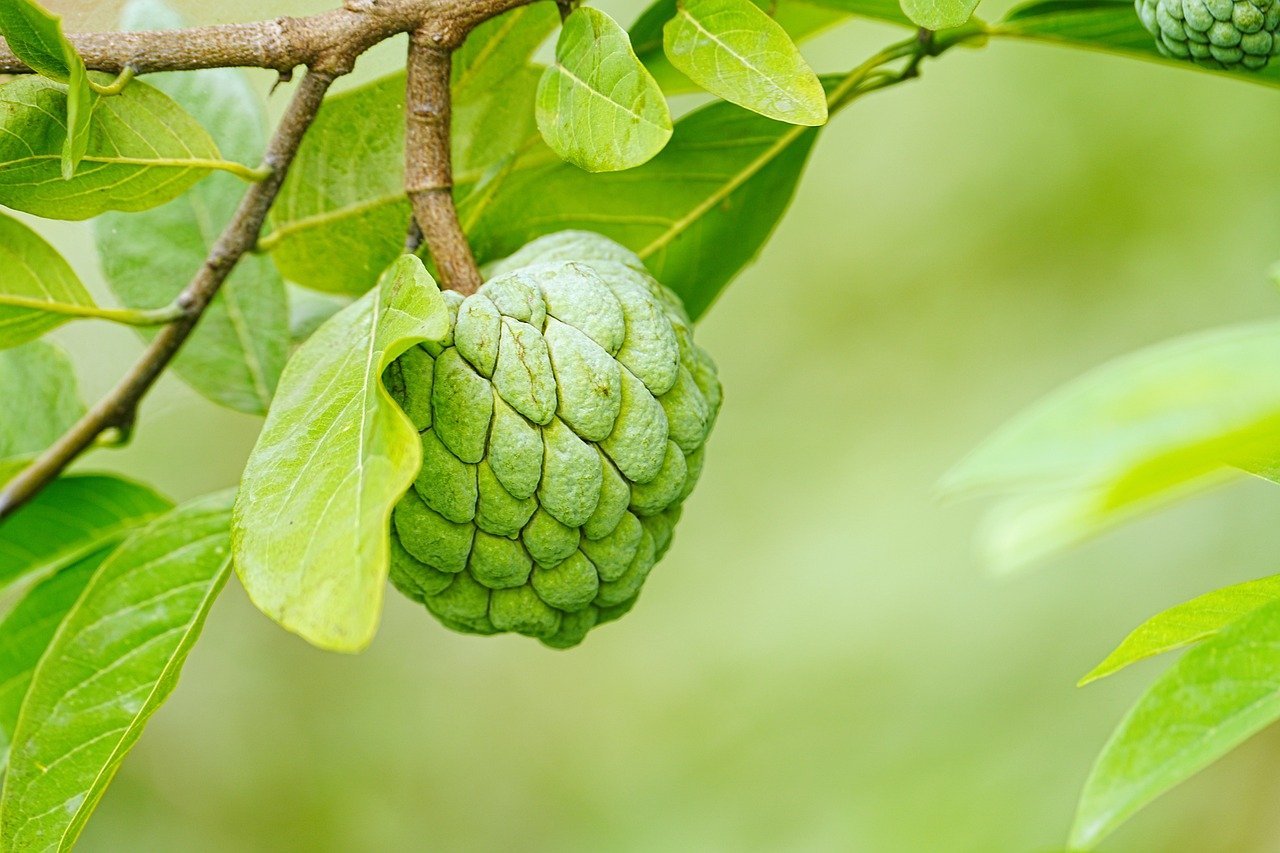
Atis, also known as sugar apple or sweetsop, is a tropical fruit with soft, creamy flesh and a naturally sweet flavor. Its scientific name is Annona squamosa L., and it belongs to the Annonaceae family.
The fruit is easy to recognize. Its green or reddish skin is made up of loosely connected, rounded segments that give it a distinctive, knobby appearance. Inside is soft white or creamy-white pulp surrounding numerous dark seeds.
Atis is commonly eaten fresh, but its pulp can also be used in drinks and desserts. The tree itself is relatively small, making it a practical fruit tree for warm climates when planted in a sunny, well-drained location.
This guide covers what atis tastes like, how to eat it, its nutritional value, seed safety, common uses, and how to grow an atis tree.
Last reviewed: October 3, 2026
Atis Fruit Quick Facts
| Feature | Details |
|---|---|
| Philippine name | Atis |
| Common English names | Sugar apple, sweetsop |
| Scientific name | Annona squamosa L. |
| Plant family | Annonaceae |
| Native range | Mexico to Colombia |
| In the Philippines | Introduced and cultivated |
| Tree type | Small tropical fruit tree |
| Typical height | About 3 to 6 meters |
| Fruit shape | Round, oval, conical, or heart-shaped |
| Flesh | White to creamy white |
| Texture | Soft and custard-like |
| Flavor | Sweet and aromatic |
| Seeds | Numerous, dark brown to black |
| Best growing conditions | Warm climate, full sun, well-drained soil |
Kew’s Plants of the World Online recognizes Annona squamosa as an accepted species and gives its native range as Mexico to Colombia. It is now cultivated widely throughout tropical regions, including the Philippines. (Kew Plants of the World Online)
What Is Atis?
Atis is the Philippine common name for Annona squamosa.
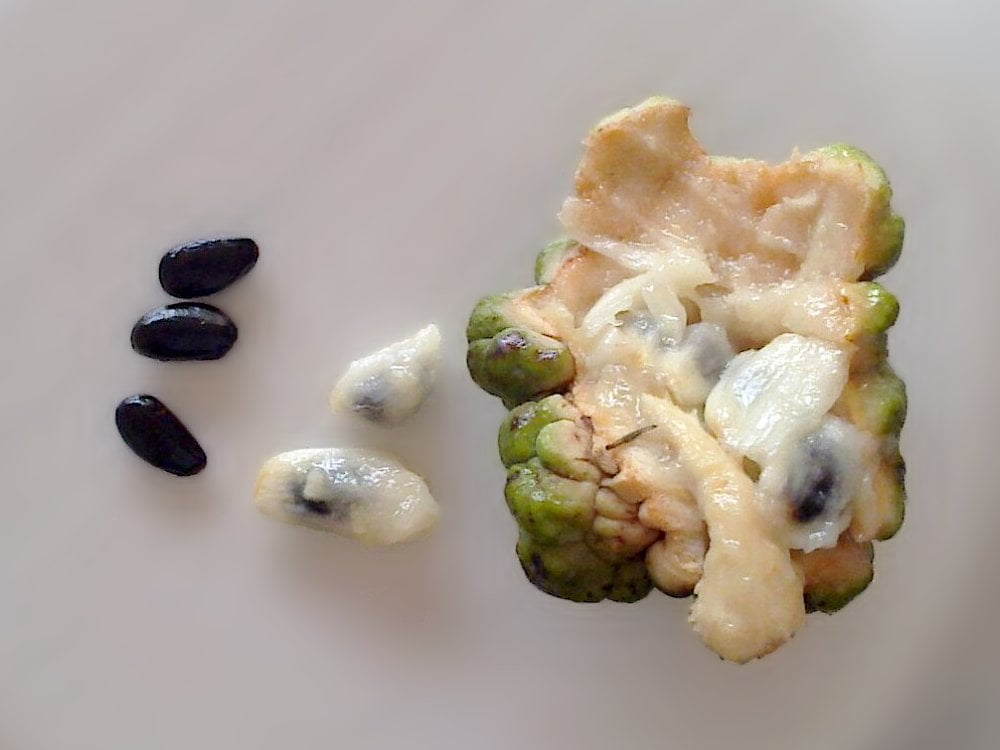
You may also see it called sugar apple, sweetsop, or, less precisely, custard apple.
The last name can cause confusion because “custard apple” is also used for other species in the Annona genus. For example, Annona reticulata is also commonly called custard apple in some regions.
For accurate identification, the scientific name is the safest reference:
Atis = Annona squamosa L.
Atis is part of the same genus as guyabano, or soursop (Annona muricata), but the two are different species.
For more tropical fruit and gardening information, see our complete gardening guide, which includes atis among its fruit-tree and backyard-orchard topics.
Is Atis Native to the Philippines?
No. Atis is not native to the Philippines.
Kew lists Annona squamosa as native to tropical areas from Mexico to Colombia. The species has since been introduced and cultivated throughout many tropical parts of the world, including the Philippines. (Kew Plants of the World Online)
Although it is introduced, atis has become familiar in Philippine gardens, markets, and food culture.
This is different from native Philippine fruits and trees such as some of the species covered elsewhere on Money For My Beer.
What Does Atis Fruit Look Like?
Atis is one of the easier tropical fruits to identify once you know its shape.
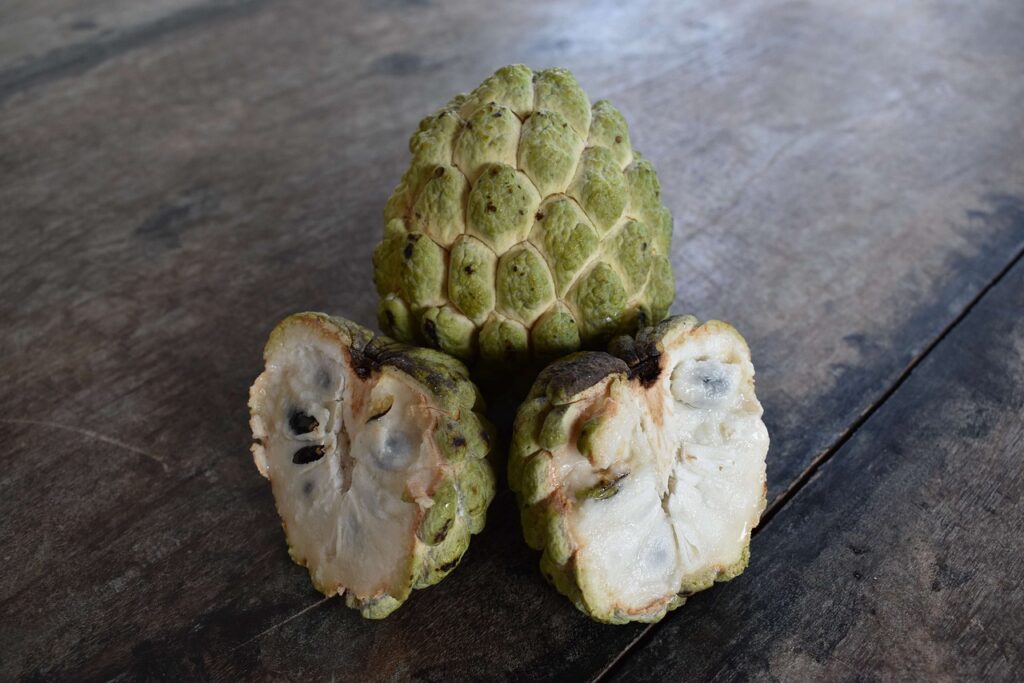
The fruit can be round, oval, conical, or somewhat heart-shaped. The surface is made up of many loosely connected segments that protrude outward as rounded lumps.
Depending on the variety, the skin may remain green or become purplish-red as the fruit matures.
Inside, the pulp is white or creamy white and soft, with numerous shiny dark brown or black seeds embedded throughout.
According to the University of Florida IFAS, the fruit is generally about 5 to 13 centimeters in diameter, although size can vary by cultivar and growing conditions. (UF/IFAS)
What Does Atis Taste Like?
Ripe atis is sweet, soft, aromatic, and custard-like.
Its texture is one of its most distinctive qualities. Instead of the crisp or juicy bite associated with fruits such as mangoes or apples, ripe atis has a soft pulp that can almost seem creamy.
The exact flavor varies with ripeness and variety, but sweetness and a pleasant tropical aroma are characteristic of the fruit.
The comparison with custard mainly describes the texture, not that atis is actually a dairy-based food.
How Do You Know When Atis Is Ripe?
A ripe atis becomes softer, and its individual surface segments become more clearly separated.
The fruit should no longer feel completely hard when gently pressed. At maturity, the loosely attached segments can separate more easily and the pulp inside becomes soft.
Atis is delicate when fully ripe, so it is best handled carefully and eaten relatively soon after reaching good eating maturity.
The University of Florida’s plant-identification guide notes that ripe sugar apples may be green or purplish-red, with the fruit’s individual segments becoming easier to separate at maturity. (UF/IFAS)
How Do You Eat Atis?
Atis is easiest to enjoy fresh.
Wash the outside of the fruit first. Once ripe, cut it open or break it apart and scoop out the soft pulp.
As you eat, separate the pulp from the seeds.
The fruit is naturally sweet, so it can be enjoyed without adding sugar or other ingredients.
Chilling the fruit before eating can also make it a refreshing snack in warm weather.
Can You Eat Atis Seeds?
The seeds should not be eaten.
Atis pulp is edible, but the seeds contain biologically active compounds, including annonaceous acetogenins, that have been associated with toxic effects in scientific research.
Research on Annona squamosa seeds has raised safety concerns, including toxicological and neurotoxic effects. This is one reason the seeds should be removed and discarded rather than chewed, ground, or deliberately consumed. (ScienceDirect)
A 2026 toxicology study also identified squamocin, an annonaceous acetogenin, as a principal toxic constituent in A. squamosa seeds in its experimental model. These findings further support treating the seeds as a part to discard rather than a food ingredient. (International Journal of Molecular Sciences)
The fruit pulp and the seeds should therefore be treated very differently.
What Are the Uses of Atis Fruit?
Fresh eating is the simplest use of atis, but the fruit can be used in several other ways.
Fresh fruit
Ripe atis is commonly eaten directly after removing the seeds.
Its soft texture makes it particularly well suited to fresh consumption.
Smoothies and shakes
The pulp can be added to smoothies and shakes.
Because atis contains many seeds, the fruit needs to be separated carefully before blending. You do not want the seeds crushed into the drink.
Atis pairs naturally with other tropical flavors such as banana, mango, coconut, and citrus.
Desserts
The sweet pulp can also be used in chilled desserts and other sweet preparations.
Possible uses include:
- Ice cream and frozen desserts
- Fruit salads
- Puddings
- Shakes
- Chilled fruit desserts
The creamy texture makes atis particularly useful in recipes where soft fruit pulp is desirable.
Food processing
Sugar apple has also been studied for food-processing applications because of the characteristics of its edible pulp.
Depending on the product, the fruit can be pulped and incorporated into processed foods and beverages.
For comparison with other tropical fruits on the site, see our articles on tropical tiesa, sineguelas, and kaong.
Atis Nutrition
Atis provides carbohydrates, natural sugars, dietary fiber, vitamin C, and several minerals.
The DOST Food and Nutrition Research Institute Philippine Food Composition Table lists the following values for sugar apple or sweetsop (Annona squamosa) per 100 grams of edible portion:
| Nutrient | Amount per 100 g edible portion |
|---|---|
| Energy | 104 kcal |
| Protein | 1.3 g |
| Total fat | 0.4 g |
| Carbohydrates | 23.7 g |
| Dietary fiber | 4.3 g |
| Total sugars | 17.7 g |
| Calcium | 41 mg |
| Phosphorus | 39 mg |
| Iron | 0.9 mg |
| Vitamin C | 40 mg |
The DOST-FNRI database lists the edible portion as 50% of the whole food.
These figures are useful for understanding the nutritional composition of the fruit, but nutrition data should not be confused with medical treatment claims. (DOST-FNRI Philippine Food Composition Table)
Is atis a healthy fruit?
Atis can be part of a varied diet and provides useful nutrients, including dietary fiber and vitamin C. For broader guidance on building balanced meals and choosing nutritious foods, read our nutrition tips for beginners.
However, it is better to describe those nutritional contributions directly rather than making broad claims that atis prevents disease, controls blood sugar, or treats a health condition.
Research has examined the fruit’s phytochemicals and possible biological activities, but laboratory and animal findings do not automatically establish health effects in humans.
Atis and Traditional Medicine
Different parts of the atis plant have been used in traditional medicine, and scientific research has investigated compounds found in the leaves, seeds, fruit, and other plant parts.
That research is interesting, but it should be separated from the question of whether atis is a proven treatment.
Claims that atis can cure fever, regulate blood sugar, treat parasites, or heal skin conditions should not be presented as established medical benefits based solely on traditional use or laboratory research.
This is especially important for the seeds, which contain compounds associated with toxicity.
For an everyday food article, the strongest evidence-based approach is to focus on the edible fruit, documented nutrition, culinary uses, and food-safety considerations.
How Big Does an Atis Tree Get?
Atis is a relatively small fruit tree.
Kew describes Annona squamosa as a shrub or small tree generally reaching around 3 to 6 meters in height. The University of Florida similarly reports that trees typically do not exceed about 4.6 to 6.1 meters in height and spread. (Kew, UF/IFAS)
Its smaller size makes it a reasonable option for a home orchard, although it still needs enough room to develop a healthy canopy.
How to Grow Atis
Atis grows best in warm, tropical to subtropical conditions.
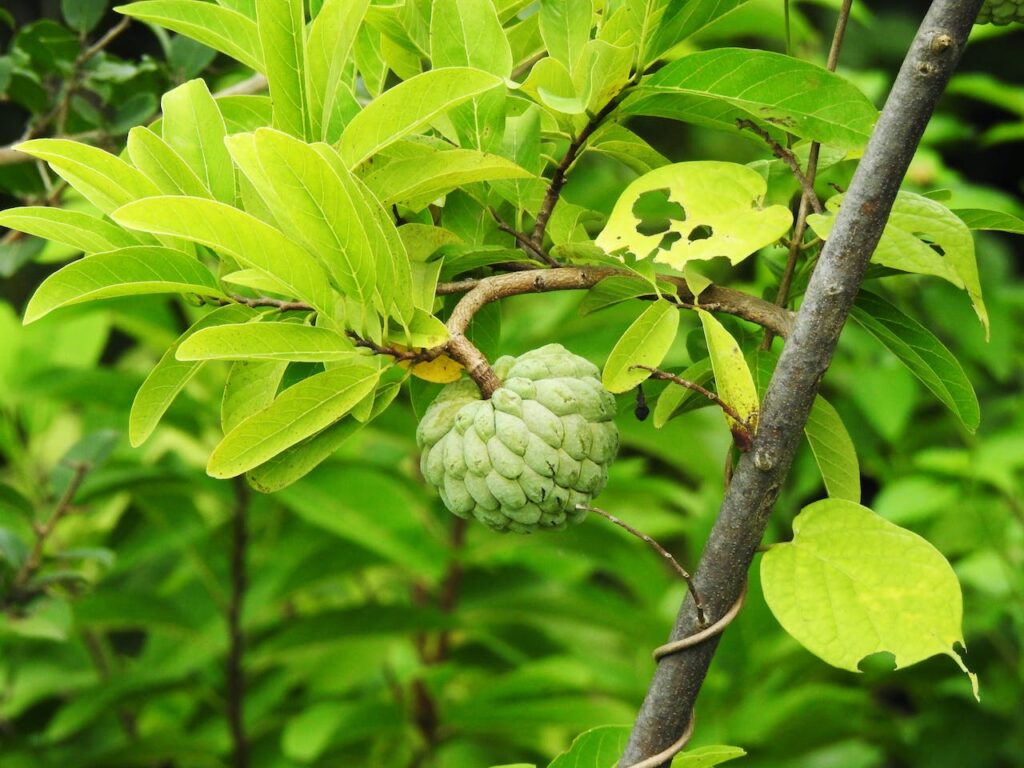
For a productive home tree, pay particular attention to sunlight, drainage, watering, spacing, and pollination.
Choose a Sunny Location
Plant atis in full sun for good growth and fruit production.
Avoid placing the tree where larger trees or buildings will shade it for much of the day.
More sunlight generally gives the tree a better environment for flowering and fruit development.
Use Well-Drained Soil
Good drainage is important.
Atis does not tolerate continuously wet or flooded soil well. The University of Florida notes that excessively wet conditions can cause serious root problems and even tree death.
Choose a location where water does not remain around the roots after heavy rain. (UF/IFAS)
This is especially important in areas that experience intense tropical rainfall.
Water During Establishment
Young atis trees need regular moisture while their roots become established.
Once established, the tree can tolerate some drought, but prolonged drought can reduce growth and fruit development.
UF/IFAS recommends paying particular attention to water availability from flowering through fruit development, because drought stress can reduce fruit set and fruit size. (UF/IFAS)
The goal is not constantly wet soil. The goal is adequate moisture without waterlogging.
Give the Tree Enough Space
Although atis is relatively compact compared with large tropical trees, it still needs room.
UF/IFAS recommends planting sugar apple trees at least 15 to 20 feet, or roughly 4.6 to 6.1 meters, from adjacent trees, structures, and power lines.
That recommendation is useful even for a home garden because crowding can reduce sunlight and make pruning and harvesting more difficult. (UF/IFAS)
Protect the Tree From Strong Wind
Young atis trees can benefit from some protection from strong winds.
Persistent or severe winds can damage branches, distort the canopy, and make fruit production more difficult.
Choose a location with reasonable shelter while still providing plenty of sunlight.
How to Propagate Atis
Atis can be propagated from seed, and improved selections can also be propagated vegetatively through techniques such as grafting and budding.
UF/IFAS notes that sugar apples are commonly grown from seed, while selected types can be veneer-grafted, cleft-grafted, or shield-budded onto suitable rootstocks. (UF/IFAS)
The Philippine Department of Agriculture also lists atis (Annona squamosa) among its fruit-tree planting materials. (Department of Agriculture)
Growing Atis From Seed
Growing from seed can be straightforward and is suitable for home gardeners who are willing to wait for the resulting tree to develop.
Seed-grown trees can show variation, though UF/IFAS notes that there may be relatively little variation among seedlings within some established selections.
Grafted Atis
Grafting can be useful when the goal is to reproduce a particular cultivar or selection.
For a gardener primarily interested in obtaining reliable fruit characteristics, buying a healthy nursery-grown or grafted plant can be easier than starting entirely from seed.
Does Atis Need Pollination?
Pollination is one of the more interesting parts of growing atis.
Sugar apple flowers have male and female functions that are not fully synchronized, which can limit natural fruit set.
UF/IFAS explains that the flowers require pollen transfer between flowers at different stages and identifies nitidulid beetles, also called sap beetles, as natural pollinators.
The same source notes that hand pollination can be highly effective in improving fruit set and fruit shape. (UF/IFAS)
This means a tree can flower normally without producing as much fruit as expected.
If an otherwise healthy atis tree is flowering but setting very little fruit, pollination is one of the first factors worth considering.
How to Improve Atis Fruit Production
Good fruit production is not just about fertilizer.
Several factors work together:
Sunlight: Give the tree a sunny location.
Water: Avoid prolonged drought, especially during flowering and fruit development.
Drainage: Do not plant in soil that stays saturated.
Pollination: Poor pollen transfer can lead to weak fruit set.
Pruning: Keep the tree at a manageable size and maintain a useful canopy structure.
Wind protection: Reduce exposure to strong, persistent winds where practical.
UF/IFAS recommends selective pruning because sugar apple responds well to pruning and can be maintained at a manageable size. (UF/IFAS)
Pruning an Atis Tree
Pruning helps keep an atis tree compact, accessible, and easier to harvest.
It can also encourage a useful branching structure and make it easier to inspect the tree for pests and developing fruit.
For a home garden, the practical goal is not to remove large amounts of healthy growth unnecessarily. Instead, focus on maintaining manageable height, removing damaged branches, and encouraging a balanced canopy.
Because sugar apple responds well to pruning, an atis tree can be maintained at a substantially more convenient height than its maximum natural size. (UF/IFAS)
Common Growing Problems
Poor fruit set
A tree that flowers without producing many fruits may have a pollination problem.
Flower biology, weather conditions, and the availability of pollinators can all affect fruit set. Hand pollination can be considered where natural fruit set remains poor.
Waterlogged soil
Persistent wet soil is a more serious problem than slightly dry soil.
Atis does not tolerate flooding or continuously saturated roots well, so drainage should be checked before increasing irrigation.
Drought stress
Atis can tolerate dry conditions, but prolonged drought can lead to leaf loss and reduced fruit production.
Water management becomes especially important during flowering and fruit development.
Pests and disease
Like other fruit trees, atis can be affected by insects and diseases.
One notable pest is the Annona seed borer, which can affect sugar apple fruit and seeds.
The Philippine Department of Agriculture’s Agricultural Training Institute also documents sugar apple leaves, bark, seeds, and fruit in traditional botanical pest-control preparations. Such information is best treated as an agricultural reference, not as a recommendation to spray homemade extracts without properly identifying a pest and assessing the risks. (DA-ATI)
Atis in the Philippines
Atis has become a familiar fruit in the Philippines despite Annona squamosa being originally native to tropical America.
The fruit is cultivated locally and appears in Philippine agricultural references, including Department of Agriculture planting-material programs.
That makes atis an interesting example of an introduced tropical fruit that has become established in Philippine food and gardening culture.
For broader context, Money For My Beer’s guide to common crops in the Philippines looks at the country’s major agricultural crops and their importance.
Atis Compared With Other Tropical Fruits
Every tropical fruit has its own combination of flavor, texture, and growing requirements.
Atis is especially distinctive because of its soft, creamy pulp and segmented skin.
If you are comparing fruit trees for a garden, you can also explore:
Tiesa or eggfruit, which has a dense, yellow, custard-like texture.
Sineguelas, which produces smaller, tart fruits with a very different texture.
Apple mango in the Philippines, another familiar tropical fruit tree with strong culinary importance.
Kaong or sugar palm fruit, a different type of tropical food plant commonly used in Filipino desserts.
You can find these and other fruit-growing topics in our complete gardening guide.
Frequently Asked Questions About Atis
What is atis called in English?
Atis is commonly called sugar apple or sweetsop in English.
What is the scientific name of atis?
The scientific name is Annona squamosa L.
Is atis the same as sugar apple?
Yes. Sugar apple is one of the standard English common names for atis.
Is atis the same as custard apple?
Not exactly. Atis is Annona squamosa, which is sometimes called custard apple, but “custard apple” can also refer to other Annona species.
Is atis native to the Philippines?
No. Annona squamosa is native to tropical America, with Kew giving its native range as Mexico to Colombia. It was introduced to other tropical regions, including the Philippines. (Kew)
What does atis taste like?
Ripe atis is sweet, aromatic, soft, and custard-like.
Can you eat atis seeds?
The seeds should be removed and discarded rather than eaten because they contain potentially toxic compounds. (ScienceDirect)
Is atis nutritious?
Yes. DOST-FNRI lists atis as providing carbohydrates, dietary fiber, vitamin C, calcium, phosphorus, iron, and other nutrients. Its database lists 104 kcal and 4.3 grams of dietary fiber per 100 grams of edible portion. (DOST-FNRI)
How tall does an atis tree grow?
An atis tree typically grows to around 3 to 6 meters. (Kew)
Can I grow atis in the Philippines?
Yes. Atis is well suited to warm tropical conditions and is cultivated in the Philippines.
Does atis need full sun?
Yes. Full sun is recommended for healthy growth and good fruit production. (UF/IFAS)
Does atis need a lot of water?
Young trees need regular moisture while establishing, but mature trees should not be kept in constantly wet soil. Drought can reduce fruit set and fruit size, particularly during flowering and fruit development. (UF/IFAS)
Can atis be grown from seed?
Yes. Seed propagation is common, and selected varieties can also be propagated by grafting or budding. (UF/IFAS)
Why does my atis tree flower but not produce fruit?
Poor fruit set can happen because sugar apple flowers have different male and female stages. Natural pollination may therefore be limited. Hand pollination can improve fruit set in suitable conditions. (UF/IFAS)
Final Thoughts
Atis is a distinctive tropical fruit with a lot to offer.
Known in English as sugar apple or sweetsop, it produces soft, sweet pulp with a creamy texture and a naturally aromatic flavor. The fruit can be eaten fresh or used in drinks and desserts, while the tree itself is compact enough to make it a useful option for many warm-climate gardens.
From a nutritional standpoint, Philippine DOST-FNRI data shows that atis provides dietary fiber, vitamin C, carbohydrates, and several minerals. The seeds, however, should be discarded because they contain compounds associated with toxicity.
For gardeners, the most important requirements are straightforward: full sun, good drainage, adequate water during establishment and fruit development, enough space, and attention to pollination.
Whether you know it as atis, sugar apple, or sweetsop, Annona squamosa is a fascinating fruit tree that has become a familiar part of food and gardening culture in the Philippines.
Sources and Further Reading
- Kew Plants of the World Online: Annona squamosa
- DOST-FNRI Philippine Food Composition Table: Sugar Apple/Sweetsop
- University of Florida IFAS Extension: Sugar Apple Growing in the Florida Home Landscape
- University of Florida IFAS: Sugar Apple Plant Identification
- University of Florida IFAS: Tropical Fruit Propagation
- Philippine Department of Agriculture: Fruit Tree Planting Materials
- Department of Agriculture Agricultural Training Institute: Botanical Pest Control
- Research on Annona squamosa seeds and acetogenins
- 2026 toxicological study of Annona squamosa seeds
Also Read: Apple Mango In The Philippines: Amazing Facts, Nutritional Benefits, And Guide
Well, what do you think about the article?
Did you enjoy reading “Atis Fruit: Their Origin, Characteristics, Nutrition Benefits, and Cultivation“?
We really hope that you have enjoyed this article. If you have any thoughts or comments about this post, please feel free to share them in the comment section below. We appreciate your feedback and would be glad to hear from you.
To see more content like this check the gardening section of Money For My Beer.

Lara is a freelance content writer and a cat mom to three furbabies, Mizu, Haru and Sora.
She graduated with a Bachelor’s Degree in Architecture and is a registered and licensed Architect. Aside from writing, she is fond of growing cacti and succulents and is a DIY type of girl.
During her free time, she engages herself in water-colouring and crocheting, while catching-up with an old tv series she just discovered. Lara loves to explore new places, but most of the time stays in her hometown province, reading historical romance novels over a cup of coffee – or matcha.