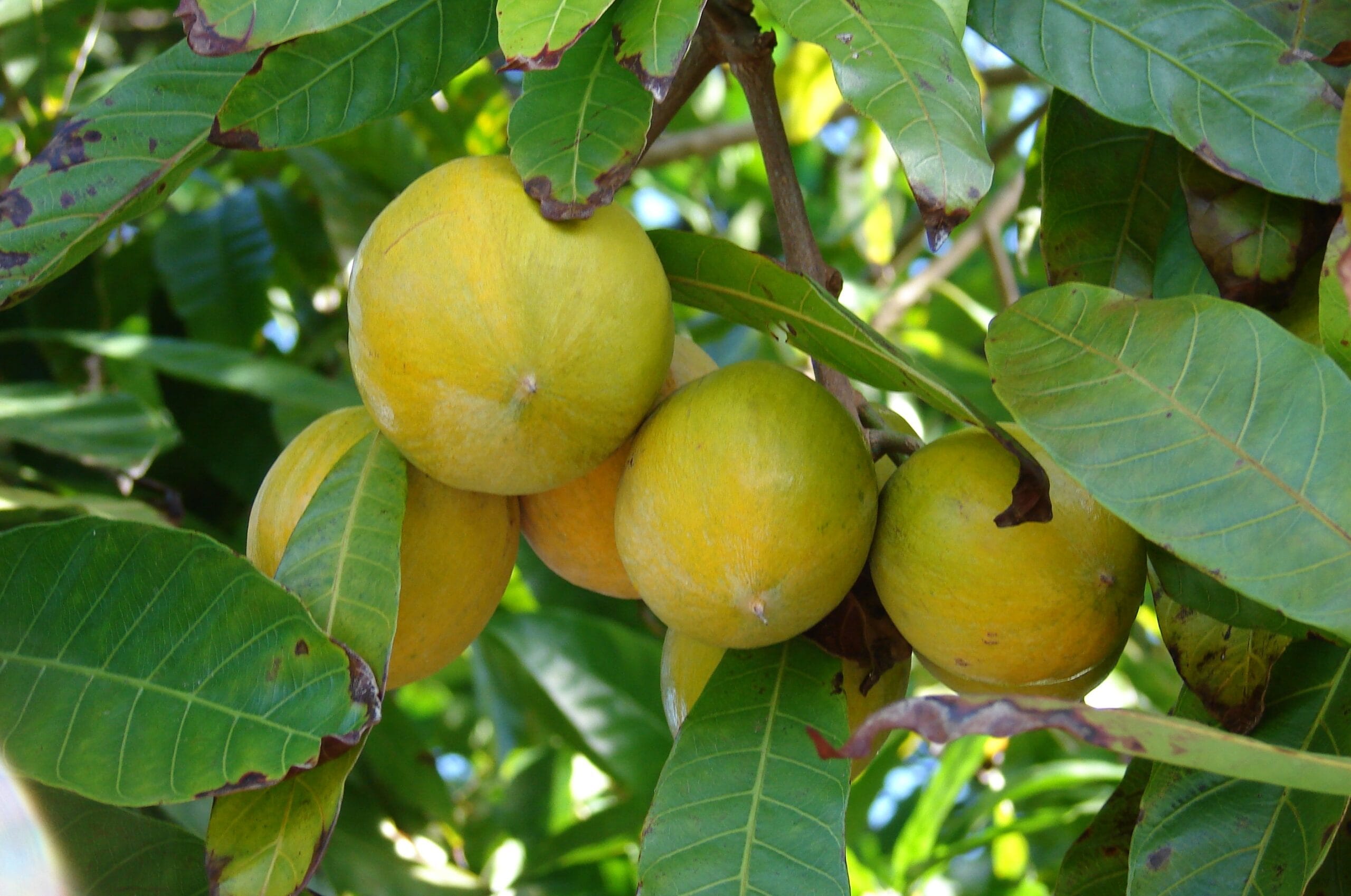
Tiesa (Pouteria campechiana), commonly called canistel or eggfruit, is a tropical fruit known for its yellow-orange flesh, sweet flavor, and dense, creamy texture. In the Philippines, tiesa is a familiar name for this unusual fruit.
Tiesa is interesting both as a food and as a fruit tree. According to the DOST Food and Nutrition Research Institute Philippine Food Composition Table, 100 grams of edible canistel contains 172 calories, 10.3 grams of dietary fiber, 40 mg of vitamin C, 1,235 µg of beta-carotene, and several minerals.
The fruit is also versatile in the kitchen. The University of Florida IFAS canistel guide notes that ripe canistel can be eaten fresh and is commonly used to make milkshakes, custards, and ice cream.
This guide explains the benefits of tiesa, its nutritional value, what it tastes like, how to eat it, how to tell when it is ripe, what scientific research says about its potential health effects, and how to grow a tiesa tree.
Last reviewed: October 5, 2026
Quick Facts About Tiesa
| Fact | Details |
|---|---|
| Common names | Tiesa, tisa, canistel, eggfruit, yellow sapote |
| Scientific name | Pouteria campechiana |
| Family | Sapotaceae |
| Native range | Mexico to Central America |
| Fruit when ripe | Yellow to bright orange |
| Texture | Dense and creamy. It can range from moist and smooth to relatively dry and mealy depending on the variety |
| Calories | 172 kcal per 100 g edible portion |
| Dietary fiber | 10.3 g per 100 g edible portion |
| Vitamin C | 40 mg per 100 g edible portion |
| Beta-carotene | 1,235 µg per 100 g edible portion |
Nutrition figures above are from the DOST-FNRI Philippine Food Composition Table. Kew currently accepts Lucuma campechiana as the species name and lists Pouteria campechiana as a synonym.
What Is Tiesa?
Tiesa is a tropical fruit tree in the Sapotaceae family. The species is native from Mexico to Central America, according to the Royal Botanic Gardens, Kew Plants of the World Online.

The fruit is particularly recognizable once ripe because its flesh becomes yellow to orange and develops a thick, creamy consistency. That unusual texture is the reason for the English nickname eggfruit.
Texture can vary considerably between fruits. The University of Florida IFAS guide to canistel describes varieties ranging from moist and smooth to dry and mealy.
Although Pouteria campechiana remains the name commonly encountered in horticultural and food literature, Kew’s current taxonomic record recognizes Lucuma campechiana as the accepted name.
Is Tiesa Native to the Philippines?
No. Tiesa is cultivated in the Philippines but is not native to the country. Kew lists the species’ native range as Mexico through Central America.

The University of Florida IFAS includes tiesa among the Filipino common names for canistel and notes that the fruit is produced commercially on a limited scale in the Philippines.
This makes tiesa an interesting tropical fruit in the country: it is familiar to many Filipinos but remains much less commercially prominent than fruits such as mango, banana, and pineapple.
Tiesa Nutrition
The clearest evidence for the benefits of eating tiesa comes from its nutritional composition. For Philippine readers, the DOST-FNRI Philippine Food Composition Table provides a particularly useful reference because its canistel entry gives values specifically for the edible portion.
According to DOST-FNRI, 100 grams of edible canistel provides:
| Nutrient | Amount per 100 g |
|---|---|
| Water | 57.2 g |
| Energy | 172 kcal |
| Protein | 2.5 g |
| Total fat | 0.6 g |
| Carbohydrates | 39.1 g |
| Dietary fiber | 10.3 g |
| Total sugars | 26.5 g |
| Calcium | 40 mg |
| Phosphorus | 30 mg |
| Iron | 1.1 mg |
| Sodium | 10 mg |
| Beta-carotene | 1,235 µg |
| Retinol activity equivalent | 103 µg RAE |
| Thiamin (Vitamin B1) | 0.02 mg |
| Riboflavin (Vitamin B2) | 0.03 mg |
| Niacin | 2.5 mg |
| Vitamin C | 40 mg |
These numbers are specific to the DOST-FNRI food record and can vary from other references because nutrient composition is affected by cultivar, growing conditions, maturity, and analytical methods.
Benefits of Tiesa
The most evidence-based way to discuss tiesa health benefits is through the nutrients the fruit provides. Some laboratory research is also promising, but it should not be confused with clinical evidence that eating tiesa can treat or prevent disease.

1. Tiesa Provides Dietary Fiber
DOST-FNRI lists 10.3 grams of dietary fiber per 100 grams of edible canistel.
Fiber is an important component of a healthy diet and can support normal digestive function. The U.S. National Institute of Diabetes and Digestive and Kidney Diseases recommends getting enough fiber and drinking adequate liquids, particularly when increasing fiber intake.
Because individual dietary needs differ, it is more accurate to say that tiesa provides fiber than to claim that the fruit itself prevents constipation or causes weight loss.
2. Tiesa Is a Source of Vitamin C
The DOST-FNRI canistel record contains approximately 40 mg of vitamin C per 100 grams of edible fruit.
Vitamin C is an essential nutrient involved in collagen production, antioxidant activity, and normal immune function. The NIH Office of Dietary Supplements vitamin C fact sheet explains these functions in more detail.
Eating a fruit containing vitamin C can therefore contribute to overall nutrient intake, but this does not mean tiesa itself prevents infections or treats a disease.
3. Tiesa Provides Beta-Carotene and Vitamin A Activity
Ripe tiesa contains carotenoids that contribute to its yellow-orange color. DOST-FNRI lists 1,235 µg of beta-carotene per 100 grams and 103 µg of retinol activity equivalent.
The NIH Office of Dietary Supplements guide to vitamin A and carotenoids explains that beta-carotene is a provitamin A carotenoid and that carotenoids are pigments responsible for the yellow, orange, and red colors found in many fruits and vegetables.
Research on canistel’s carotenoid composition provides useful additional context. A peer-reviewed study published in the Revista Brasileira de Fruticultura found substantial carotenoid content in canistel pulp but also reported that the predominant carotenoids were not all provitamin A compounds. This is why it is better to describe tiesa as a source of carotenoids and vitamin A activity rather than making an overly broad claim that all of its carotenoids provide vitamin A.
4. Tiesa Contains Several Minerals
The DOST-FNRI canistel food record lists calcium, phosphorus, iron, and sodium in the edible fruit.
These nutrients contribute to normal physiological functions. However, a normal serving of tiesa should be viewed as one food within a varied diet rather than as a treatment for a mineral deficiency.
5. Tiesa Contains Bioactive Plant Compounds
Researchers have identified carotenoids, phenolic compounds, flavonoids, and other phytochemicals in Pouteria campechiana. A 2023 comprehensive review in the Journal of Functional Foods examined the nutritional composition, phytochemistry, biological activities, food applications, and toxicity research surrounding canistel.
The review found that the species contains a wide range of nutrients and plant bioactives and summarized experimental research into potential biological activities. These findings are scientifically interesting, but laboratory activity does not automatically translate into a health benefit from eating the fruit.
Is Tiesa Good for You?
Ripe tiesa can be a nutritious addition to a balanced diet. Its strongest evidence-based advantages are its dietary fiber, vitamin C, beta-carotene, vitamin A activity, carbohydrates, and mineral content.
At the same time, claims that tiesa “cures diabetes,” “prevents cancer,” “lowers blood pressure,” or produces guaranteed weight loss are not supported by adequate human clinical evidence.
A 2026 review of the genus Pouteria notes that research into pharmacological activities is still incomplete for several species and that additional studies are needed. Much of the available evidence involves laboratory or animal research rather than human clinical trials.
How Many Calories Are in Tiesa?
According to the DOST-FNRI Philippine Food Composition Table, 100 grams of edible canistel contains 172 calories.
The same amount contains 39.1 grams of carbohydrates and 26.5 grams of total sugars. Tiesa is relatively low in fat, with 0.6 grams of total fat per 100 grams.
Because the fruit is relatively energy-dense compared with many water-rich fruits, portion size can still matter for people managing their overall calorie or carbohydrate intake.
Is Tiesa Good for Weight Loss?
Tiesa should not be described as a weight-loss fruit.
Its relatively high fiber content can be useful within a balanced diet, but the fruit also contains 172 calories and 39.1 grams of carbohydrates per 100 grams according to DOST-FNRI.
Whether tiesa fits a weight-management diet depends on the overall eating pattern and portion size. Its nutritional value is a stronger reason to eat it than a promise of weight loss.
Can People With Diabetes Eat Tiesa?
There is no good basis for claiming that tiesa treats or controls diabetes.
The DOST-FNRI food record lists about 39.1 grams of carbohydrate and 26.5 grams of sugar per 100 grams of edible canistel.
For a person managing diabetes, the important consideration is how the fruit’s carbohydrate content fits into the individual’s overall diet. People with diabetes should follow the dietary guidance provided by their healthcare professional.
What Does Tiesa Taste Like?
Ripe tiesa is sweet and has a dense, creamy texture. The flesh can resemble cooked egg yolk, which explains the common name eggfruit.
The texture is not identical across all canistel varieties. According to the University of Florida IFAS canistel guide, some varieties have moist, smooth pulp while others are dry or mealy.
This unusual consistency is one of tiesa’s defining characteristics and is also why it works especially well in blended drinks and creamy desserts.
How to Eat Tiesa
The simplest way to eat tiesa is to let it ripen properly, cut it open, remove the large seeds, and eat the soft pulp.
The University of Florida IFAS specifically notes that canistel may be eaten fresh and is commonly used in milkshakes, custards, and ice cream.
Ripe tiesa can also be used in:
- Smoothies and shakes: Blend ripe pulp with milk, yogurt, or other fruit.
- Custards: The creamy pulp works well in custard-style desserts.
- Ice cream: Its thick texture makes it suitable for frozen desserts.
- Jams and preserves: Ripe pulp can be incorporated into sweet spreads.
- Baked desserts: Canistel can be used in pies, cakes, and similar recipes.
The 2023 review of Pouteria campechiana also discusses fresh consumption and processed applications including desserts, milkshakes, ice cream, jam, and pie.
For another Philippine fruit with very different flavor and texture characteristics, see our guides to sineguelas and apple mango in the Philippines.
How to Tell When Tiesa Is Ripe
Proper ripeness makes a major difference when eating canistel.
According to UF/IFAS, canistel should be harvested when the fruit turns yellow-orange and then allowed to finish ripening at room temperature.
The UF/IFAS guidance gives approximately 3 to 10 days of room-temperature ripening. Ripe fruit should be soft but not mushy.
Once ripe, canistel can be refrigerated for several days. The peel is easily damaged, so careful handling during harvest is recommended.
Can You Eat Unripe Tiesa?
Unripe canistel is generally not pleasant to eat because its flesh is much firmer and can be dry or mealy.
The practical approach is to allow the fruit to reach proper eating ripeness rather than relying on claims that ordinary unripe canistel is poisonous. UF/IFAS recommends harvesting the fruit at the yellow-orange stage and allowing it to soften before consumption.
Can You Eat Tiesa Seeds?
Canistel fruits contain large glossy brown seeds, which are normally removed when preparing the fruit for eating.
Research has also investigated the chemical composition of different parts of the plant. However, research on an isolated seed, leaf, bark, or extract should not automatically be interpreted as evidence that those materials are appropriate for routine human consumption.
For normal food use, the focus should remain on the ripe fruit pulp.
Does Tiesa Have Medicinal Benefits?
Tiesa has been investigated for potentially useful biological activities, and researchers have identified numerous plant compounds in Pouteria campechiana.
The 2023 peer-reviewed review of canistel research discusses nutritional compounds, phytochemicals, biological activities, food applications, and toxicity studies.
A newer 2026 review in Phytochemistry Reviews similarly describes antioxidant, anti-inflammatory, hypoglycemic, antimicrobial, and other areas of experimental interest across the Pouteria genus, while emphasizing that evidence is incomplete for several species.
This distinction matters. Laboratory or animal research can help identify compounds worth studying, but it does not prove that eating tiesa treats a disease.
For most people, tiesa is best regarded as a nutritious tropical fruit rather than as a substitute for medical treatment.
How to Grow a Tiesa Tree
Tiesa is suited to warm tropical and subtropical conditions. It can become a substantial evergreen fruit tree, so selecting an appropriate planting site is important.

The University of Florida IFAS canistel growing guide recommends full sun and well-drained soil and provides detailed guidance on propagation, irrigation, spacing, harvesting, and pruning.
| Growing factor | Recommendation |
|---|---|
| Climate | Warm tropical or warm subtropical conditions |
| Sunlight | Full sun |
| Soil | Well-drained soil. Canistel tolerates a range of soil types |
| Water | Regular watering while young, with irrigation during prolonged dry periods |
| Spacing | About 25 to 30 feet, or roughly 7.6 to 9.1 meters, from nearby trees and structures where space permits |
| Propagation | Seed, grafting, budding, or less commonly air-layering |
UF/IFAS notes that canistel tolerates most well-drained soil types, including acidic and alkaline soils. Trees in fertile soils may produce larger fruit, while trees in infertile soils may produce more but smaller fruit.
For Philippine gardeners looking for broader advice on planting and maintaining a backyard orchard, our complete gardening guide also covers fruit trees and other practical gardening topics.
Growing Tiesa From Seed
Canistel can be grown from seed, but the seeds are relatively short-lived.
According to UF/IFAS, fresh seeds should be planted within a few days after extraction from the fruit. Germination can take approximately 2 to 3 months.
Seedling trees may begin producing fruit in approximately 3 to 6 years. UF/IFAS also notes that superior varieties should be propagated by grafting or budding onto seedling rootstock.
Where to Plant a Tiesa Tree
Choose a location with full sun and good drainage.
UF/IFAS recommends planting canistel approximately 25 to 30 feet from adjacent trees and structures where possible. That is about 7.6 to 9.1 meters.
This amount of space may not be practical in every Philippine backyard, but it illustrates how much room a mature canistel tree may eventually require.
Watering a Young Tiesa Tree
Young trees need more regular watering while they establish their root systems.
Once established, canistel can tolerate periods of dry soil. However, UF/IFAS recommends avoiding drought stress from flowering through fruit development because water availability during these stages is important for crop development.
Pruning a Tiesa Tree
Pruning can make a canistel tree easier to manage in a home garden.
UF/IFAS recommends selective pruning to maintain trees at around 10 to 12 feet, or approximately 3.1 to 3.7 meters, where appropriate.
The goal is not simply to make the tree smaller. Proper pruning can help maintain a manageable canopy, improve light penetration, and keep fruit production within a more accessible part of the tree.
When Does Tiesa Produce Fruit?
Seed-grown canistel trees may begin producing fruit in approximately 3 to 6 years, according to UF/IFAS.
Fruit production varies with propagation method, variety, age, climate, and growing conditions. In tropical areas, some fruit may be available throughout the year, while seasonal fruiting can be more pronounced in subtropical climates.
Tiesa Safety
For ordinary food use, the most practical approach is to eat properly ripe fruit and remove the large seeds.
It is important to distinguish eating tiesa as a fruit from using concentrated extracts made from leaves, seeds, bark, or other plant parts.
The 2023 review of Pouteria campechiana discusses toxicity research as well as potential biological activities, while the 2026 review of the Pouteria genus notes that safety and pharmacological evidence remains incomplete for several species.
For that reason, tiesa is best treated primarily as a food. Anyone considering concentrated plant extracts or using the plant for a medical condition should consult a qualified healthcare professional.
Tiesa vs. Other Tropical Fruits
Tiesa has a texture that sets it apart from many fruits commonly eaten in the Philippines.
Mangoes tend to be juicy and aromatic, while sineguelas have a more tart, plum-like character. Ripe tiesa is much denser and creamier, which makes it particularly useful for shakes and desserts.
You can also compare tiesa with atis and apple mango in our other Philippine fruit guides.
Frequently Asked Questions About Tiesa
What is tiesa called in English?
Tiesa is commonly called canistel or eggfruit in English. Yellow sapote is another common name.
What is the scientific name of tiesa?
The name commonly used in horticultural and food literature is Pouteria campechiana. Kew currently accepts Lucuma campechiana and lists Pouteria campechiana as a synonym.
Is tiesa native to the Philippines?
No. Kew lists the species’ native range as Mexico to Central America. Tiesa is cultivated in the Philippines but is not native to the country.
Is tiesa healthy?
Ripe tiesa can be part of a healthy diet because it provides dietary fiber, vitamin C, beta-carotene, vitamin A activity, carbohydrates, and several minerals. The specific amounts are documented in the DOST-FNRI Philippine Food Composition Table.
How many calories are in tiesa?
The DOST-FNRI database lists 172 calories per 100 grams of edible canistel.
Does tiesa have vitamin C?
Yes. DOST-FNRI lists approximately 40 mg of vitamin C per 100 grams of edible canistel.
Does tiesa have vitamin A?
Canistel contains beta-carotene and other carotenoids. DOST-FNRI lists 1,235 µg of beta-carotene and 103 µg of retinol activity equivalent per 100 grams.
Can you eat tiesa raw?
Yes. UF/IFAS states that canistel may be eaten fresh once properly ripe.
What does ripe tiesa taste like?
Ripe tiesa is sweet with dense, creamy flesh. UF/IFAS notes that the texture can range from moist and smooth to dry and mealy depending on the variety.
How do you know when tiesa is ripe?
The fruit changes toward yellow-orange and becomes soft. UF/IFAS recommends allowing harvested fruit to ripen at room temperature for about 3 to 10 days until it is soft but not mushy.
Can you grow tiesa from seed?
Yes. UF/IFAS recommends planting fresh seeds within a few days after extraction. Germination may take 2 to 3 months, and seedling trees may begin producing fruit in approximately 3 to 6 years.
Does tiesa have medicinal benefits?
Researchers have identified various phytochemicals in Pouteria campechiana and investigated antioxidant and other biological activities. However, much of the evidence is preliminary, laboratory-based, or from animal studies. The 2026 review of the Pouteria genus emphasizes the need for additional research.
Conclusion
Tiesa, or canistel, is a distinctive tropical fruit with meaningful nutritional value and a surprisingly versatile culinary profile.
The strongest evidence-based benefits of eating ripe tiesa come from its nutrient content. According to DOST-FNRI, the fruit provides dietary fiber, vitamin C, beta-carotene, vitamin A activity, carbohydrates, and several minerals.
Its thick, creamy flesh is also particularly useful in smoothies, milkshakes, custards, ice cream, jams, and other desserts. UF/IFAS provides detailed guidance on these uses, as well as harvesting and ripening.
For gardeners, tiesa is an interesting fruit tree for warm climates. It performs best in full sun and well-drained soil, can tolerate dry conditions once established, and can be propagated from seed or through grafting and budding.
Scientific research into Pouteria campechiana is also continuing. Reviews have identified a wide range of phytochemicals and experimental biological activities, but these findings should not be presented as proof that eating tiesa can treat or cure a disease.
For most people, the simplest way to enjoy the benefits of tiesa is to eat the properly ripe fruit as part of a varied and balanced diet.
Sources and Further Reading
- DOST Food and Nutrition Research Institute. Philippine Food Composition Table: Canistel. Philippine food-composition data for canistel, including calories, carbohydrates, dietary fiber, minerals, beta-carotene, vitamin A activity, and vitamin C.
- University of Florida IFAS Extension. Canistel Growing in the Florida Home Landscape. Detailed information on canistel identification, common names, cultivation, propagation, spacing, irrigation, pruning, harvesting, ripening, storage, uses, and nutritional value.
- Do et al. (2023). Nutritional value, phytochemistry, health benefits, and potential food applications of Pouteria campechiana. Peer-reviewed comprehensive review covering nutrition, phytochemicals, biological activities, food applications, and toxicity research.
- Costa et al. (2010). Carotenoids composition in canistel. Research examining carotenoid composition and provitamin A activity in canistel pulp.
- Matos et al. (2026). The genus Pouteria: a review of advances in phytochemical elucidation and its pharmacological properties. Recent peer-reviewed review covering phytochemical and pharmacological research across the genus and discussing evidence limitations.
- NIH Office of Dietary Supplements. Vitamin C. Evidence-based information on vitamin C’s physiological roles, including collagen synthesis, antioxidant activity, and immune function.
- NIH Office of Dietary Supplements. Vitamin A and Carotenoids. Background on vitamin A, beta-carotene, carotenoids, vision, immune function, and provitamin A activity.
- NIH National Institute of Diabetes and Digestive and Kidney Diseases. Eating, Diet, & Nutrition for Constipation. Guidance on dietary fiber and fluid intake in relation to digestive health.
- Royal Botanic Gardens, Kew. Plants of the World Online: Lucuma campechiana. Current botanical classification, synonymy, family, and native-range information.
Also Read: Atis Fruit (Sugar Apple): Taste, Nutrition, Uses, and Growing Guide
Well, what do you think about the article?
Did you enjoy reading “Tiesa (Canistel) Benefits, Nutrition, Uses and Safety“?
We really hope that you have found this article informative and engaging. If you have any thoughts or comments about this post, please feel free to share them in the comment section below. We appreciate your feedback and would be glad to hear from you.
To see more content like this check the gardening section of Money For My Beer.