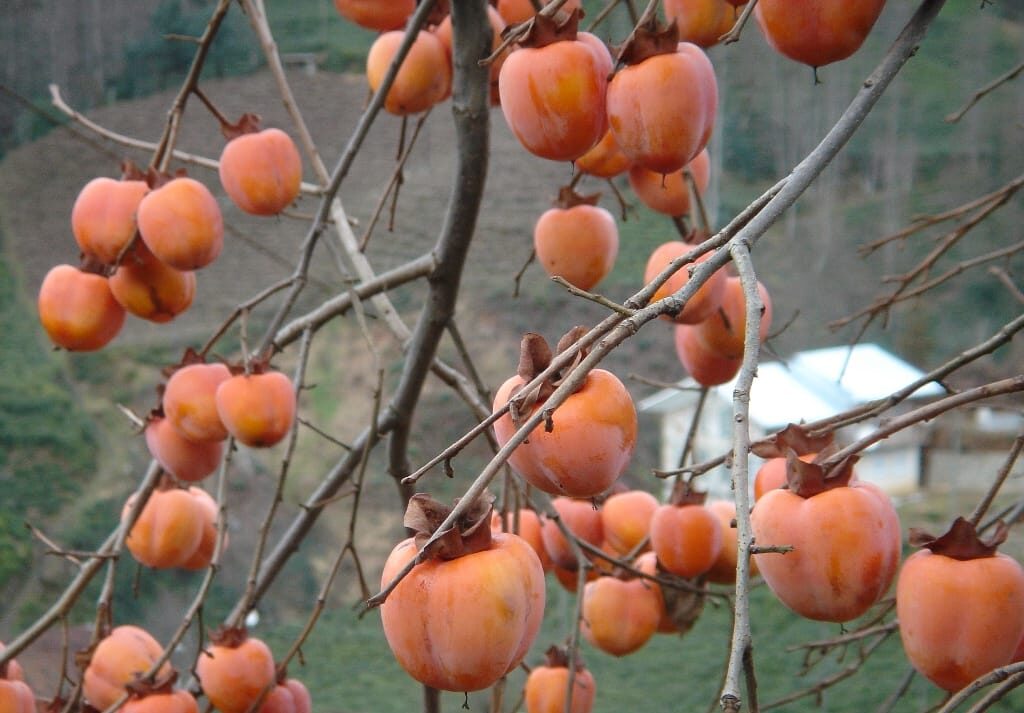
Persimmon (Diospyros kaki Thunb.), also called Japanese persimmon or kaki, is an orange-colored fruit known for its sweet flavor and, depending on the variety, either a firm texture or very soft flesh when ripe.
Persimmons provide dietary fiber, vitamin C, vitamin A compounds, potassium, and other nutrients. They also contain naturally occurring plant compounds such as carotenoids, tannins, and polyphenols. However, it is important to distinguish between the nutritional value of the fruit and medical claims. Research on persimmon compounds is promising in some areas, but it does not establish that ordinary servings of persimmon prevent or treat specific diseases.
This guide covers persimmon benefits, nutrition, calories, taste, Fuyu vs. Hachiya, how to tell when a persimmon is ripe, how to eat persimmon, whether you can eat the skin, safety concerns, and how persimmon grows in the Philippines.
Last reviewed: October 8, 2026
Quick Facts About Persimmon
| Fact | Details |
|---|---|
| Common names | Persimmon, Japanese persimmon, kaki |
| Scientific name | Diospyros kaki Thunb. |
| Family | Ebenaceae |
| Fruit type | Berry |
| Native range | Assam to central and southern China, Vietnam, and Taiwan |
| Common cultivated types | Astringent and non-astringent |
| Well-known cultivars | Fuyu and Hachiya |
| Common uses | Fresh eating, drying, baking, salads, sauces, and desserts |
Kew’s Plants of the World Online recognizes Diospyros kaki as an accepted species. Kew lists its native range as Assam to central and southern China, Vietnam, and Taiwan, and records the species as introduced in several other regions, including the Philippines.
What Is Persimmon?
Persimmon is a common name used for several fruits in the genus Diospyros. This article focuses on Diospyros kaki, one of the most widely cultivated persimmon species.

The fruit is usually orange to reddish-orange when mature, although appearance varies by cultivar. Botanically, the fruit is a berry.
One of the most important things to understand about persimmons is that varieties differ greatly in astringency. Some types can be eaten while firm, while others become pleasant to eat only after they have softened substantially.
If you are interested in growing fruit and other edible plants at home, our complete gardening guide provides a broader starting point for choosing plants, evaluating climate, and planning for mature tree size.
Where Is Persimmon From?
Diospyros kaki is native to parts of Asia, with Kew listing Assam, several regions of China, Vietnam, and Taiwan within its native range.
The species has been cultivated for a long time in East Asia and is now grown in many other parts of the world. Kew records Diospyros kaki as introduced in the Philippines as well as several countries and regions outside its native range.
This distinction matters for gardeners. A plant being cultivated in a country does not necessarily mean that it is native there.
What Does Persimmon Taste Like?
A ripe persimmon is generally sweet and aromatic, but the flavor and texture depend heavily on the cultivar and stage of ripeness.

Fuyu-type persimmons are non-astringent and can be eaten while firm. They are often crisp or relatively firm when ready to eat.
Hachiya-type persimmons are astringent. They need to ripen until very soft before they become pleasant to eat. When fully ripe, the flesh can be soft, smooth, and almost custard-like.
The dry, puckering sensation sometimes mistaken for bitterness is called astringency. It is primarily associated with soluble tannins and related compounds in unripe astringent fruit.
Fuyu vs. Hachiya Persimmon
Fuyu and Hachiya are two of the most familiar Japanese persimmon cultivars, but they should not be eaten in exactly the same way.
| Feature | Fuyu | Hachiya |
|---|---|---|
| Type | Non-astringent | Astringent |
| Can be eaten firm? | Yes | No. It should be fully ripe |
| Typical shape | Flat or squat | Elongated or heart-shaped |
| Texture when ready | Firm to moderately soft | Very soft and jelly-like |
| Common use | Fresh eating and salads | Scooping, baking, sauces, and desserts |
University of California and University of Florida horticultural resources classify persimmons by astringency and identify Fuyu as a non-astringent cultivar and Hachiya as an astringent cultivar.
How Do You Know When a Persimmon Is Ripe?
The best way to judge ripeness depends on the variety.
When is Fuyu persimmon ripe?
Fuyu and other non-astringent persimmons can be eaten while firm. Look for the mature orange color and a fruit that feels firm rather than completely hard.
When is Hachiya persimmon ripe?
Hachiya and other astringent varieties should become very soft before eating. The flesh should yield easily to gentle pressure and may have a jelly-like consistency.
Do not assume that an orange-colored Hachiya is ready simply because it looks mature. For astringent varieties, texture is an important indicator.
UC Davis postharvest guidance similarly distinguishes Fuyu and Hachiya maturity and notes that astringency is tied to tannin content.
Why Does Persimmon Make Your Mouth Feel Dry?
The dry or puckering sensation caused by an unripe astringent persimmon is not simply “bitterness.” It is astringency.
Persimmons contain tannins and related proanthocyanidins. In astringent fruit, these compounds remain soluble while the fruit is immature. They interact with proteins in saliva and produce the characteristic drying sensation in the mouth.
As astringent persimmons ripen, soluble tannins become less available to interact with saliva, which reduces the astringent sensation.
University of Florida research explains how changes in persimmon proanthocyanidins during ripening influence astringency.
Persimmon Nutrition
Persimmons provide carbohydrates, natural sugars, dietary fiber, vitamin C, vitamin A compounds, potassium, and other nutrients.
The table below uses USDA reference data for raw Japanese persimmon. These figures are useful for general nutrition information, but they should not be interpreted as an exact analysis of every persimmon cultivar.
| Nutrient | Approximate amount per 100 g |
|---|---|
| Calories | 70 kcal |
| Carbohydrates | 18.6 g |
| Dietary fiber | 3.6 g |
| Total sugars | 12.5 g |
| Protein | 0.6 g |
| Total fat | 0.2 g |
| Vitamin C | 7.5 mg |
| Vitamin A | 81 mcg RAE |
| Potassium | 161 mg |
| Calcium | 8 mg |
| Magnesium | 9 mg |
A USDA reference fruit weighing about 168 grams provides approximately 118 calories, 6 grams of dietary fiber, 12.6 mg of vitamin C, and 270 mg of potassium.
USDA FoodData Central is the main U.S. Department of Agriculture food composition database.
What Are the Benefits of Persimmon?
Persimmon can contribute useful nutrients and plant compounds to a balanced diet. The most defensible health claims are based on those nutritional components rather than on claims that the fruit itself acts as a medicine.

1. Persimmon Provides Dietary Fiber
Raw Japanese persimmon provides about 3.6 grams of dietary fiber per 100 grams.
Dietary fiber supports normal digestive function and is an important part of a healthy eating pattern. Choosing whole fruit also preserves fiber that may be reduced when fruit is processed into juice.
For more gardening and edible-plant information, our complete gardening guide brings together our wider gardening resources.
2. Persimmon Provides Vitamin C
Persimmon contains vitamin C, although it is not among the most concentrated dietary sources of this vitamin.
Vitamin C is required for collagen production, helps support normal immune function, and improves the absorption of non-heme iron from plant foods.
The NIH Office of Dietary Supplements explains the role of vitamin C in the body.
That does not mean persimmon prevents infections or “boosts immunity” in a medical sense. It simply contributes vitamin C to the overall diet.
3. Persimmon Contains Carotenoids
The orange color of persimmon is associated in part with carotenoid pigments. Research on Diospyros kaki has identified carotenoids and other bioactive compounds in the fruit.
Some carotenoids can be converted into vitamin A. Vitamin A contributes to normal vision, immune function, growth, and development.
The NIH Office of Dietary Supplements explains vitamin A and carotenoids in more detail.
4. Persimmon Provides Potassium
Raw Japanese persimmon contains about 161 milligrams of potassium per 100 grams.
Potassium is an essential mineral involved in normal muscle and nerve function and maintaining fluid balance.
Persimmon can contribute to overall potassium intake, but it should not be described as a treatment for high blood pressure or cardiovascular disease.
5. Persimmon Contains Polyphenols and Tannins
Persimmon contains several naturally occurring plant compounds, including tannins, proanthocyanidins, flavonoids, and carotenoids.
These compounds have been investigated for antioxidant and other biological activities. However, much of the research involves extracts, isolated compounds, laboratory experiments, or other models rather than large clinical trials of ordinary whole-fruit consumption.
A review in EXCLI Journal summarizes research on persimmon phytochemicals and specifically notes that more integrated research is needed before strong health conclusions can be made.
6. Persimmon Can Be a Filling Whole-Fruit Snack
Whole persimmon provides water and fiber along with natural carbohydrates and sugars. This makes it a practical fruit snack for many people.
It is still important to consider the form of the fruit. Dried persimmon contains less water and therefore has a much more concentrated amount of calories and sugars by weight than fresh fruit.
Is Persimmon Good for Weight Loss?
Persimmon does not have a special fat-burning or weight-loss property.
However, fresh whole persimmon can fit into a weight-conscious eating pattern because it provides water and dietary fiber for relatively moderate calories. The USDA reference value is about 70 calories per 100 grams.
Weight management depends on the overall balance of foods, drinks, activity, and other factors rather than on one particular fruit.
Is Persimmon High in Sugar?
Persimmon contains natural sugars. USDA reference data list about 12.5 grams of total sugars per 100 grams of raw Japanese persimmon.
This does not make the fruit unhealthy. Whole fruit also provides water, fiber, and micronutrients. Still, portion size matters, especially for people who have been advised to monitor carbohydrate intake.
Dried persimmon is more concentrated because much of the fruit’s water is removed during drying.
Can You Eat Persimmon Skin?
Yes. Persimmon skin is edible.
Some people prefer to peel persimmons because of the texture, while others eat the fruit whole. The skin contains fiber and naturally occurring plant compounds.
Wash the fruit thoroughly under running water before eating it. The FDA recommends washing fresh produce before eating or preparing it and advises against using soap or household detergent on fruits and vegetables.
How to Eat a Persimmon
How to eat a Fuyu persimmon
Wash the fruit, remove the leafy calyx if you prefer, and cut it into slices or wedges. Fuyu can generally be eaten while firm, so it can be prepared similarly to a crisp apple.
How to eat a Hachiya persimmon
Wait until the fruit is very soft. Cut away or open the top and scoop out the soft flesh with a spoon.
Eating an astringent persimmon before it has softened can result in an extremely dry, puckering mouthfeel.
Other ways to use persimmon
- Fresh: Eat ripe fruit on its own.
- Salads: Slice firm non-astringent persimmons into fruit or green salads.
- Breakfast: Add sliced persimmon to oatmeal or yogurt.
- Baking: Use very ripe persimmon pulp in breads, cakes, muffins, and desserts.
- Sauces: Blend ripe fruit into sauces, purees, or toppings.
- Drying: Persimmons can be preserved by drying.
How to Ripen an Astringent Persimmon
Astringent persimmons such as Hachiya should be allowed to soften fully before eating.

The simplest home approach is to leave the fruit at room temperature and check it regularly. As it ripens, the flesh becomes increasingly soft and the astringent sensation decreases.
Ethylene can accelerate persimmon softening. UC Davis and University of Florida postharvest resources describe the relationship between ethylene exposure, ripening, and the loss of astringency.
Persimmon Safety
Can eating too many persimmons cause problems?
Most people can enjoy normal servings of ripe persimmon without difficulty. Rare gastrointestinal complications have nevertheless been documented, particularly involving persimmon phytobezoars, also called diospyrobezoars.
A phytobezoar is a mass of indigestible plant material that forms in the digestive tract. Persimmon bezoars have been associated with excessive persimmon consumption, and certain underlying gastrointestinal conditions can increase risk.
Published medical literature documents cases of persimmon bezoars causing gastrointestinal obstruction. These complications are uncommon, but they are an important reason not to consume unusually large quantities of persimmons, particularly unripe astringent fruit.
Read the PubMed case report on diospyrobezoar and small-bowel obstruction.
Can unripe persimmons make you sick?
Unripe astringent persimmons can contain high levels of soluble tannins and can cause an extremely unpleasant astringent sensation.
More serious gastrointestinal complications are rare, but the medical literature links excessive persimmon intake with persimmon phytobezoars.
What about persimmon allergies?
Food allergies can occur with fruits, including persimmons. Anyone who develops symptoms such as hives, swelling, wheezing, difficulty breathing, or other signs of a serious allergic reaction after eating persimmon should seek appropriate medical care.
People with known food allergies or medically prescribed dietary restrictions should follow individualized advice from a qualified healthcare professional.
Persimmon Uses
Fresh eating is only one way to use persimmon. The fruit is also valued for cooking and preservation.
Fresh fruit
Non-astringent varieties can be sliced while firm, while ripe astringent varieties are often eaten by spooning out the soft flesh.
Dried persimmon
Drying is an established traditional preservation method in East Asia. Well-known products include Japanese hoshigaki and Korean gotgam.
Baking and desserts
Soft ripe persimmon pulp can be used in breads, cakes, puddings, sauces, and other desserts.
Food processing
Researchers have also investigated persimmon pulp, peel, leaves, and other plant materials as sources of food compounds and ingredients. These studies are useful for food science and processing research, but they should not be confused with evidence that persimmon extracts are medical treatments.
Can You Grow Persimmon?
Diospyros kaki is a woody fruit tree that is cultivated in many parts of the world. Whether it will perform well in your garden depends on the cultivar, climate, temperature, soil, drainage, sunlight, and other growing conditions.
Choose a suitable location
Persimmons generally benefit from a sunny location and well-drained soil. Avoid planting where water remains around the roots for long periods.
Give the tree enough space
Consider the tree’s mature size before planting. Leave enough room for the canopy, root area, pruning, access, and harvesting.
Choose the cultivar carefully
Fuyu, Hachiya, and other cultivars differ in astringency, growth, fruiting behavior, and climate performance. A cultivar that performs well in one region may not perform the same way in another.
North Carolina State University’s plant database recommends full sun and good drainage for Diospyros kaki, while University of Florida extension resources provide cultivar-specific guidance for Fuyu, Hachiya, and other Japanese persimmons.
Our complete gardening guide covers broader considerations such as climate, sunlight, drainage, watering, mature size, and plant selection.
Can You Grow Persimmon in the Philippines?
Diospyros kaki is not native to the Philippines, but Kew records the species as introduced there.
That does not mean every cultivar will grow equally well throughout the country. The Philippines has substantial variation in rainfall, temperature, elevation, and local growing conditions.
Gardeners should therefore evaluate the specific cultivar and local conditions rather than relying on a generic planting calendar from a temperate climate.
For additional context, our guide to the most common crops in the Philippines discusses the country’s agricultural environment, while the Gardening section contains more plant-specific resources.
Persimmon Compared With Other Fruits
Persimmon has a distinctive combination of sweetness, orange flesh, dietary fiber, and astringency that makes it different from many other familiar fruits.
If you enjoy comparing fruit trees and tropical garden crops, Money For My Beer also covers atis or sugar apple, sineguelas, strawberry apple, and apple mango in the Philippines.
Frequently Asked Questions About Persimmon
Is persimmon healthy?
Persimmon can be a nutritious whole fruit. It provides dietary fiber, vitamin C, vitamin A compounds, potassium, and naturally occurring plant compounds.
How many calories are in a persimmon?
USDA reference data list about 70 calories per 100 grams of raw Japanese persimmon. A reference fruit weighing about 168 grams contains approximately 118 calories.
Is persimmon high in sugar?
Raw Japanese persimmon contains about 12.5 grams of total sugars per 100 grams. Because dried persimmon contains much less water, its sugar and calorie content is more concentrated by weight.
What does persimmon taste like?
Ripe persimmon is generally sweet and aromatic. Fuyu-type varieties can be eaten firm, while Hachiya-type varieties become soft and custard-like when fully ripe.
Can you eat persimmon skin?
Yes. Persimmon skin is edible. Wash the fruit thoroughly before eating it.
Can you eat a persimmon while it is hard?
It depends on the variety. Non-astringent types such as Fuyu can be eaten while firm. Astringent varieties such as Hachiya should be allowed to become very soft.
Why does persimmon make your mouth dry?
Unripe astringent persimmons contain soluble tannins and related compounds that interact with saliva and create the characteristic dry, puckering sensation.
Are Fuyu persimmons non-astringent?
Yes. Fuyu is a well-known non-astringent cultivar.
Are Hachiya persimmons astringent?
Yes. Hachiya is an astringent cultivar and should be fully ripe and soft before eating.
Can you dry persimmons?
Yes. Drying is a traditional way of preserving persimmons, and dried persimmons are an important food in several East Asian cultures.
Can eating too many persimmons cause a blockage?
Rarely, excessive persimmon consumption can contribute to a phytobezoar, an indigestible mass in the digestive tract. Medical literature has documented cases causing gastrointestinal obstruction.
Is persimmon native to the Philippines?
No. Kew lists Diospyros kaki as native to parts of Asia and records it as introduced in the Philippines.
Can persimmon grow in the Philippines?
It can be cultivated in the Philippines, but success depends on the cultivar and local growing conditions. Climate, elevation, temperature, rainfall, sunlight, and drainage should all be considered before planting.
What is the scientific name of persimmon?
The species covered in this article is Diospyros kaki Thunb.
Bottom Line
Persimmon (Diospyros kaki) is a nutritious fruit with a distinctive flavor and a major difference between astringent and non-astringent varieties.
Fresh persimmon provides dietary fiber, vitamin C, vitamin A compounds, potassium, and naturally occurring plant compounds. These nutritional qualities make it a useful whole-fruit choice, but current evidence does not justify presenting ordinary persimmon consumption as a cure or treatment for disease.
The most useful thing to remember is the difference between Fuyu and Hachiya. Fuyu can generally be eaten while firm, while Hachiya should become very soft before eating.
For gardeners, Diospyros kaki can be an interesting fruit tree, but cultivar selection and local climate matter. In the Philippines, treat it as an introduced crop and evaluate the specific growing conditions before planting.
About Our Research
Money For My Beer aims to make plant and gardening information practical without overstating what the evidence shows. For health-related topics, we distinguish between nutritional facts, human studies, laboratory research, traditional uses, and claims that require stronger evidence.
Learn more about Money For My Beer, its founder, and its editorial approach.
Information note: This article provides general information about persimmon, nutrition, food safety, and gardening. It is not medical advice. People with allergies, digestive conditions, or other health concerns should seek individualized guidance from a qualified healthcare professional.
Sources and References
- Kew Science. Plants of the World Online: Diospyros kaki Thunb.
- U.S. Department of Agriculture. FoodData Central
- UC Davis Postharvest Research and Extension Center. Persimmon
- UC Davis Fruit and Nut Research and Information Center. Persimmon Scion & Rootstock Selection
- University of Florida IFAS Extension. Alleviating Astringency in Persimmon Fruit
- University of Florida IFAS Extension. Postharvest Physiology and Physiological Disorders of Persimmon Fruit
- North Carolina Extension Gardener Plant Toolbox. Kaki
- NIH Office of Dietary Supplements. Vitamin C
- NIH Office of Dietary Supplements. Vitamin A
- PubMed. Persimmon (Diospyros kaki) fruit: hidden phytochemicals and health claims
- PubMed. Diospyrobezoar as a cause of small bowel obstruction
- U.S. Food and Drug Administration. Selecting and Serving Produce Safely
Well, what do you think about the article?
Did you enjoy reading “Persimmon Benefits: Nutrition, Calories, Taste & How to Eat“?
We really hope that you have found this article informative and engaging. If you have any thoughts or comments about this post, please feel free to share them in the comment section below. We appreciate your feedback and would be glad to hear from you.
To see more content like this check the gardening section of Money For My Beer.