Is Redbubble legit and trustable in 2026? Can you safely buy products from the platform, and can artists really make money selling their designs there?
Redbubble is a print-on-demand marketplace that connects independent artists with customers looking for products such as clothing, stickers, phone cases, wall art, and home decor.
But being a legitimate platform does not necessarily mean every experience will be perfect. Product quality, shipping, returns, customer service, artist fees, and earnings are all worth considering before you decide to use it.
In this updated Redbubble review, we look at how Redbubble works for both buyers and artists, whether the platform is legitimate and trustworthy, what its current fees and payment system look like, and whether Redbubble is still worth using in 2026.
Last Reviewed: October 5, 2026
How We Reviewed Redbubble
For this 2026 review, we checked Redbubble’s current official documentation covering artist accounts, fees, payments, shipping, returns, copyright, and its Fan Art Program. We also compared this information with independent customer feedback from sources such as Trustpilot and the Better Business Bureau.
We focus on what Redbubble currently offers, what buyers and artists should realistically expect, and where the platform has potential drawbacks. Because fees, policies, products, and fulfillment arrangements can change, we also checked the information against current sources available at the time of this update.
Is Redbubble Legit?
Yes. Redbubble is a legitimate online marketplace, not a scam website.
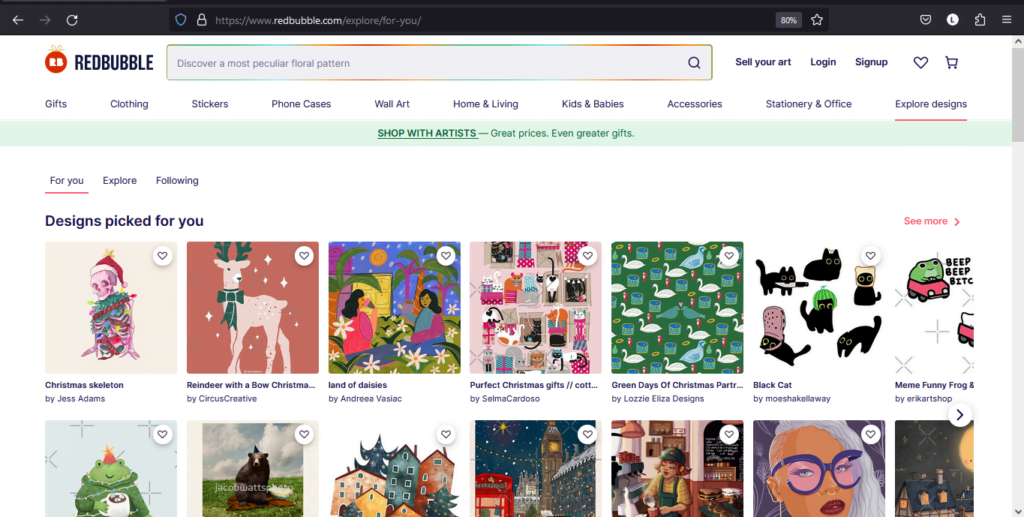
The company says it was founded in 2006 and connects independent artists with customers who buy products featuring their designs. Redbubble operates the marketplace and order process, while products are made to order through third-party fulfillment partners. See Redbubble’s About page for more information about the company and its marketplace.
For buyers, this means you are purchasing through an established marketplace with systems for orders, payments, shipping, and returns. Redbubble offers a wide range of products, including clothing, stickers, phone cases, wall art, accessories, and home decor.
For artists, Redbubble provides a way to sell designs without keeping physical inventory or handling production and shipping for every order. Artists upload their work, choose their markup, and can earn money when eligible products featuring their designs are sold. Redbubble explains how this works in its guide to selling on Redbubble.
Being legitimate does not mean every order or seller experience will be perfect. Problems with product quality, delivery, returns, or customer service can still occur, which is why it is useful to look beyond the simple question of whether Redbubble is a real business.
Is Redbubble Trustable?
Whether Redbubble is trustable is a more nuanced question than whether it is legitimate. The platform is real and established, but your experience can depend on the specific product, artist, fulfillment partner, and circumstances of your order.
One important factor is Redbubble’s print-on-demand model. Products are made when they are ordered and fulfilled through a network of third-party producers. This allows Redbubble to offer a large variety of designs without keeping all of that inventory itself, but it can also mean that product quality and delivery experiences are not identical across every order.
As a buyer, it makes sense to check the product description, sizing information, customer reviews, estimated delivery date, and Redbubble’s return policy before purchasing. These details can help you set realistic expectations rather than assuming every Redbubble product will have the same quality or delivery experience.
Artists should also understand Redbubble’s current fees, payment rules, content policies, and intellectual-property requirements before uploading designs. For example, Redbubble explains its account fees and artist payment system, while its intellectual property policy explains the rules surrounding uploaded content.
So, is Redbubble trustable? We think it is reasonable to use, but it is best approached as a large marketplace with both strengths and potential drawbacks. The platform itself is legitimate, while the quality of an individual transaction can still vary.
How Does Redbubble Work?
Redbubble uses a print-on-demand model.
An artist uploads an original design and chooses which products to make available. When a customer places an order, the product is produced and shipped rather than being manufactured in advance and stored as traditional inventory.
Redbubble currently advertises more than 70 products on its artist selling page.
This model has an obvious advantage for artists. You do not need to purchase a large inventory before knowing whether anyone wants your designs.
The trade-off is that you have less direct control over manufacturing and fulfillment because those parts of the process are handled by Redbubble’s third-party producers.
For buyers, this means the marketplace is convenient, but individual product experiences can vary.
Buying From Redbubble
If you are shopping rather than selling, there are several things worth checking before placing an order.
Products and Designs
One of Redbubble’s main attractions is the large range of independent artwork available across different product categories.
The product itself matters just as much as the artwork, though. A design that looks excellent on a sticker may not look equally good on every shirt, mug, poster, or other product.
Check the individual product page, available images, sizing information, material details, and customer reviews before ordering.
Shipping
Redbubble uses third-party producers, so the company does not necessarily manufacture every product in the same place.
Redbubble explains that production and shipping can vary based on the product, the delivery destination, and the producer handling the order. You may also receive products from the same order in separate packages.
That helps explain why delivery experiences can differ between customers.
For an important event or gift, pay attention to the estimated delivery date rather than assuming that an order will arrive quickly simply because it is being purchased from a large marketplace.
Returns and Exchanges
Redbubble’s current Return and Exchange Policy says qualifying returns can generally be made within 30 days of the latest estimated delivery date.
For qualifying issues, Redbubble may provide a replacement or Redbubble voucher. The policy also explains that customers should keep the item and provide photos when needed.
That is useful information to know before buying.
What About Product Quality?
The original version of this article made broad claims about Redbubble’s quality. That is too simplistic for a print-on-demand marketplace.
Redbubble uses third-party producers and different printing methods for different products. That means there can be variation between products and orders.
Redbubble itself describes its products as being produced to order by third-party producers. Rather than assuming every product will be identical, check reviews for the particular item you are considering.
This is especially important when sizing, fabric, print appearance, or color accuracy matter to you.
What Do Customers Say About Redbubble?

Independent customer feedback is mixed, which is worth acknowledging when answering whether Redbubble is trustable.
At the time of this update, Redbubble’s Trustpilot profile showed a 4.4 out of 5 score from more than 52,000 reviews. Trustpilot also showed both strong positive feedback and a meaningful share of one-star reviews. Some customers praise product quality and delivery, while others report problems involving printing, sizing, shipping, or customer service.
That does not mean the Trustpilot score represents every Redbubble customer. Reviews are self-selected, and people who leave reviews may not reflect the broader customer population.
The Better Business Bureau provides another perspective. Redbubble’s U.S. BBB profile currently shows a D- rating. BBB says the rating is affected by Redbubble’s failure to respond to 110 complaints in the reporting period. Its complaints page listed 114 complaints during the previous three years when reviewed in August 2026.
BBB also cautions that complaint information should be considered in context and that complaint counts do not tell the whole story.
Taken together, these sources do not establish that Redbubble is a scam. They do show why it is better to describe customer experiences as mixed rather than universally positive.
Selling on Redbubble

Redbubble is not only a shopping website. It is also a marketplace where independent artists can upload designs and earn money from sales.
Redbubble is also an option for artists who want to sell designs without handling inventory or fulfillment themselves. If you’re interested in getting started, see our guide to how to sell on Redbubble in 2026 for the account setup, design uploads, tags, markup, fees, payments, and other basics.
Creating an artist account is free.
According to Redbubble’s current artist setup guide, artists create products, set up their shop, and add payment information before becoming eligible to sell.
Redbubble says an artist account may take up to five business days to be classified and become visible to customers.
There is also an important requirement for new stores. Redbubble says an artist needs at least five public artworks with at least one product enabled for each design before the shop becomes visible.
So while opening an account is free, getting an actual store established still requires work.
How Much Does Redbubble Pay Artists?
This is probably the most important part of the Redbubble review for anyone thinking about using the platform as a side-income stream.
Redbubble does not simply hand artists a fixed percentage of every customer payment.
Instead, your earnings are based on your artist margin, which comes from the markup you set on the product’s base price.
Redbubble explains the calculation in its artist payment guide.
The base price includes Redbubble’s marketplace service component and the manufacturing cost charged by the third-party producer. Your markup determines your artist margin.
For example, Redbubble gives a U.S. Classic T-Shirt example with a $20 base price.
If you set a 20% markup:
$20 × 20% = $4 artist margin
That $4 is before account fees.
The important part is that your account tier can then affect what you actually keep.
Redbubble Artist Fees in 2026
Redbubble currently uses three artist account tiers.
| Account tier | Platform fee |
|---|---|
| Standard | 50% of monthly earnings |
| Premium | 20% of monthly earnings |
| Pro | 0% of monthly earnings |
Redbubble’s current account-fee documentation says Standard and Premium account fees only apply if you make a sale.
There is also an excess markup fee on earnings from product markup above 20%.
For Standard and Premium artists, 50% of the earnings generated from markup above 20% is subject to that additional fee. Pro accounts are exempt.
The current monthly account-fee cap is $150, £150, or €150.
What Does That Mean in Practice?
Using the simple $20 base-price example:
| Account tier | Artist margin before account fee | Example platform fee | Remaining amount |
|---|---|---|---|
| Standard | $4.00 | $2.00 | $2.00 |
| Premium | $4.00 | $0.80 | $3.20 |
| Pro | $4.00 | $0.00 | $4.00 |
This is only a simplified example. Actual earnings can be affected by discounts, taxes, currency differences, the product, the buyer’s location, and other adjustments.
The main lesson is that your Redbubble markup is not the same as your final take-home earnings.
That is something older Redbubble reviews can easily miss.
Is Redbubble Good for Passive Income?
Redbubble can reduce the amount of operational work involved in selling physical products, but calling it completely passive would be misleading.
You still need to create designs, upload them, choose products, maintain your shop, follow Redbubble’s rules, and ideally promote your work.
Redbubble handles much of the physical side of the business, including production and shipping through third-party providers.
It does not guarantee traffic or sales.
For artists, that means Redbubble is better thought of as outsourced print-on-demand fulfillment combined with a marketplace, rather than automatic passive income.
Redbubble Payment Threshold
Payment rules have also changed.
Redbubble announced that beginning July 1, 2026, the artist payment threshold would be reduced from $20, £20, or €20 to $10, £10, or €10.
You can read the announcement in Redbubble’s artist payment update.
For small sellers, a lower threshold means it can take less time to become eligible for a payment, assuming the account meets the other payment requirements.
Remember that the threshold is based on the balance after applicable account fees.
Redbubble and Copyright
Artists should pay close attention to intellectual property rules.
Redbubble says that artists are responsible for the content they upload and must have the necessary rights or permissions to use the material.
That means you should not assume that you can safely upload copyrighted characters, logos, celebrity images, photographs, lyrics, or somebody else’s artwork simply because you found it online.
Redbubble’s IP and Publicity Rights Policy explains its notice and takedown process.
Redbubble also has a Fan Art Program for selected brands. However, those licenses can be subject to specific terms.
Some licensed fan art may only be allowed for sale through Redbubble and may not automatically give an artist permission to sell the same work elsewhere. Redbubble explains this in its fan art licensing documentation.
When it comes to copyrighted material, assume nothing. Check the applicable license or create original work.
Redbubble Pros and Cons
Redbubble has genuine advantages, especially for independent artists who do not want to manage inventory.
Potential advantages
Free to open an artist account: There is no upfront shop fee.
Print-on-demand model: Products are produced when customers order them.
No inventory to store: Artists do not have to keep boxes of unsold products at home.
Third-party fulfillment: Redbubble handles production and shipping.
Large marketplace: Redbubble says its marketplace reaches millions of customers.
Multiple product types: Artists can apply designs across a wide catalog of products.
Potential drawbacks
Standard account fees: The current Standard tier has a 50% platform fee on monthly earnings.
Competition: Uploading a design does not guarantee sales.
Variable production experience: Different products can involve different third-party producers.
Shipping issues can happen: Delivery experiences vary by order and destination.
Customer-service complaints exist: Independent customer feedback includes reports of frustrating support experiences.
Copyright remains your responsibility: Artists can face takedowns or account action when content violates intellectual property rules.
Is Redbubble Worth It in 2026?
That depends on what you are trying to accomplish.
For buyers, Redbubble offers a large selection of products featuring independent artwork. The marketplace is legitimate, but product quality and delivery experiences can vary, so it makes sense to read reviews and check the return policy before ordering.
For artists, Redbubble offers a relatively accessible way to experiment with print-on-demand without buying inventory or handling fulfillment yourself.
However, the current account-fee structure is a major consideration.
A Standard artist account can lose 50% of monthly earnings to the platform fee, while Premium accounts are charged 20% and Pro accounts are exempt. That makes your pricing, product selection, and ability to generate sales particularly important.
In other words, Redbubble can provide an opportunity to earn money, but it should not be treated as guaranteed income or effortless passive income.
Our Verdict: Is Redbubble Trustworthy?
Redbubble is a legitimate marketplace, but whether it is worth trusting depends on what you expect from it.
For buyers, it is a reasonable option for finding independent designs and niche products, provided you check the specific product and seller information before ordering. For artists, it can be a convenient way to sell designs without handling fulfillment, but the current fee structure and competition make it better suited as an additional sales channel than a guaranteed source of income.
Overall, we consider Redbubble trustworthy enough to use, but not a platform to approach without checking the details. Buyers should shop selectively, while artists should understand the fees and earning model before committing significant time to the platform.
For the latest information on artist costs, see Redbubble’s current account tiers and fees.
Frequently Asked Questions
Can I trust Redbubble?
Yes. Redbubble is an established online marketplace that has operated since 2006. However, individual experiences can vary because products are made and fulfilled through third-party producers. Checking product reviews, delivery estimates, and return terms before ordering is sensible.
Is Redbubble legitimate or a scam?
Redbubble is legitimate. It operates a real print-on-demand marketplace for independent artists and customers. That does not guarantee that every order will be problem-free, but there is no evidence that Redbubble itself is a scam.
Is Redbubble safe to buy from?
Redbubble is generally safe to use as an established online marketplace. Before purchasing, check the specific product’s reviews, sizing information, estimated delivery date, and return policy, especially when ordering an item for a specific occasion.
Can you really make money on Redbubble?
Yes, artists can earn money from sales, but there is no guaranteed income. Your results depend on factors such as the number of sales, product prices, markup, account tier, platform fees, and how effectively you attract customers.
How much does Redbubble take from artists?
Standard accounts currently have a 50% platform fee on monthly earnings, Premium accounts have a 20% platform fee, and Pro accounts have a 0% platform fee. Additional excess markup fees can apply when markup exceeds 20%.
Is Redbubble free for artists?
Creating an artist account and opening a shop is free. However, Standard and Premium artists can have platform fees deducted from their earnings after making sales, so free to join does not mean you keep all of your artist margin.
What is the Redbubble payment threshold in 2026?
Redbubble lowered its artist payment threshold to $10, £10, or €10 beginning July 1, 2026. Other payment requirements still apply.
Does Redbubble own my artwork?
No. Redbubble says artists retain copyright in their uploaded work, although they grant Redbubble a license to use that content to operate the service. Artists are responsible for having the necessary rights to anything they upload.
Can I sell fan art on Redbubble?
Only when you have the necessary rights or the work qualifies under an applicable license. Redbubble has a Fan Art Program for selected brands, but participation is limited and individual licenses can have specific restrictions.
Is Redbubble worth it in 2026?
It depends on what you want from the platform. Buyers may find unique products and independent artwork, while artists can use Redbubble to sell designs without managing inventory or fulfillment. For artists, current account fees and competition can make profitability more difficult.
Sources We Checked
For this update, we reviewed Redbubble’s current official documentation and independent customer-feedback sources:
- Redbubble About
- Redbubble Selling and Artist Information
- How do I set up an Artist Account?
- How is my payment calculated?
- What are Redbubble’s account fees?
- Redbubble Artist Payment Update
- Redbubble IP/Publicity Rights Policy
- Redbubble Fan Art Licensing Information
- Redbubble Return and Exchange Policy
- Redbubble reviews on Trustpilot
- Redbubble complaints on Better Business Bureau
Editorial Note
Redbubble’s products, fees, account tiers, policies, payment rules, and fulfillment arrangements can change over time.
Money For My Beer makes a reasonable effort to keep this article current, but important details should always be verified directly with Redbubble before making a purchase, opening an artist account, or relying on the platform for income.
For more information about how we approach research, updates, recommendations, and affiliate relationships, see our About page and Disclosure Policy.
For more guides about making extra money online, visit our Beermoney section.
Also Read: Is Travelgo.com Legit or a Scam? An In-Depth TravelGo Review
So what are your thoughts?
Did you like what you have read about “Redbubble Review 2026: Is Redbubble Legit, Safe & Worth It?”? If so, please comment down below.
If you are interested in supporting independent artists like me, visit my shop (laracxxx) or check out other works that you may like.

Lara is a freelance content writer and a cat mom to three furbabies, Mizu, Haru and Sora.
She graduated with a Bachelor’s Degree in Architecture and is a registered and licensed Architect. Aside from writing, she is fond of growing cacti and succulents and is a DIY type of girl.
During her free time, she engages herself in water-colouring and crocheting, while catching-up with an old tv series she just discovered. Lara loves to explore new places, but most of the time stays in her hometown province, reading historical romance novels over a cup of coffee – or matcha.