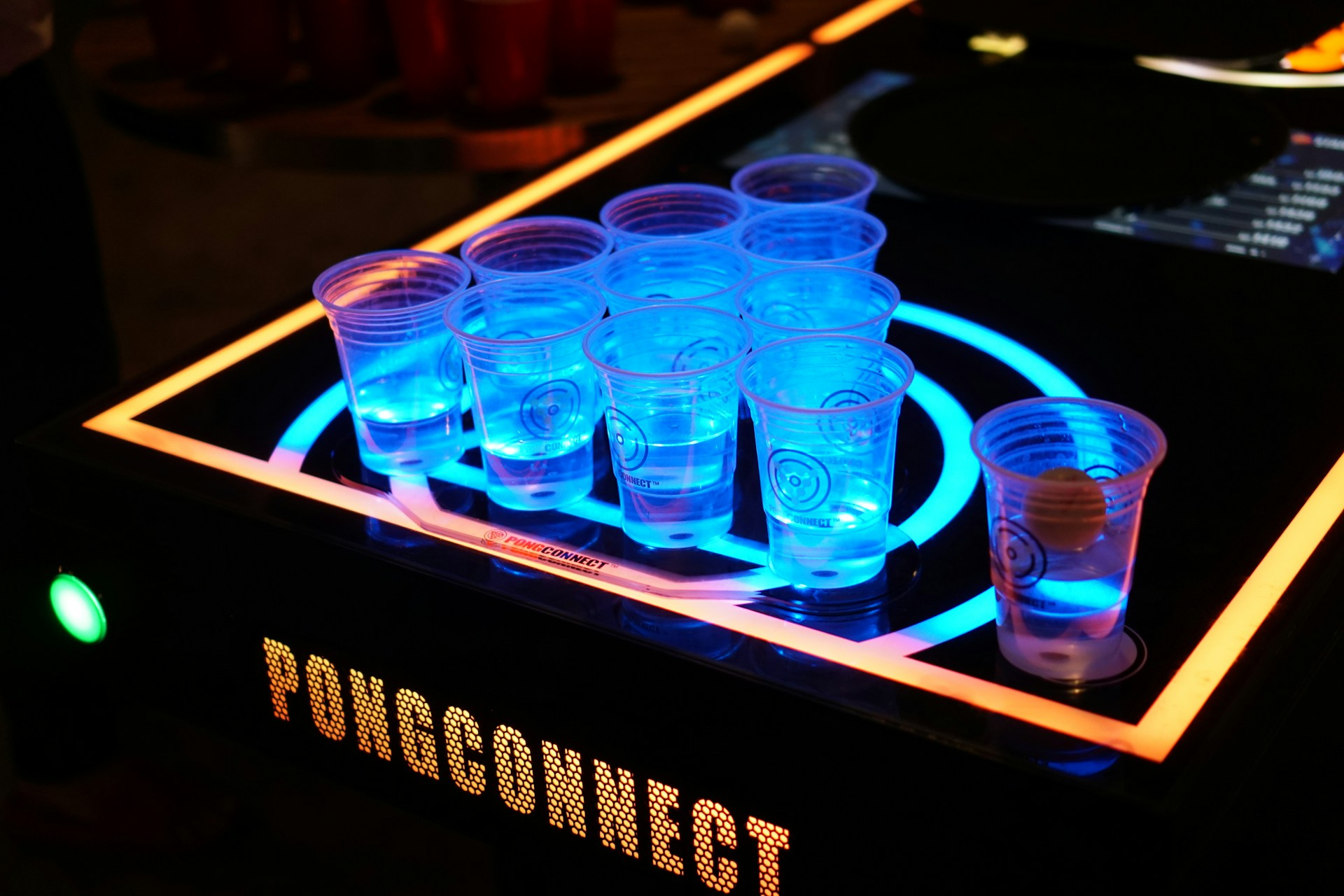
Hosting a beer pong tournament can turn a casual game night into a small event business. With interested players, a suitable venue, and a well-organized competition, you may be able to earn money through team entry fees, sponsorships, merchandise, and recurring leagues.
However, collecting entry fees does not automatically make a tournament profitable. Venue rental, equipment, staff, prizes, marketing, and other expenses can quickly add up. You also need to understand the rules that apply to paid competitions and any alcohol-related activities.
This guide explains five ways to monetize beer pong tournaments, how to organize a competition, how to calculate entry fees and prize budgets, and what to consider before hosting your first event.
Last reviewed: November 3, 2026
Quick Facts: How to Monetize Beer Pong Tournaments
- Potential revenue sources: Team entry fees, business sponsorships, merchandise, venue partnerships, and recurring league registrations.
- Main expenses: Venue rental, tables, cups, balls, staff, prizes, promotion, insurance, and applicable permits.
- Best starting approach: Organize a small tournament, test local demand, and use actual expenses to determine your pricing.
- How to improve profitability: Secure confirmed sponsorships, control operating costs, and encourage repeat participation.
- Important consideration: Paid-entry contests, alcohol service, and sponsorship arrangements may be subject to different state and local requirements.
This guide focuses on organizing beer pong tournaments in the United States. Event, gaming, alcohol, and business requirements vary depending on your location and the activities involved.
5 Ways to Make Money Hosting Beer Pong Tournaments
A tournament can generate revenue in several ways. You do not have to rely entirely on entry fees, especially if you want to build an event that attracts returning players and local business partners.
1. Charge Team Entry Fees
Team entry fees are one of the most direct ways to generate revenue from a beer pong tournament. Players pay a registration fee to participate, while the organizer uses the collected money to cover operating expenses and any permitted prizes.
For example, you could organize a doubles tournament where each team pays a fixed registration fee. The amount should reflect the venue, equipment, event duration, expected attendance, and overall experience.
Before setting your price, calculate:
- Venue rental and table costs.
- Cups, balls, and other equipment.
- Staff, referees, and event assistance.
- Marketing, registration, and payment processing fees.
- Cleaning, insurance, and applicable permits.
- Any planned prize budget and contingency expenses.
Do not automatically treat all collected entry fees as earnings. Your actual operating surplus is what remains after accounting for event expenses and prize commitments.
Also, charging participants to compete for cash or other valuable prizes can raise gambling, gaming, or contest-law questions. Check the applicable requirements before collecting payments or advertising a prize pool.
2. Find Local Business Sponsors
Sponsorships can provide another source of income while helping you reduce some tournament expenses.
Potential sponsors include local restaurants, sports shops, entertainment businesses, printing companies, and other businesses interested in reaching your intended audience.
For example, a local business might pay to have its logo displayed on tournament promotional materials, your registration page, a scoreboard, or event announcements.
Prepare a short sponsorship proposal explaining:
- Event details: Date, location, tournament format, and expected attendance.
- Target audience: The type of players and spectators you expect to attract.
- Promotional opportunities: Logo placement, event announcements, social media mentions, and permitted promotional displays.
- Sponsorship options: Cash contributions, equipment support, merchandise, or other agreed benefits.
- Expected exposure: Explain where the sponsor will appear and what you can realistically deliver.
If this is your first event, you may not have previous attendance figures or promotional results. Be transparent about that. A clear proposal with realistic estimates is better than promising exposure or sales you cannot guarantee.
What about brewery sponsorships?
Beer brands and breweries may seem like natural partners for this type of event. However, alcohol-industry sponsorships can involve additional restrictions, particularly when financial support, free products, or promotional benefits involve licensed alcohol retailers.
The Alcohol and Tobacco Tax and Trade Bureau (TTB) regulates certain alcohol-industry trade practices, including tied-house arrangements and exclusive outlets. These federal rules apply to defined industry members and particular business relationships. They are not a blanket ban on all brewery sponsorships.
Before agreeing to exclusive product arrangements, free alcoholic beverages, or other benefits involving a licensed retailer, review the TTB’s alcohol trade-practice guidance and consult the relevant state alcohol-control authority when necessary.
If you promote a sponsor’s products through social media, disclose paid relationships and free products when required. The Federal Trade Commission’s social media disclosure guidance explains how to make sponsorship disclosures clear and noticeable.
For a different beer-related earning opportunity, see our guide to brewery brand ambassador opportunities.
3. Sell Co-Branded Tournament Merchandise
Merchandise can provide additional revenue and help give your tournament or league a recognizable identity.
Consider products that players and spectators might actually want, such as:
- Custom tournament T-shirts and sweatshirts.
- Branded cups and reusable drinkware.
- Beer pong-themed stickers.
- Caps and other accessories.
- Limited-edition tournament merchandise.
You can also collaborate with a sponsor on authorized co-branded products. For example, a local business might contribute to production costs in exchange for agreed branding exposure.
Be careful when using a brewery’s name, logo, mascot, or other protected branding. Obtain permission or an appropriate license before producing merchandise for commercial sale.
To control inventory costs, consider accepting preorders or using a print-on-demand supplier before committing to a large production run.
Calculate the full cost of each item, including production, shipping, platform fees, payment processing, and unsold inventory. The difference between the selling price and production cost is not necessarily your actual profit.
4. Partner With Venues and Local Vendors
A bar, restaurant, entertainment venue, or event space may be interested in hosting a beer pong tournament because it can attract customers during otherwise quieter periods.
Instead of renting a location independently, approach venues that already have suitable tables, seating, and space for organized activities.
Possible arrangements include:
- Venue rental: Pay an agreed amount to use the space for a specific period.
- Fixed hosting fee: The venue pays you to organize and manage the tournament.
- Revenue sharing: You and the venue agree in writing on how eligible event revenue will be divided.
- Vendor partnerships: Local food businesses or other approved vendors pay an agreed fee to participate.
There is no universal revenue-sharing percentage that works for every event. The appropriate arrangement depends on who provides the venue, equipment, staffing, marketing, and other services.
Put the agreement in writing. Clarify who collects registration payments, who handles refunds, who supplies equipment, who is responsible for cleanup, and how venue or vendor payments are calculated.
Also, do not assume that a venue’s existing liquor license automatically authorizes you as an independent organizer to sell, distribute, or include alcohol in an admission package. The venue and relevant licensing authority should confirm what activities are permitted.
5. Build a Recurring Beer Pong League
A one-time tournament can be a useful way to test demand, but recurring competitions offer another opportunity to build a community of players.
Instead of organizing a new event from scratch every time, create a regular league with scheduled matches, standings, and a season finale.
You could structure the league around:
- Weekly or monthly tournament nights.
- Season-based team registrations.
- Beginner and competitive divisions.
- Published leaderboards and player rankings.
- End-of-season awards and permitted prizes.
- Special tournaments for returning participants.
A season registration model can make attendance and budgeting easier to plan. However, clearly explain what registration includes, when matches take place, and what happens if a team withdraws or an event is cancelled.
Use actual participation data to determine whether players are interested in continuing. Recurring fees can help stabilize event planning, but they do not guarantee attendance or profit.
How to Organize a Beer Pong Tournament
Before thinking about sponsorships and merchandise, you need a tournament that is organized enough to attract participants and operate smoothly.
Step 1: Choose a Suitable Venue
Start by identifying a venue that can accommodate your expected number of teams and spectators.
Consider the following:
- Available space for playing tables.
- Seating and spectator areas.
- Restrooms and accessibility.
- Operating hours and setup time.
- Equipment and staffing provided by the venue.
- Parking and transportation options.
- Any event, building, or occupancy restrictions.
Possible locations include bars and restaurants that agree to host organized competitions, entertainment venues, private event spaces, and community halls that permit the activity.
Get a written agreement before collecting registrations or making non-refundable purchases.
Step 2: Select a Tournament Format
Choose a format that matches the number of teams, available tables, and time you have.
- Single elimination: A team is eliminated after one loss. This format is relatively simple and works well for shorter events.
- Double elimination: Teams are eliminated after two losses, giving participants another opportunity to compete.
- Round robin: Each team plays against the other teams in its group. This provides more matches but requires additional time and table availability.
- Group stage followed by playoffs: Teams compete in groups, with the strongest advancing to the knockout rounds.
Account for the number of available tables and the time needed for each match. A tournament schedule that looks manageable on paper may become difficult to follow if games take longer than expected.
Step 3: Prepare the Equipment
You will need suitable equipment for a consistent playing experience. Depending on your tournament format and venue, this may include:
- Beer pong tables or suitable playing surfaces.
- Plastic cups and cup racks.
- Ping-pong balls.
- Water for gameplay cups.
- Scoreboards or score-tracking sheets.
- Extra supplies for cleaning and replacing damaged equipment.
For a standardized format, consult the published World Series of Beer Pong rules. These rules specify water in gameplay cups and state that players should not be required or encouraged to drink as part of the game.
The published BPONG rules page identifies its version as v2018-03-001, so review the rules and any updates before adopting them for your event. You can also establish your own clearly documented house rules.
Step 4: Publish Clear Tournament Rules
One of the easiest ways to create disputes is to leave important game rules unclear.
Prepare a rule sheet before registration opens. Include:
- Number of players per team.
- Starting cup formation.
- Number of cups used.
- Rules for re-racks and bounce shots.
- Fouls and player interference.
- Match time limits, if applicable.
- How ties and disputed results are resolved.
- What happens when a team arrives late or fails to appear.
Decide which rule set will govern the tournament and announce any house-rule modifications before participants register.
Whenever possible, assign a referee or tournament official to each active playing area. Organizers should not rely on competing players to settle every dispute themselves.
Step 5: Set Up Registration and Payments
Make registration easy to understand and complete.
Your event page or registration form should explain:
- Date, location, and registration deadline.
- Team size and participant requirements.
- Entry fee and what it includes.
- Maximum number of teams.
- Tournament format and basic rules.
- Prize details, if legally permitted.
- Cancellation and refund policies.
- Relevant venue and event requirements.
Confirm registrations and payments before making major purchases or promising specific prize amounts. Keep a record of transactions and participant communications.
How to Calculate Beer Pong Tournament Entry Fees and Prize Payouts
Setting an entry fee requires more than looking at what another tournament charges. You need to know how much the event will cost and how many paying teams you realistically expect.
Start by identifying your fixed and variable expenses.
Fixed costs may include:
- Venue rental.
- Table and equipment rental.
- Staff and referee fees.
- Applicable insurance and permits.
Other event costs may include:
- Additional supplies.
- Payment processing fees.
- Printing and registration materials.
- Cleanup and other participant-related expenses.
- Planned prizes.
Calculate the entry fee based on the amount that needs to be funded after accounting for confirmed sponsorships.
Use a Simple Entry Fee Formula
Required entry revenue = Total event costs + Prize budget + Target surplus – Confirmed cash sponsorships
Then divide the required entry revenue by your expected number of paying teams:
Entry fee per team = Required entry revenue ÷ Expected paying teams
For example, suppose you expect 20 teams and have identified the following event expenses. These are hypothetical figures, not typical venue or staffing quotations.
| Expense | Illustrative amount |
|---|---|
| Venue and table rental | $150 |
| Staff and referees | $90 |
| Supplies, cleanup, marketing, and payment fees | $60 |
| Planned prize budget | $100 |
| Total expenses and prizes | $400 |
If you collect $20 from each of 20 teams, your entry-fee revenue is $400. That amount covers the illustrative budget but leaves nothing for an operating surplus.
Now suppose you also secure a confirmed $100 cash sponsorship.
| Revenue | Illustrative amount |
|---|---|
| Entry fees: 20 teams × $20 | $400 |
| Confirmed cash sponsorship | $100 |
| Total revenue | $500 |
| Total expenses and prizes | $400 |
| Amount remaining | $100 |
The illustrative $100 remaining is before taxes, the organizer’s own labor, and any additional costs not included in the example.
Product sponsorships and donated equipment should be recorded separately. They may reduce expenses, but they are not the same as receiving cash revenue.
This method is more useful than automatically allocating a fixed percentage of entry fees to prizes. Decide on prizes only after understanding your actual operating costs and confirming the applicable contest rules.
Make Prize Distribution Transparent
If your tournament legally offers prizes, publish the prize structure before registration opens.
Explain:
- What the winner receives.
- Whether second- or third-place awards are included.
- How ties and disputes are resolved.
- When and how prizes will be distributed.
- Any eligibility or participation requirements.
Do not advertise prizes based on sponsor contributions that have not been confirmed. Also, do not assume that money collected from entrants can automatically be pooled and awarded as cash prizes. Confirm the legal treatment of the competition first.
Legal Requirements for Hosting Paid Beer Pong Tournaments
Organizing a paid competition can involve different legal requirements depending on your state, city, venue, and event structure. This is particularly important when the event includes cash prizes or alcohol.
Check Whether Entry Fees and Prizes Are Permitted
Charging people to participate in a competition and awarding cash or valuable prizes can raise questions under state and local gambling, gaming, or contest laws.
The treatment can depend on the tournament structure, how winners are determined, how entry payments are handled, and the rules in the jurisdiction where the event takes place.
Do not assume that calling the tournament a game of skill automatically makes every paid-entry prize arrangement legal.
Before collecting entry fees or advertising a cash prize, consult the relevant state gaming or gambling authority or a qualified local attorney about your proposed structure.
Understand Venue and Alcohol Licensing
Hosting a tournament at a licensed bar or restaurant can simplify some aspects of event planning, but the venue’s existing license does not automatically authorize every activity an independent organizer might want to conduct.
If alcohol is sold, served, included in admission, or supplied through a sponsorship, clarify who is legally responsible for the activity and whether the arrangement is permitted.
In the United States, state governments generally regulate businesses and individuals selling or serving alcoholic beverages to consumers. Review the TTB’s alcohol regulation FAQs and contact the relevant state alcohol-control authority.
There is no single temporary-event permit requirement that applies to every beer pong tournament. Requirements depend on the location, whether the event is public or private, and the activities taking place.
Review Sponsorship and Promotional Rules
Alcohol-industry sponsorships deserve additional attention. Federal and state rules may restrict certain arrangements between alcohol suppliers and licensed retailers.
For example, agreements involving financial support, free alcoholic products, preferential product placement, or exclusive sales arrangements should not be treated as ordinary sponsorships without checking the applicable regulations.
The TTB trade-practice rules provide a starting point for understanding these restrictions.
If you promote a sponsor through social media, make any required paid or gifted-product disclosures clear and noticeable. See the FTC’s sponsorship disclosure guidance.
Consider Event Insurance and Venue Agreements
Ask the venue what insurance coverage it requires and whether your existing policy covers organized tournaments, participants, spectators, and the specific activities planned.
If alcohol is involved, ask an insurance professional whether liquor-liability coverage is needed and whether any exclusions apply.
Insurance requirements and coverage are not identical for every event. Obtain actual quotations and review the policy terms rather than relying on generic online price estimates.
Put your venue agreement in writing. Clarify responsibility for property damage, accidents, security, equipment, cleanup, cancellations, and revenue sharing.
How to Make Beer Pong Tournaments Safer and More Organized
A successful competition should be enjoyable without making alcohol consumption a requirement for participation.
Keep Alcohol Separate From Gameplay
Consider using water in the cups during matches rather than putting beer or other beverages in gameplay cups.
The published World Series of Beer Pong rules use water in cups and state that participants should not be required or encouraged to drink as part of the game. This is a practical approach to separating the competition from alcohol consumption.
Avoid rules that require players to drink when they miss a shot, lose a match, or commit a foul. Winning should depend on playing the game, not consuming alcohol.
Have Alcohol Service Handled Properly
If alcohol is available at the venue, keep its sale and service under the control of the licensed venue and appropriately authorized staff.
In the United States, the minimum legal purchase age is 21 in all 50 states and the District of Columbia. Have the venue follow its applicable age-verification and alcohol-service procedures. Do not assume that tournament registration alone verifies eligibility to purchase or receive alcohol.
Read the CDC’s guidance on the U.S. minimum legal drinking age.
Offer Non-Alcoholic Options and Safe Transportation
Provide access to water and non-alcoholic drinks, and make sure participants can take breaks without feeling pressured to continue playing or drinking.
Coordinate with the venue on responsible alcohol service and provide information about available transportation options. Participants who have been drinking should not drive.
Assign Referees and Event Staff
Have someone responsible for managing the bracket, announcing matches, recording results, and handling rule disputes.
Whenever possible, keep the tournament organizer and referees focused on running the event rather than participating in the games themselves.
Set up a clear schedule, maintain accessible walkways, keep the playing area organized, and clean or replace gameplay equipment as needed.
How to Attract More Players to Your Beer Pong Tournament
Even a well-organized tournament will struggle if potential participants do not know about it. Promotion should start before registration opens and continue until the event is complete.
Create an Event Page
Publish a dedicated event page with the important information. Include the date, venue, entry fee, tournament format, registration deadline, team requirements, and any permitted prize details.
Use clear photographs of your venue, playing setup, and previous competitions when available. Do not advertise attendance figures, sponsors, or prizes that you cannot verify.
Promote Through Local Communities
Share the event through relevant social media pages, local community groups, entertainment venues, and other channels where promotion is permitted.
Coordinate with the venue so both parties can share the announcement with their audiences. Give people enough information to understand what they are registering for before they pay.
Build Relationships With Local Businesses
Approach businesses that have a genuine reason to reach your intended audience. A restaurant, printing business, or local entertainment company might be interested in promoting the event or supporting it through an agreed sponsorship.
Keep a record of sponsor contributions and deliver the promotional benefits you promised. If you share sponsored content online, disclose the relationship when required.
Encourage Players to Return
After the event, publish results and thank participants and sponsors. With permission, share photographs and highlights from the competition.
Maintain a schedule of upcoming events and give returning participants clear registration information. A leaderboard or season standings can also provide a reason for teams to come back.
Track actual registrations, attendance, returning players, sponsorship contributions, expenses, and event results. Use this information to decide whether another tournament is financially worthwhile.
If you are interested in a different type of event-based side hustle, our guide to making money hosting a Super Bowl watch party explores admission fees, event budgets, sponsorships, and break-even calculations.
Common Mistakes to Avoid When Monetizing Beer Pong Tournaments
A tournament can generate revenue and still lose money if the organizer overlooks important expenses or makes unrealistic assumptions.
- Setting entry fees without a budget: Calculate your fixed and variable expenses before announcing registration prices.
- Promising prizes too early: Confirm the budget, sponsorships, and legal requirements before advertising specific rewards.
- Assuming a fixed revenue split is standard: Negotiate venue arrangements according to each party’s actual contribution.
- Relying on unconfirmed sponsors: Do not include promised sponsorship money in your operating budget until the agreement is confirmed.
- Ignoring alcohol-related rules: A venue’s license does not automatically authorize an independent organizer to sell or distribute alcohol.
- Using unclear tournament rules: Publish the format, scoring system, fouls, and dispute procedures before play begins.
- Overlooking event expenses: Include staff, equipment, cleanup, payment fees, insurance, applicable permits, and the value of your time.
- Failing to plan for low attendance: Establish a minimum registration threshold and a clear cancellation and refund policy.
Frequently Asked Questions About Monetizing Beer Pong Tournaments
Can you actually make money hosting beer pong tournaments?
Yes, a properly planned tournament may generate a surplus through entry fees, sponsorships, merchandise, and venue partnerships. However, there is no guaranteed income. Your results depend on attendance, pricing, expenses, sponsor commitments, and the time required to organize the event.
How much should I charge for a beer pong tournament?
There is no universal entry fee. Calculate your venue, equipment, staffing, promotional, and other operating costs, then account for any planned prizes and confirmed sponsorship contributions. Divide the amount that needs to be funded by the number of teams you realistically expect to pay.
How do beer pong tournament prize payouts work?
Organizers can establish a prize budget and publish how awards will be distributed among eligible winners. The amount and structure should be determined before registration opens. Make sure the paid-entry competition and its prize arrangement comply with applicable local contest and gambling laws.
Can a brewery sponsor a beer pong tournament?
A brewery may be interested in supporting an event, but alcohol-industry sponsorship arrangements can be subject to federal and state trade-practice restrictions. Check the applicable rules before accepting cash, free products, exclusive pouring arrangements, or other promotional benefits involving licensed retailers.
Do I need a liquor license to host a beer pong tournament?
Not necessarily if you are only organizing a game tournament and are not selling or serving alcohol. However, if alcoholic beverages are sold, distributed, or included in an admission package, licensing and other requirements may apply. Check with the venue and relevant state and local authorities before proceeding.
Does everyone have to drink during beer pong?
No. A tournament can use water in gameplay cups without requiring players to consume alcohol. The published World Series of Beer Pong rules specifically use water in cups and prohibit requiring or encouraging participants to drink as part of the game.
How can I find sponsors for a beer pong tournament?
Start with local businesses whose customers match your intended audience. Prepare a sponsorship proposal that outlines expected attendance, promotional opportunities, event details, and the support you are requesting. Keep projections realistic and disclose paid promotional relationships where required.
Can I turn a beer pong tournament into a recurring side hustle?
Potentially. Start with a small event and evaluate actual attendance, costs, and participant feedback. If there is enough demand, consider organizing monthly competitions or a seasonal league. A recurring format can make planning easier, but continued participation and profitability are never guaranteed.
Are beer pong tournament prize winnings taxable?
In the United States, prizes and awards are generally taxable to recipients. Cash and non-cash awards may need to be reported, with non-cash prizes generally valued at fair market value. The actual tax treatment depends on the circumstances. See the IRS guidance on prizes and awards, and seek professional tax advice when necessary.
Sources and Further Reading
- BPONG: Official Rules of the World Series of Beer Pong. A reference for tournament equipment, gameplay, water-filled cups, and competition rules.
- Alcohol and Tobacco Tax and Trade Bureau: Alcohol Trade Practices. Federal guidance on tied-house, exclusive outlet, commercial bribery, and consignment restrictions.
- Alcohol and Tobacco Tax and Trade Bureau: Alcohol FAQs. Information about federal and state responsibilities for alcohol regulation.
- Centers for Disease Control and Prevention: Minimum Legal Drinking Age. Information about U.S. age requirements for purchasing alcohol.
- Federal Trade Commission: Disclosures 101 for Social Media Influencers. Explains disclosure requirements for paid and gifted promotional relationships.
- Internal Revenue Service: Publication 17, Your Federal Income Tax. Guidance on the tax treatment of prizes and awards.
Editorial Note: Event, gaming, alcohol, sponsorship, and tax requirements can vary and change. Confirm the rules applicable to your location and event structure before accepting payments, offering prizes, or arranging alcohol-related activities.
Also Read: Can You Sell Homebrewed Beer Online?
Well, what do you think about the article?
Did you enjoy reading “How to Make Money Hosting Beer Pong Tournaments”? We really hope that you have enjoyed.
If you have any thoughts or comments about this post, please feel free to share them in the comment section below. We appreciate your feedback and would be glad to hear from you.
To see more content like this check the Beer section of Money For My Beer.

Chief Editor and Website Owner.
Hi, I’m Ryan. I write and edit everything on this site, which means I’m the last set of eyes on every post before it goes live. By day I’m a technical architect. I design and build enterprise systems, apps, websites, and the occasional game.
This site started because I wanted one place where money advice for regular people doesn’t read like it was written by a finance robot. My goal is simple: every article should be genuinely useful, actually tested against what real people are searching for, and written in plain English. No jargon, no “get rich quick,” no advice I wouldn’t follow myself.
You’ll see a lot of topics here that lean on my engineering background: software reviews, tools, and tech-adjacent money stuff. Where a topic needs real financial expertise, I say so plainly and point you to qualified sources rather than pretending.