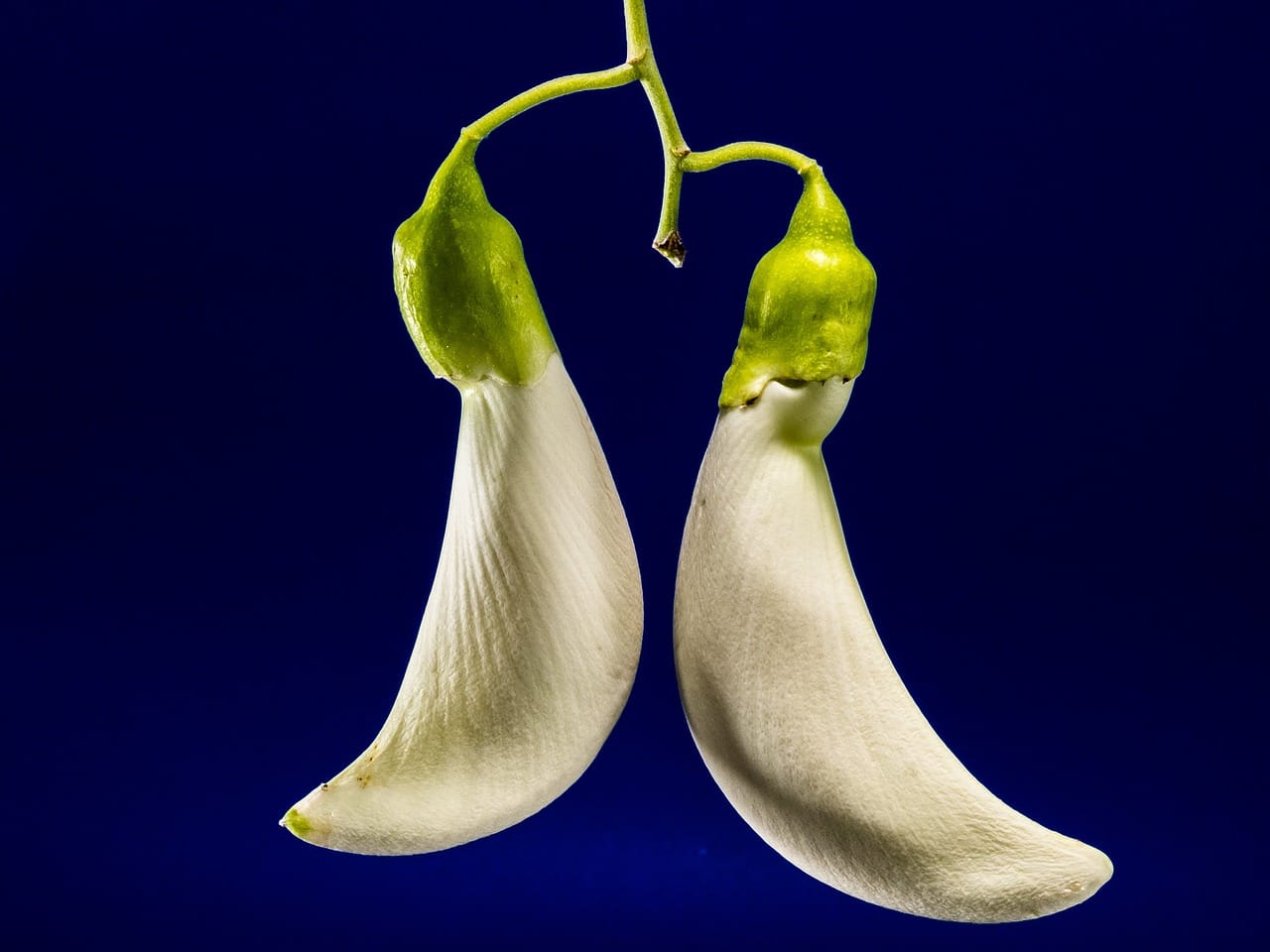
The Katuray tree, scientifically known as Sesbania grandiflora, is a fast-growing tropical tree known for its large edible flowers, young leaves, and tender pods. It is native to parts of Malesia and New Guinea, including the Philippines, and is widely cultivated in tropical regions.
Katuray is also known as vegetable hummingbird and Agati. In the Philippines, it has several regional names, including Katuday and Diana. Its flowers are commonly eaten as a vegetable, while the tree is also used for fodder, green manure, shade, and other agricultural purposes.
For Filipino gardeners, Katuray is particularly interesting because it combines food production with rapid growth and relatively simple propagation.
For a broader introduction to growing plants at home, see our Complete Gardening Guide.
Katuray Tree Quick Facts
| Feature | Details |
|---|---|
| Common name | Katuray, Katurai |
| Scientific name | Sesbania grandiflora |
| Family | Fabaceae |
| Other common names | Vegetable hummingbird, Agati |
| Philippine names | Katuray, Katuday, Diana, Gauai-gauai, Kature, Kambangturi |
| Growth | Fast-growing, soft-wooded tropical tree |
| Height | About 6–9 meters in Philippine agricultural references, with taller trees also reported |
| Flowers | Large, hanging flowers in white, pink, rose, red, or related shades |
| Edible parts | Flowers, young leaves, and young pods |
| Propagation | Seeds and branch or stem cuttings |
| Climate | Warm tropical conditions |
What Is Katuray?
Katuray is Sesbania grandiflora, a flowering tree in the Fabaceae or legume family. The Royal Botanic Gardens, Kew currently recognizes Sesbania grandiflora (L.) Poir. as the accepted scientific name and lists the Philippines among the species’ native range.
The tree grows quickly and has soft wood, fine compound foliage, and large hanging flowers. Philippine agricultural references describe Katuray as a short-lived, quick-growing tropical tree commonly cultivated in lower elevations.
Different references may show slightly different botanical authorships, such as Sesbania grandiflora (L.) Pers.. These names refer to the same species and reflect differences in taxonomic treatment.
For the current accepted name and distribution, see Kew’s Plants of the World Online profile for Sesbania grandiflora.
What Is Katuray Called in the Philippines?
Katuray has several local names across the Philippines. Philippine agricultural references list names including:
- Katuray
- Katuday
- Diana
- Gauai-gauai
- Kature
- Kambangturi
Its English names include vegetable hummingbird and Agati.
These regional names can be useful when looking for seeds, cuttings, recipes, or local growing information. The PCAARRD Katuray reference provides a more detailed list of Philippine names and botanical information.
What Does a Katuray Tree Look Like?
Katuray is relatively easy to recognize because of its delicate foliage and unusually large, hanging flowers.
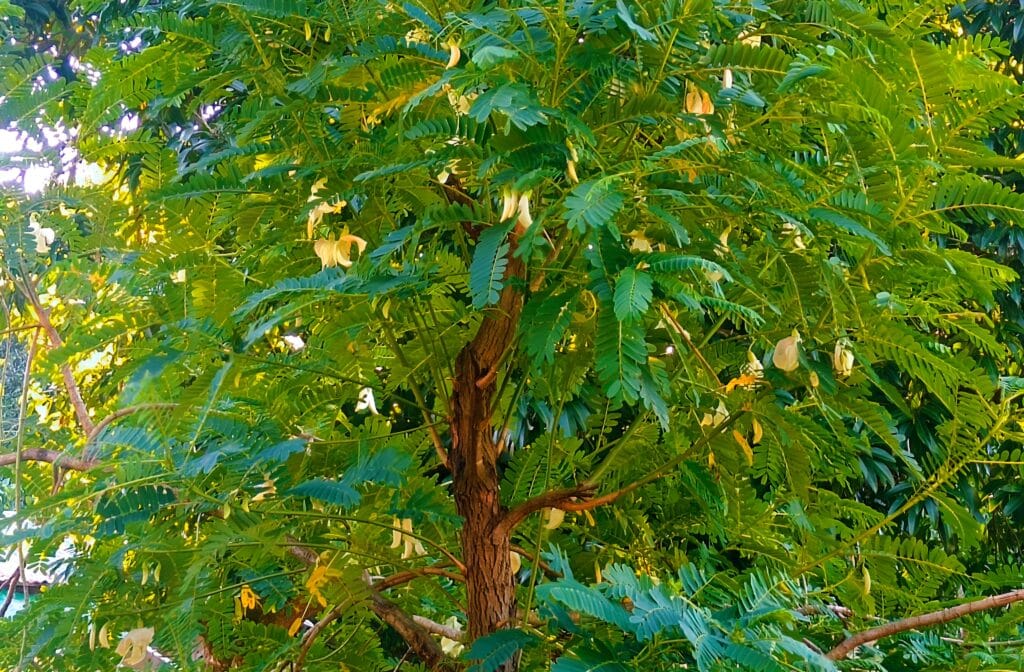
Leaves
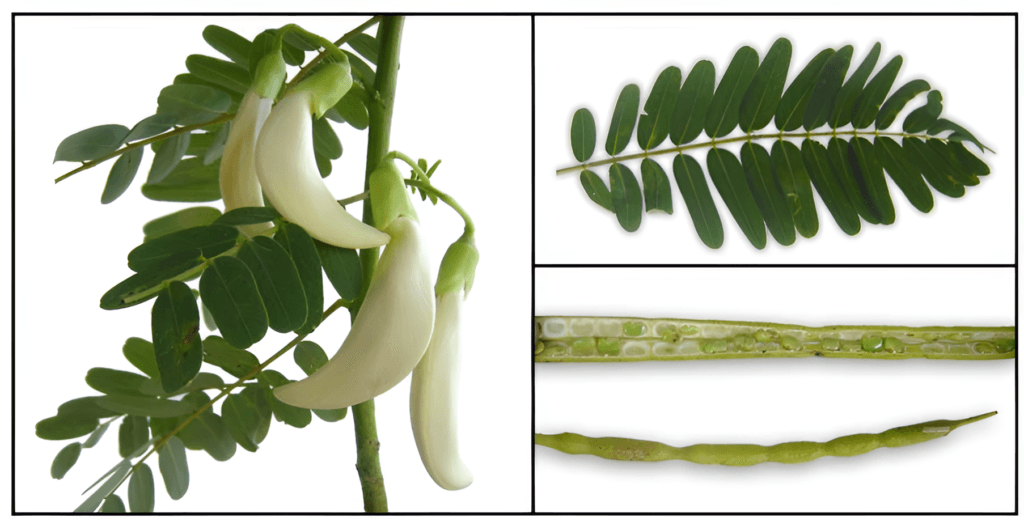
The leaves are pinnately compound, meaning many small leaflets are arranged along a central stalk. This gives the foliage a light, feathery appearance.
Philippine agricultural references describe numerous narrow or oblong leaflets arranged along the leaf stalk.
Flowers
The flowers are the tree’s most distinctive feature. They are large, fleshy, pea-like flowers that hang from the branches.
Flower color varies among plants. White, pink, rose, and red or crimson forms are commonly described, while Philippine Department of Agriculture material also records yellowish forms.
The unusual flower shape is the reason for the common English name vegetable hummingbird.
Pods
After flowering, Katuray produces long, narrow seed pods. Young green pods are also eaten as a vegetable in parts of Asia.
Are Katuray Flowers Edible?
Yes. Katuray flowers are edible and are commonly used as a vegetable.
Philippine agricultural sources document the flowers as food and describe them being eaten raw or cooked. Young leaves and tender pods are also used as vegetables.
Depending on the recipe, Katuray flowers may be added to salads, curries, stews, or steamed vegetable dishes. The Philippine Department of Agriculture’s Agricultural Training Institute specifically documents Katuray flowers, leaves, and young pods as food.
See the Department of Agriculture’s guide to edible flowers and Katuray.
What Do Katuray Flowers Taste Like?
Katuray flowers have a distinctive vegetable flavor and can be somewhat bitter or astringent.
Preparation varies by region. Some culinary references recommend removing the stamens before cooking because they can contribute bitterness.
For a food-focused preparation reference, see the JIRCAS entry on Sesbania grandiflora.
Katuray Uses and Benefits
Katuray has several practical uses beyond its flowers. Its combination of rapid growth, edible plant parts, and agricultural value makes it a useful multipurpose tree in tropical regions.
1. Edible Flowers
The large flowers are one of the tree’s best-known uses. They are harvested as a vegetable and feature in regional dishes across Southeast Asia, including the Philippines.
2. Young Leaves and Pods
Young leaves and tender pods are also eaten as vegetables. This gives Katuray more food value than a plant grown only for its flowers.
3. Green Manure and Soil Improvement
Katuray is a legume capable of biological nitrogen fixation through its association with soil microorganisms. Its rapid growth and substantial foliage make it useful as green manure in suitable agricultural systems.
Research and agricultural references also document its use for improving soil fertility and integrating tree growth into farming systems.
For more general information about building healthier garden soil, see our guide on improving soil health.
4. Livestock Fodder
Katuray foliage and young branches are used as livestock feed in some tropical farming systems, particularly for ruminants.
However, animal feeding should not be treated the same way as human food use. Feedipedia notes that Katuray contains compounds such as tannins, saponins, and canavanine, so its use as animal feed should follow appropriate feeding practices.
5. Agroforestry
Because Katuray grows quickly and produces abundant foliage, it has been used in agroforestry as a shade tree, windbreak, support plant, and source of organic matter.
These uses make it particularly interesting for farms where a single tree can serve multiple purposes.
6. Fuelwood
The soft wood has also been used as fuelwood. Katuray is therefore better viewed as a multipurpose agricultural tree than as a timber tree grown primarily for high-value wood.
Katuray Flower Nutrition
Katuray flowers provide nutrients, but the most useful way to describe their nutritional value is with actual Philippine food-composition data rather than broad claims about them being a “superfood.”
The DOST-FNRI Philippine Food Composition Table lists the following values for raw Katuray flowers, identified as Sesbania grandiflora, per 100 grams of edible portion:
| Nutrient | Per 100 g edible portion |
|---|---|
| Energy | 31 kcal |
| Protein | 1 g |
| Total fat | 0.3 g |
| Carbohydrates | 6.1 g |
| Dietary fiber | 2.1 g |
| Calcium | 13 mg |
| Phosphorus | 20 mg |
| Iron | 0.4 mg |
| Potassium | 134 mg |
| Beta-carotene | 48 µg |
| Vitamin C | 1 mg |
These figures are for the raw flower entry in the Philippine Food Composition Table. Nutrient levels can vary depending on the plant, maturity, growing conditions, and preparation.
View the DOST-FNRI Philippine Food Composition Table entry for Sesbania flower.
Does Katuray Have Health Benefits?
Katuray flowers and other edible parts can contribute nutrients to a varied diet, but that does not mean the plant should be presented as a treatment for disease.
Katuray also has a long history of traditional medicinal use in parts of Asia. Botanical and agricultural references document those traditional applications, but traditional use is not the same as clinical evidence that Katuray can cure or prevent a specific medical condition.
For that reason, it is more accurate to describe Katuray as an edible, nutritious, and multipurpose tropical plant with traditional medicinal uses rather than a miracle cure.
How to Grow Katuray in the Philippines
Katuray is well suited to warm tropical conditions and is commonly grown in lower elevations in the Philippines.
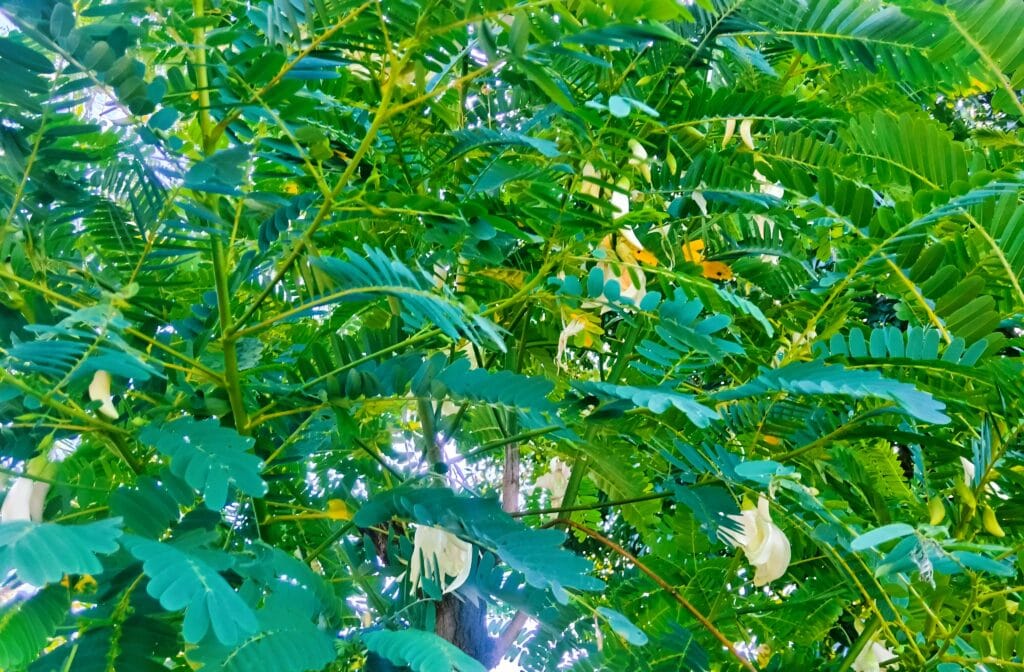
It is a relatively fast-growing tree, which makes it useful for gardeners who want a plant that establishes quickly and can provide flowers and foliage in a relatively short period.
Choose a Sunny Location
Katuray performs well in direct sunlight. Choose an open location where the tree will receive plenty of light.
Because it can grow several meters tall, avoid planting it where mature branches will interfere with buildings, narrow pathways, or utility lines.
Propagate Katuray From Seeds or Cuttings
Katuray can be propagated from seeds or branch cuttings.
Seeds are useful when starting several plants, while healthy branch cuttings can provide another practical way to propagate an established tree.
The Department of Agriculture’s Agricultural Training Institute specifically documents branch cuttings and seed germination as propagation methods for Katuray.
Plant in Warm Conditions
Katuray is a tropical species and does not tolerate prolonged cold well. Philippine references describe it as commonly grown in lower elevations.
For gardeners in the Philippines, warm conditions and plenty of sunlight generally provide the climate this tree prefers.
Use Suitable Soil
Katuray can adapt to a range of soil conditions. Good drainage is still useful in a home garden, particularly in areas where heavy rainfall can leave the soil saturated for long periods.
For general advice on soil structure, drainage, organic matter, and garden preparation, our soil health guide provides additional background.
Water While Establishing
Young trees benefit from regular watering while their roots become established.
Once established, Katuray is relatively adaptable, but watering should still be adjusted according to rainfall, soil conditions, and the age of the tree.
Give the Tree Enough Space
Plan for the tree’s mature size when choosing a planting location. A small seedling can develop into a sizeable tree surprisingly quickly.
Selective pruning can help manage its shape and height, but Philippine and tropical-agriculture references caution against severe and repeated pruning of young Katuray trees.
Common Katuray Pests and Problems
Katuray can still experience pest and disease problems despite being a hardy tropical tree.
Philippine agricultural references report problems involving leaf webbers, leaf feeders, stem borers, seed pests, and root-knot nematodes, among others.
For a home garden, inspect the leaves, stems, new growth, and soil regularly. Look for unusual holes, webbing, wilting, discoloration, or stem damage.
Identify the problem before applying pesticides or other treatments. Targeted control is generally preferable to spraying simply because insects are present.
When Should You Harvest Katuray?
Young, fresh Katuray flowers are commonly harvested for food. Tender young leaves and pods can also be harvested as vegetables.
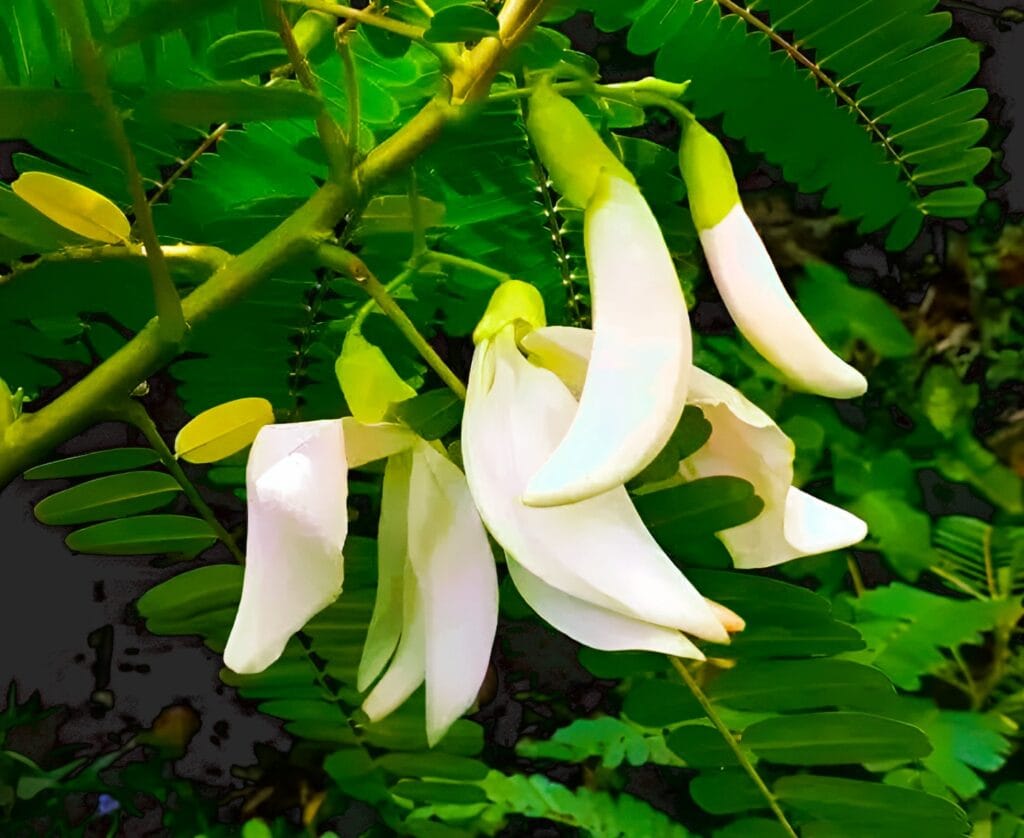
Some recipes remove the stamens from the flowers before cooking because they can contribute bitterness.
For food use, harvest only from a correctly identified Katuray tree and from plants that have not been exposed to unsuitable pesticides, herbicides, or other contaminants.
Katuray and Traditional Medicine
Katuray has a documented history of traditional medicinal use in parts of Asia. Philippine agricultural references also mention traditional applications.
However, it is important to distinguish between traditional use and scientifically established medical treatment. Traditional use, laboratory findings, animal studies, and human clinical trials represent different levels of evidence.
For a gardening and food reference such as this one, the safest and most useful approach is to document Katuray’s traditional uses without presenting them as proven cures.
Is Katuray Native to the Philippines?
Yes. The Royal Botanic Gardens, Kew currently lists the Philippines among the native range of Sesbania grandiflora.
The species is also widely cultivated in the country, which helps explain why Katuray remains familiar in many Philippine communities and home gardens.
Kew’s current species profile for Sesbania grandiflora provides the botanical classification and distribution information.
Is Katuray Endangered?
The current global conservation status of Sesbania grandiflora is Data Deficient.
Data Deficient does not mean that Katuray is endangered. It also does not mean that the species has been conclusively shown to be free from conservation concern. Rather, it means that there is insufficient information for the IUCN to assign a more definitive global category.
World Flora Online records the current IUCN status as Data Deficient.
Frequently Asked Questions About Katuray
What is the scientific name of Katuray?
The accepted scientific name is Sesbania grandiflora. Kew currently lists Sesbania grandiflora (L.) Poir. as the accepted name.
Are Katuray flowers edible?
Yes. Katuray flowers are edible and are used as vegetables in the Philippines and other parts of Southeast and South Asia.
Can you eat Katuray leaves?
Yes. Young Katuray leaves are documented as edible and are commonly prepared as a vegetable.
Can you eat Katuray pods?
Yes. Tender young pods are also documented as edible.
How do you propagate Katuray?
Katuray can be propagated from seeds or branch and stem cuttings.
Does Katuray need full sun?
Yes. Katuray grows well in direct sunlight and warm tropical conditions.
Is Katuray easy to grow in the Philippines?
Katuray can be relatively easy to grow in suitable parts of the Philippines because it is fast-growing, adaptable to a range of soils, and can be propagated through seeds or cuttings.
What are the benefits of growing Katuray?
Katuray can provide edible flowers, young leaves, and pods. It can also contribute foliage for green manure, provide shade, support some agroforestry systems, and serve as livestock fodder when appropriately managed.
What is Katuray called in English?
Two common English names are vegetable hummingbird and Agati.
Final Thoughts
The Katuray tree (Sesbania grandiflora) is a good example of a multipurpose tropical plant that has remained useful in Philippine gardens and agriculture.
Its flowers are edible, its young leaves and pods can be prepared as vegetables, and its rapid growth gives it additional value for fodder, green manure, shade, and agroforestry.
For Filipino gardeners, Katuray is especially worth knowing because the species is native to the Philippines, performs well in warm tropical conditions, and can be propagated without complicated equipment.
Its value is best understood through documented food, nutritional, gardening, and agricultural uses rather than exaggerated health claims.
For more plant profiles and practical gardening advice, visit our Gardening section or continue with the Complete Gardening Guide.
Sources and Further Reading
- Royal Botanic Gardens, Kew: Plants of the World Online entry for Sesbania grandiflora
- PCAARRD-DOST: Katuray botanical description, Philippine names, and cultivation information
- DOST-FNRI: Philippine Food Composition Table entry for Sesbania flower
- Department of Agriculture Agricultural Training Institute: Edible flowers, Katuray uses, propagation, and care
- Feedipedia: Agati (Sesbania grandiflora) uses, fodder, soil improvement, and agricultural information
- World Flora Online: Sesbania grandiflora classification and current IUCN status
Also Read: Interesting Facts, Uses And Benefits Of Ipil Ipil
Well, what do you think about the article?
Did you enjoy reading “Katuray Tree (Sesbania grandiflora): Flowers, Uses, Benefits & Growing Guide“?
We really hope that you have found this article informative and engaging. If you have any thoughts or comments about this post, please feel free to share them in the comment section below. We appreciate your feedback and would be glad to hear from you.
To see more content like this check the gardening section of Money For My