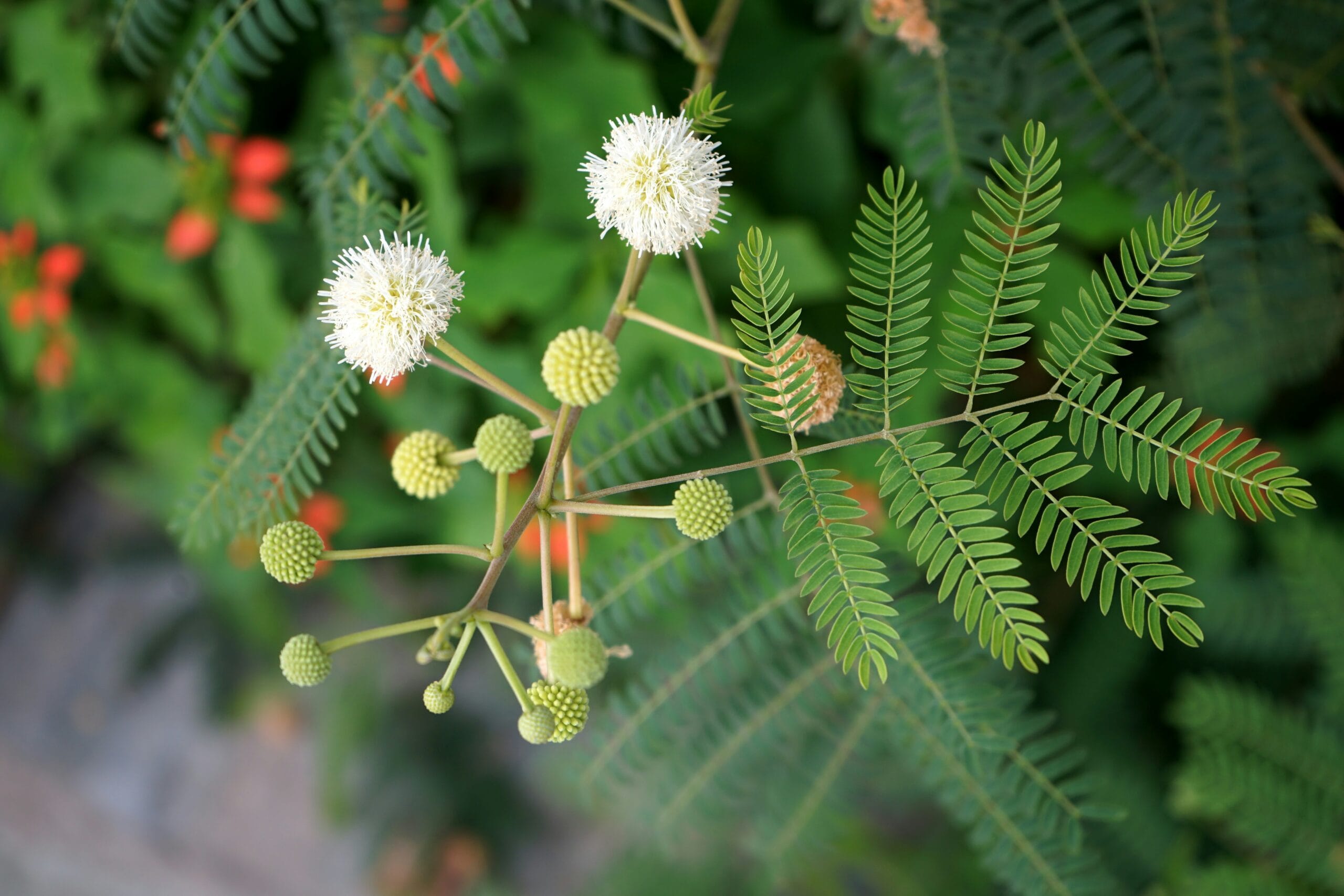
Ipil-ipil (Leucaena leucocephala) is a fast-growing tropical legume with many practical uses. Also known as river tamarind, lead tree, wild tamarind, and leucaena, it is widely used for livestock forage, green manure, agroforestry, soil conservation, shade, fuelwood, charcoal, and other wood products.
What makes ipil-ipil valuable is its ability to grow quickly, produce plenty of leafy biomass, fix nitrogen through its relationship with soil bacteria, and regrow after cutting. At the same time, it has limitations that should not be overlooked. It contains mimosine, a compound that can cause toxicity when consumed inappropriately, and it can spread aggressively in some introduced environments.
This guide covers the benefits of ipil-ipil, its common uses, growing requirements, role in soil improvement and agroforestry, livestock value, edible parts and safety concerns, invasive potential, and the difference between ipil-ipil, Philippine ipil, and katuray.
Quick Facts About Ipil-Ipil
| Fact | Details |
|---|---|
| Scientific name | Leucaena leucocephala (Lam.) de Wit |
| Family | Fabaceae |
| Common names | Ipil-ipil, river tamarind, lead tree, wild tamarind, leucaena |
| Native range | Mexico to Central America |
| Distribution | Widely introduced throughout tropical and subtropical regions, including the Philippines |
| Growth habit | Fast-growing, thornless shrub or tree |
| Typical size | Commonly around 3 to 15 meters, with some plants reaching about 20 meters |
| Main uses | Livestock forage, green manure, agroforestry, soil conservation, shade, fuelwood, charcoal, and wood products |
| Key characteristic | Nitrogen-fixing legume with strong regrowth after cutting |
| Main safety concern | Contains mimosine, which can be harmful when consumed in excessive amounts |
| Environmental concern | Can become invasive or weedy in some introduced regions |
The Royal Botanic Gardens, Kew recognizes Leucaena leucocephala as an accepted species. Kew gives Mexico to Central America as its native range and lists the Philippines among its introduced distribution.
What Is Ipil-Ipil?
Ipil-ipil is a member of the legume family, Fabaceae. It is a highly adaptable tropical shrub or tree that grows rapidly and performs well in warm environments.
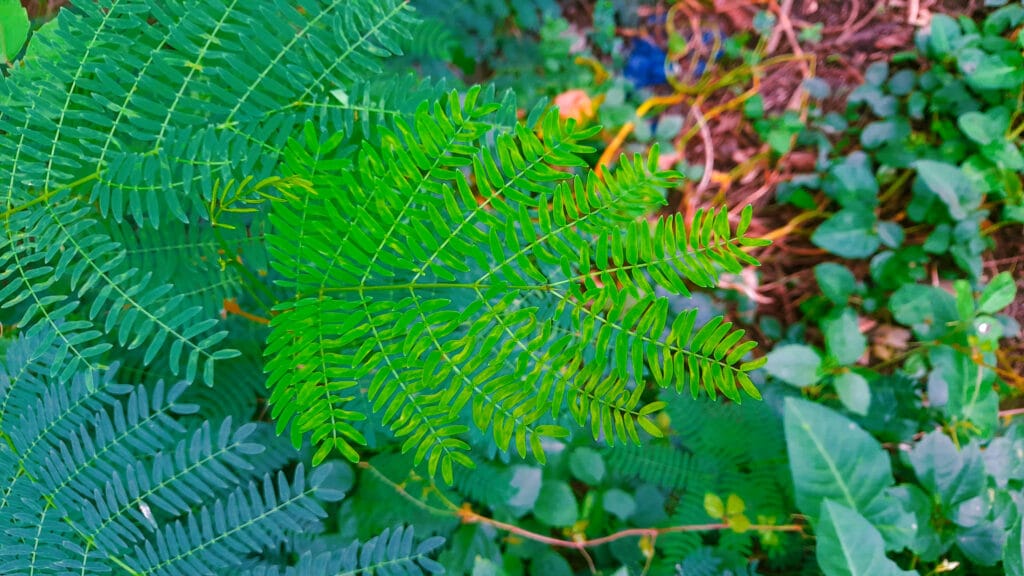
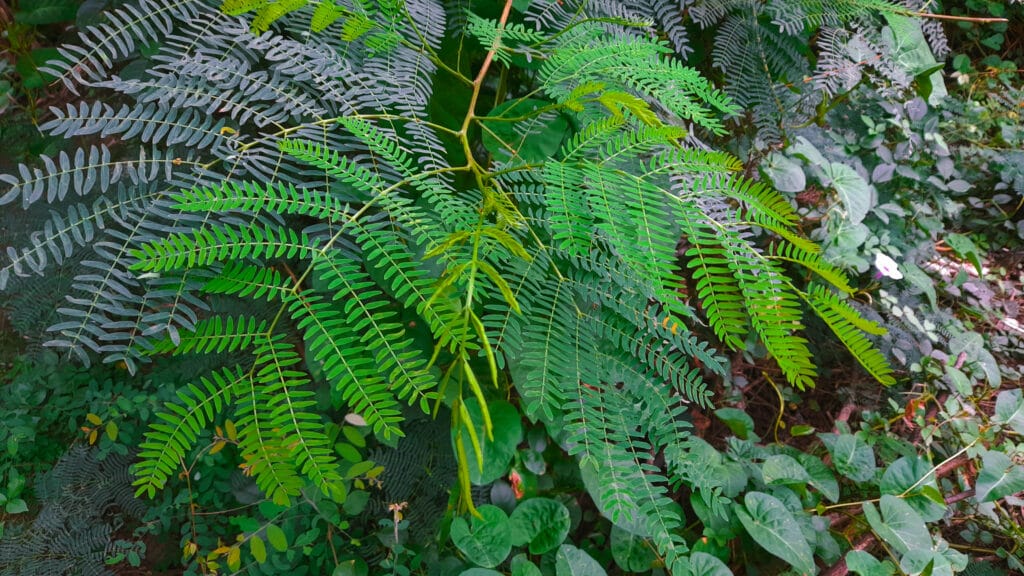
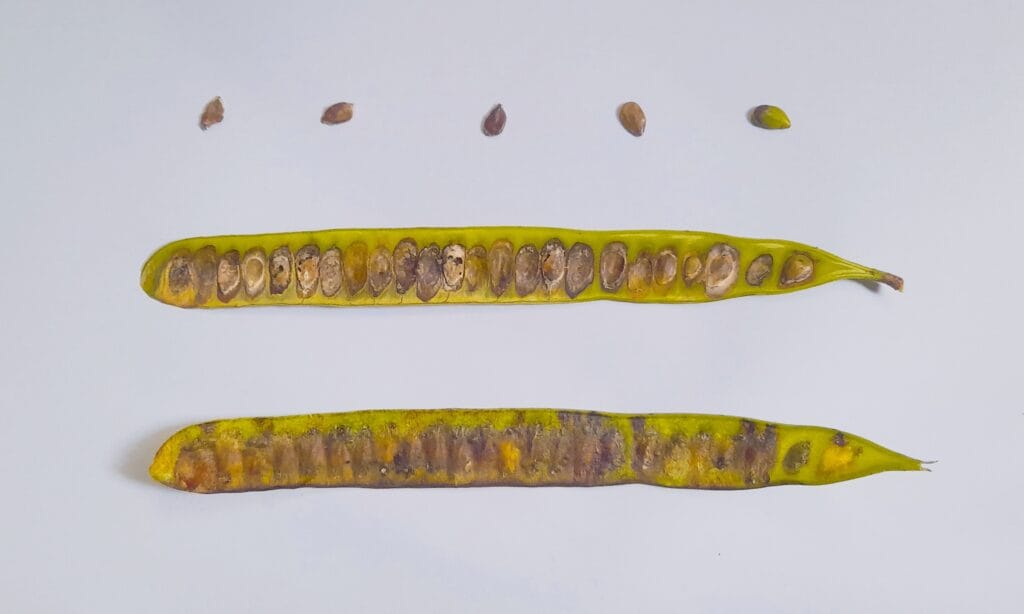
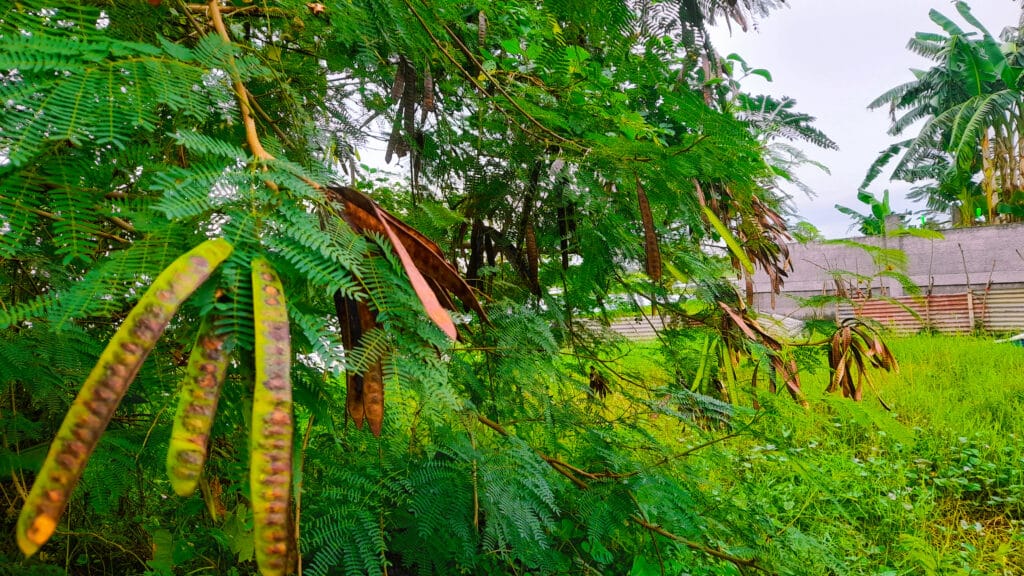
The plant has finely divided, bipinnate leaves, small rounded flower heads, and flat seed pods containing multiple seeds. Depending on the variety and how it is managed, it can be maintained as a shrub for repeated cutting or allowed to develop into a larger tree.
The species is especially well known for its combination of rapid growth, nitrogen fixation, nutritious foliage, and vigorous regrowth. Those characteristics explain its importance in tropical agriculture and agroforestry.
The Philippine National Parks Development Committee identifies ipil-ipil as Leucaena leucocephala and notes that it prefers full sunlight, needs little to moderate water, and is drought-tolerant.
Its common names can cause confusion, especially in the Philippines. Ipil-ipil is not the same plant as ipil or katuray. The differences are explained later in this guide.
Benefits of Ipil-Ipil
The strongest and best-documented benefits of ipil-ipil are agricultural, environmental, and practical. Its usefulness comes from several traits working together rather than from a single benefit.
1. Can Improve Nutrient Cycling and Soil Fertility
Ipil-ipil is a nitrogen-fixing legume. It forms associations with bacteria in root nodules that allow atmospheric nitrogen to enter the plant-soil system.
This makes leucaena useful in agroforestry and other farming systems where trees are integrated with crops or livestock. When its leaves and pruned branches are returned to the soil, they also contribute organic material and nutrients.
However, the amount of nitrogen contributed is not fixed. It depends on soil conditions, plant growth, management, and the effectiveness of the plant’s symbiotic relationship with nitrogen-fixing bacteria.
For that reason, it is better to describe ipil-ipil as a plant that can contribute nitrogen and improve nutrient cycling rather than as a guaranteed replacement for fertilizer.
For more practical information about improving garden soil, see our guide to how to improve soil health.
2. Provides High-Quality Forage for Livestock
One of the most important uses of ipil-ipil is livestock feed. Its foliage is highly palatable and contains substantial protein, making it useful as a supplement to grass-based forage in tropical livestock systems.
Leucaena is particularly associated with cattle, sheep, and goats. It can provide useful forage during dry periods when pasture growth is reduced.
There is an important limitation. Ipil-ipil contains mimosine, a non-protein amino acid that can become toxic when leucaena is consumed in excessive amounts or used incorrectly in livestock diets.
Feedipedia documents the nutritional value of leucaena and its mimosine-related constraints. The risk is especially important when leucaena makes up a large portion of an animal’s diet over extended periods.
This means ipil-ipil can be valuable forage, but it should be treated as a managed feed resource rather than unrestricted pasture.
3. Can Be Used as Green Manure
Ipil-ipil can be repeatedly pruned, with leafy material returned to the soil as green manure or mulch.
The biomass decomposes and contributes organic matter and nutrients. This is one reason leucaena has been incorporated into alley-cropping, contour hedgerows, and other agroforestry systems.
It can be especially useful where growers want a renewable source of plant material that can be cut and returned to the soil rather than removed from the farm.
4. Can Support Soil Conservation
Leucaena has been used in contour hedgerows and other soil-conservation systems where vegetation barriers are planted across slopes.
These systems can help slow surface runoff, reduce soil movement, and provide a continuing source of pruned biomass. FAO documentation on the Sloping Agricultural Land Technology (SALT) system in the Philippines specifically includes Leucaena leucocephala among nitrogen-fixing species used in contoured hedgerows.
Ipil-ipil should not, however, be presented as a standalone erosion solution. The effectiveness of soil conservation depends on slope, rainfall, ground cover, drainage, planting design, and wider land-management practices.
For another example of a Philippine groundcover used in erosion-control and agricultural settings, see our article on carabao grass.
5. Useful in Agroforestry
Ipil-ipil is a classic multipurpose agroforestry tree because a single planting can perform several functions.
- Foliage: Used as livestock forage.
- Pruned biomass: Used as green manure or mulch.
- Nitrogen fixation: Contributes to nutrient cycling in suitable systems.
- Canopy: Can provide shade or shelter.
- Wood: Can be used for fuel, charcoal, posts, and other products.
Philippine farmers have also incorporated leucaena into indigenous and community-based agroforestry systems. Research from the University of the Philippines Los Baños documents a Leucaena leucocephala-based fallow system in Central Philippines that was developed by farmers more than a century ago.
The University of the Philippines Los Baños study on the Naalad system provides an example of how leucaena has been integrated into Philippine farming practices.
6. Provides Fuelwood and Charcoal
Ipil-ipil wood has long been used for fuelwood and charcoal because the tree grows quickly and can regenerate after cutting.
Leucaena wood can also be used for posts, small wood products, furniture, paper pulp, and other applications depending on local conditions and available industries.
7. Regrows Well After Cutting
Strong regrowth is one of the main reasons ipil-ipil is useful for forage and biomass production.
Plants can survive repeated cutting or grazing when properly managed, allowing growers to harvest fresh foliage and other biomass multiple times.
For residential planting, pruning can also help control the tree’s height and shape. However, cutting back the plant does not eliminate its ability to produce seeds.
8. Can Provide Shade and Shelter
Leucaena can be incorporated into managed agroforestry systems as a shade or shelter tree.
The amount of shade depends on variety, spacing, age, and pruning. This matters because too much shade can also reduce the productivity of some crops.
As a result, ipil-ipil is generally more useful as a managed component of a planting system than as an uncontrolled shade tree.
Ipil-Ipil Benefits vs. Its Limitations
Ipil-ipil is valuable partly because the same characteristics that create its benefits also create management challenges.
| Benefit | Important limitation |
|---|---|
| Nitrogen fixation | Effect varies with soil conditions and plant-microbe interactions |
| Protein-rich forage | Mimosine limits unrestricted feeding |
| Fast biomass production | Regular pruning may be needed to control size |
| Soil conservation | Works best as part of a complete conservation system |
| Easy establishment | Can naturalize or become invasive in suitable environments |
| Traditional food uses | Plant parts contain mimosine and require appropriate caution |
In other words, ipil-ipil is not simply a “good” or “bad” tree. Its value depends heavily on where it is planted and how it is managed.
Is Ipil-Ipil Good for Soil?
It can be, especially in managed agricultural and agroforestry systems.
As a legume, ipil-ipil can fix atmospheric nitrogen when suitable bacteria are present. Its leaves and pruned branches also return organic material and nutrients to the soil when used as mulch or green manure.
Its use in contour hedgerows can provide an additional soil-conservation benefit by creating vegetative barriers across slopes.
For a small home garden, however, planting a large, fast-growing tree solely to improve soil may not be the most practical approach. Compost, mulch, cover crops, and other soil-management techniques are often easier to control.
How Fast Does Ipil-Ipil Grow?
Ipil-ipil is considered a fast-growing tropical tree, but there is no single growth rate that applies to every plant.
Growth depends on the variety, rainfall, sunlight, soil, water availability, nutrient status, and whether the plant is regularly cut for forage or biomass. Under favorable conditions, leucaena can establish quickly and produce substantial biomass, which is one of the reasons it has been widely used in tropical agriculture.
Its strong regrowth after cutting is also important. A plant managed for forage or green manure may repeatedly produce new shoots rather than being grown only for mature timber.
How to Grow Ipil-Ipil
Ipil-ipil is relatively easy to establish in warm climates when it receives sufficient sunlight and has suitable drainage.
Choose a Sunny Location
Plant ipil-ipil where it can receive plenty of direct sunlight. The Philippine National Parks Development Committee notes that ipil-ipil prefers full sunlight. Ensure you select a spot outdoors where it will not be shaded by taller structures.
Give the plant enough room for its eventual size, especially if you are growing a larger type rather than maintaining it as a frequently pruned shrub.
Use Well-Drained Soil
Leucaena generally performs best in well-drained soil and can tolerate relatively dry conditions once established.
Good drainage is important because drought tolerance does not mean the tree performs well in permanently waterlogged soil.
Water Young Plants
Young plants need adequate moisture while their root systems are becoming established. After establishment, ipil-ipil can tolerate considerably drier conditions.
Water according to rainfall, soil type, and local climate rather than following a fixed schedule.
Prune According to Your Purpose
Pruning depends on how you intend to use the plant.
For forage or biomass production, regular cutting encourages fresh growth. For residential planting, pruning can help control the tree’s size and shape. In agroforestry systems, pruning is usually integrated into a broader crop-management plan.
Manage Seed Pods and Seedlings
Monitor mature plants for seed pods and remove unwanted seedlings before they become established.
This is particularly important in locations where leucaena has the potential to naturalize or spread into surrounding vegetation.
Where Should You Not Plant Ipil-Ipil?
Because ipil-ipil can spread outside cultivation, planting location matters.
Be especially cautious about planting it near protected natural areas, sensitive habitats, waterways, forests, or other locations where escaped seedlings would be difficult to manage.
Also consider whether you can regularly prune the tree and remove unwanted seedlings. A fast-growing species that is easy to manage on a farm can become inconvenient in a small residential lot.
The IUCN Global Invasive Species Database reports that leucaena spreads naturally in many tropical and subtropical locations and can form dense stands in disturbed habitats.
Is Ipil-Ipil Invasive?
Ipil-ipil can become invasive in some regions. It is not invasive everywhere, but the species has naturalized widely outside its native range.
Its rapid growth, abundant seed production, self-fertility, and ability to resprout after cutting all contribute to its ability to establish and persist.
The IUCN Global Invasive Species Database documents the invasive behavior and distribution of Leucaena leucocephala, including reports of the species forming dense stands that can replace native vegetation in some areas.
Its invasive potential is therefore an important consideration, especially outside cultivated land.
Is Ipil-Ipil Edible?
Some parts of ipil-ipil have been eaten traditionally in different parts of the world. Young shoots, leaves, pods, and green seeds have documented food uses.
However, ipil-ipil should not be treated like an ordinary leafy vegetable.
The plant contains mimosine, and the concentration varies by plant part and growth stage. Excessive consumption can be harmful, particularly in livestock.
Research has investigated methods for reducing mimosine in plant material intended as food. One peer-reviewed study found that boiling removed mimosine from young leaves, pods, and seeds, while soaking in water for 24 hours substantially reduced mimosine in several tested plant materials.
Read the peer-reviewed study on methods for reducing mimosine in edible leucaena plant material.
These findings do not mean that any preparation method automatically makes ipil-ipil safe to eat. The plant part, preparation method, quantity, and individual circumstances all matter.
For this reason, this article does not recommend casually eating ipil-ipil leaves, pods, or seeds or using them as a home remedy.
Does Ipil-Ipil Have Medicinal Benefits?
Ipil-ipil has a history of traditional medicinal use, and scientific literature has investigated compounds found in different parts of the plant.
However, traditional use should not automatically be presented as a proven medical treatment. Botanical references recognize medicinal uses for the species, but that does not establish its effectiveness for a particular disease or condition.
This distinction is especially important because ipil-ipil also contains compounds associated with toxicity.
For health concerns, ipil-ipil should not be used as a substitute for established medical care.
Ipil-Ipil vs Ipil vs Katuray
The similar names can cause considerable confusion in the Philippines. Ipil-ipil, ipil, and katuray are three different plants.
Ipil-Ipil (Leucaena leucocephala)
Ipil-ipil is Leucaena leucocephala. It is the fast-growing leguminous shrub or tree discussed throughout this article. It is also known by English names such as river tamarind, lead tree, wild tamarind, and leucaena.
Ipil (Intsia bijuga)
Ipil refers to Intsia bijuga, a completely different tropical hardwood tree. It is valued for its timber and should not be confused with ipil-ipil.
Our article on termite-resistant woods in the Philippines discusses Philippine ipil wood separately.
Katuray (Sesbania grandiflora)
Katuray is Sesbania grandiflora, another leguminous tree known for its edible flowers and agricultural uses.
It is not another name for ipil-ipil. Our separate guide to the benefits and uses of katuray covers Sesbania grandiflora in more detail.
The three species are botanically distinct despite their similar common names.
Ipil-Ipil in the Philippines
Ipil-ipil has a long history of agricultural use in the Philippines. It has been used for livestock feed, fuelwood, charcoal, soil conservation, green manure, and other farming purposes.
One notable example is the Philippine use of leucaena in contour-based upland farming. FAO documentation on the Sloping Agricultural Land Technology system describes nitrogen-fixing hedgerows, including Leucaena leucocephala, planted along contours to help manage soil erosion while supplying useful biomass.
Leucaena has also been incorporated into traditional farming systems. Research published through the University of the Philippines Los Baños documents a Leucaena leucocephala-based fallow system in Central Philippines that was developed by local farmers over many generations.
At the same time, ipil-ipil should not be described as native to the Philippines. Kew lists Mexico to Central America as the species’ native range and the Philippines as part of its introduced distribution.
This distinction is important when discussing Philippine agriculture and biodiversity. A plant can be highly useful in agriculture while still being introduced to the country.
Common Uses of Ipil-Ipil
Because ipil-ipil is a multipurpose species, its uses extend well beyond gardening.
- Livestock forage: Leaves are used as a protein-rich supplement, particularly for ruminants.
- Green manure: Pruned foliage can be returned to the soil.
- Agroforestry: Used in mixed farming systems, fallows, and contour hedgerows.
- Soil conservation: Can contribute to managed erosion-control systems.
- Shade and shelter: Used in certain crop and agroforestry systems.
- Fuelwood: Wood is used as a fuel source in many tropical regions.
- Charcoal: Wood can also be used for charcoal production.
- Posts and wood products: Stems and wood have several practical applications.
- Traditional food: Young plant parts and seeds are consumed in some cultures, with important safety considerations.
Frequently Asked Questions About Ipil-Ipil
What are the benefits of ipil-ipil?
The main benefits of ipil-ipil are its use as livestock forage, green manure, a nitrogen-fixing agroforestry tree, soil-conservation plant, shade or shelter tree, and source of fuelwood and charcoal.
What is ipil-ipil used for?
Ipil-ipil is commonly used for livestock feed, soil improvement, green manure, contour hedges, erosion-control systems, shade, fuelwood, charcoal, fencing, and other wood products.
What is the scientific name of ipil-ipil?
The scientific name of ipil-ipil is Leucaena leucocephala (Lam.) de Wit.
What is another name for ipil-ipil?
Common English names include river tamarind, lead tree, wild tamarind, and leucaena. Other regional names are also used around the world.
Is ipil-ipil good for soil?
It can be. As a legume, ipil-ipil can fix atmospheric nitrogen when suitable bacteria are present, while leaves and pruned branches can contribute organic matter and nutrients when returned to the soil.
Is ipil-ipil good for cattle?
Ipil-ipil can provide high-quality forage for cattle and other ruminants. However, its mimosine content means it should be managed as part of a balanced diet rather than treated as unrestricted feed.
How fast does ipil-ipil grow?
Ipil-ipil is a fast-growing tree, but its growth rate varies considerably with variety, sunlight, moisture, soil, climate, and management.
Can ipil-ipil grow in dry areas?
Yes. Established plants can tolerate relatively dry conditions and perform well in warm climates with sufficient sunlight and suitable drainage.
Is ipil-ipil invasive?
It can be invasive in some introduced regions. Its fast growth, abundant seed production, self-fertility, and ability to regrow after cutting make careful management important.
Can you eat ipil-ipil leaves?
Young shoots and other plant parts have been eaten traditionally in some regions, but ipil-ipil contains mimosine. It should not be treated as an ordinary edible leafy vegetable without considering the plant part, preparation, quantity, and safety implications.
Does ipil-ipil have medicinal uses?
Ipil-ipil has traditional medicinal uses, but traditional use should not be confused with clinically established treatment. The species also contains compounds associated with toxicity.
Is ipil-ipil the same as katuray?
No. Ipil-ipil is Leucaena leucocephala, while katuray is Sesbania grandiflora. They are different species.
Is ipil-ipil the same as Philippine ipil?
No. Philippine ipil is Intsia bijuga, while ipil-ipil is Leucaena leucocephala. Their common names are similar, but the trees are different.
Final Word
Ipil-ipil is a remarkably versatile tropical tree. Its strongest benefits are practical: it can provide protein-rich forage, contribute to nutrient cycling, produce green manure and biomass, support soil-conservation systems, provide shade, and supply useful wood and fuel.
Those same characteristics also explain why it needs responsible management. Ipil-ipil can spread in suitable environments, and its mimosine content means that livestock feeding and food use require caution.
For gardeners and landowners in the Philippines, the best approach is to identify the plant correctly, choose an appropriate planting location, manage its size and regeneration, and understand both its benefits and limitations.
Most importantly, remember the names: ipil-ipil is Leucaena leucocephala, Philippine ipil is Intsia bijuga, and katuray is Sesbania grandiflora.
Sources and Further Reading
- Royal Botanic Gardens, Kew. Plants of the World Online: Leucaena leucocephala
- Philippine National Parks Development Committee. Ipil-ipil
- Feedipedia. Leucaena (Leucaena leucocephala)
- Food and Agriculture Organization. Sloping Agricultural Land Technology and leucaena-based hedgerows in the Philippines
- University of the Philippines Los Baños. A Leucaena leucocephala-based indigenous fallow system in Central Philippines
- PROSEA. Leucaena
- IUCN Global Invasive Species Database. Leucaena leucocephala
- International Journal of Food Science and Technology. Methods for reducing mimosine in edible Leucaena leucocephala plant material
Also Read: The Ultimate Guide to Growing Okra Plants
Well, what do you think about the article?
Did you enjoy reading “Ipil-Ipil (Leucaena leucocephala): Benefits, Uses & Safety“?
We really hope that you have found this article informative and engaging. If you have any thoughts or comments about this post, please feel free to share them in the comment section below. We appreciate your feedback and would be glad to hear from you.
To see more content like this check the gardening section of Money For My Beer.