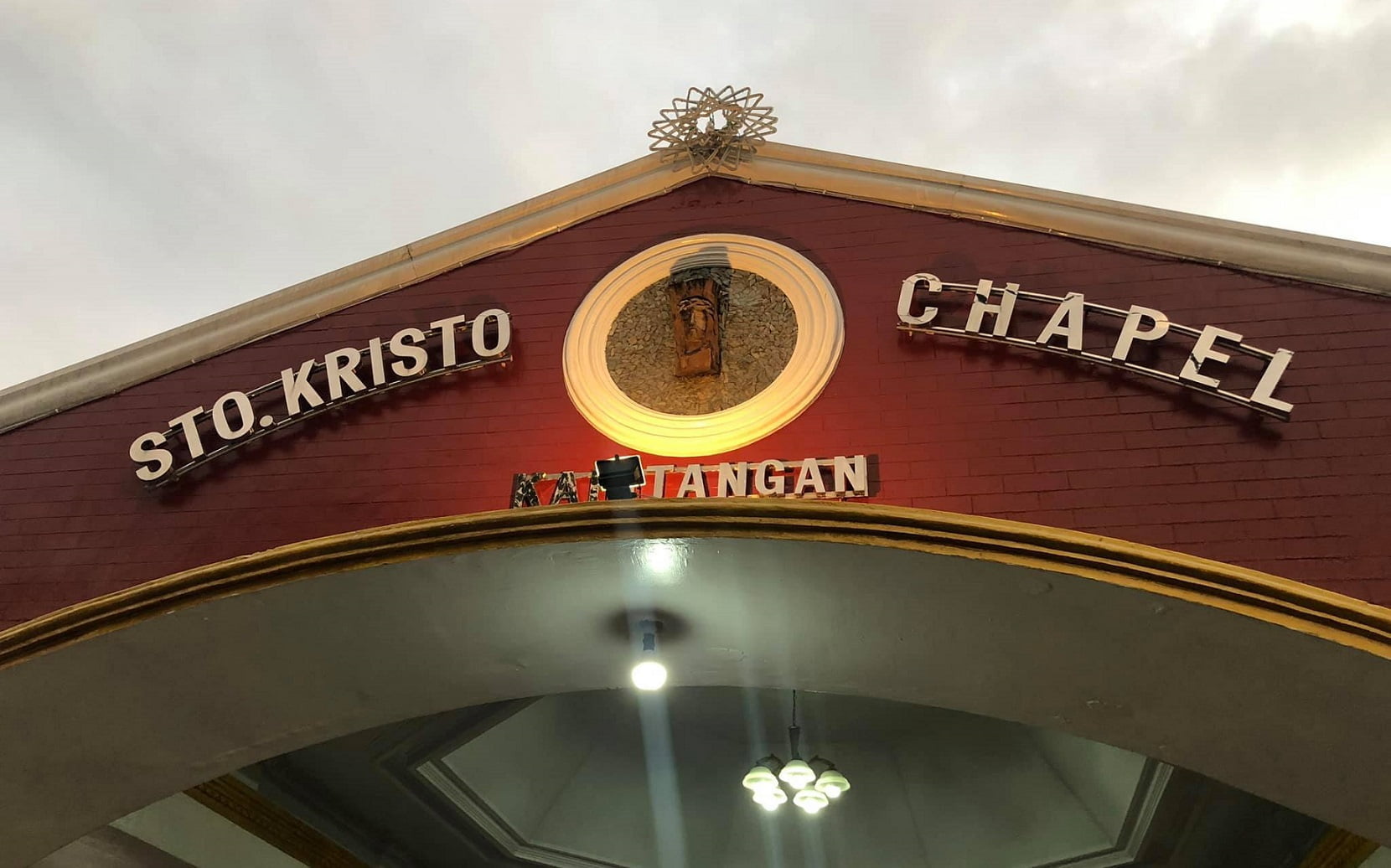
Kapitangan is a rural barangay in Paombong, Bulacan, known for its Santo Kristo devotion, distinctive Holy Week traditions, agricultural roots, and stories passed down through generations.
The Philippine Statistics Authority recorded 4,788 residents in Kapitangan in the 2024 Census of Population (2024 POPCEN). Kapitangan is one of the 14 barangays that make up Paombong.
The barangay is especially known during Semana Santa, when devotees gather around the Santo Kristo and take part in penitential traditions that may include self-flagellation, carrying wooden crosses, and voluntary crucifixion.
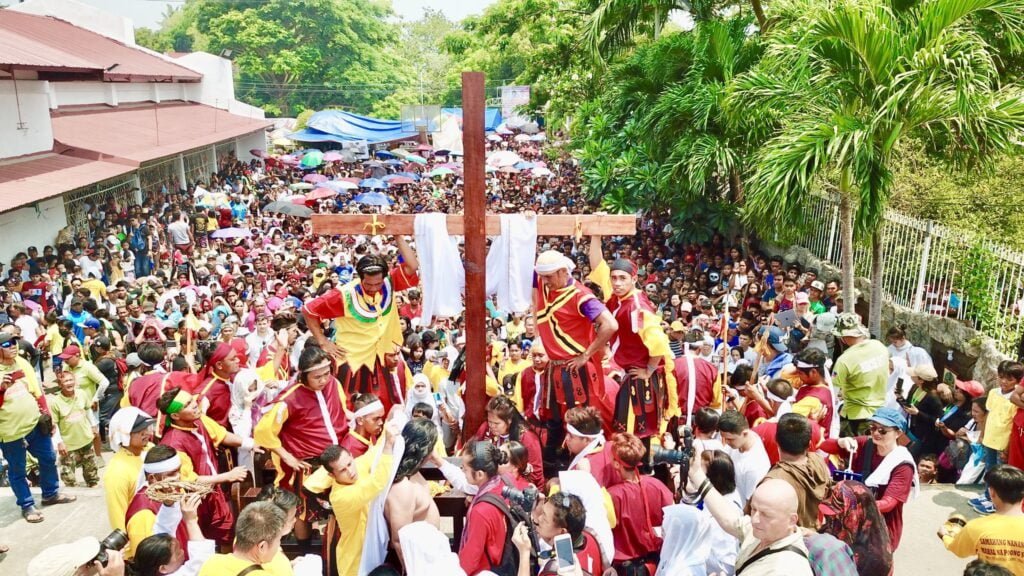
The Provincial Government of Bulacan recognizes the flagellant and Lenten rites in Kapitangan as one of the province’s religious traditions.
There is much more to Kapitangan, though. Its history includes an agricultural community that developed over generations, a local explanation for the name “Kapitangan,” the story of an early teacher known as Emiterio “Apo Terio” Bantigue, wartime memories, Santo Kristo traditions, local folklore, and everyday community life.
Quick Facts About Kapitangan
| Fact | Information |
|---|---|
| Barangay | Kapitangan |
| Municipality | Paombong |
| Province | Bulacan |
| Region | Central Luzon |
| Classification | Rural |
| Population | 4,788 in 2024 POPCEN |
| Known for | Santo Kristo devotion, Holy Week traditions and agriculture |
The Philippine Statistics Authority lists Kapitangan as a rural barangay of Paombong with 4,788 residents in the 2024 POPCEN.
Where Is Kapitangan, Paombong, Bulacan?
Kapitangan is located in Paombong, Bulacan, in Central Luzon.
Paombong is a low-lying municipality in the province with a landscape shaped by agriculture and waterways. The Provincial Government of Bulacan lists Paombong’s major industries as including food processing, aquaculture, ornamental plants and flowers, garments, and grass planting.
Kapitangan is one of the municipality’s 14 barangays. Its location places it within the wider area connecting Paombong with communities in Malolos, Calumpit, and Hagonoy.
The barangay has a predominantly rural character, although modern roads and access to nearby urban areas have changed how residents work, travel, and conduct business.
Kapitangan Population
The latest official population figure for Kapitangan is 4,788 residents, based on the 2024 POPCEN.
The 2020 Census recorded 4,708 residents.
| Census | Population |
|---|---|
| 2020 | 4,708 |
| 2024 POPCEN | 4,788 |
Kapitangan’s recorded population increased by 80 people between the two census counts.
The PSA’s current Paombong barangay data provides the latest official population and rural or urban classifications.
What Is Kapitangan Known For?
Kapitangan is best known for its Santo Kristo devotion and Holy Week penitential traditions.
The Provincial Government of Bulacan specifically identifies the flagellant and Lenten rites at Kapitangan, Paombong, as a religious tradition of the province.
Agriculture is another important part of the barangay’s identity. The wider municipality of Paombong has long been associated with farming, aquaculture, and grass planting.
Historical research also gives us a picture of Kapitangan as an agricultural community whose economy changed over time, first through rice and other crops and later through turf or grass cultivation.
The Early History of Kapitangan
Kapitangan has a documented history that goes back well before its present-day reputation as a Holy Week destination.
Anthropologist Charles Kaut studied Kapitangan as part of his research into Tagalog society. His 1965 study describes Kapitangan as a barrio in Paombong, Bulacan where wet-rice production was a major subsistence activity.
Kaut’s research traces the origins of many families in the settlement to nearby barrios of Malolos, with migration beginning around 1880. He also describes the community’s changing social and economic structure during the late 19th and early 20th centuries. (Asian Studies, University of the Philippines)
During the early years from about 1880 to 1926, Kaut recorded that land use was predominantly devoted to sugar cane, with smaller rice-growing areas. An irrigation system constructed in 1926 helped change agriculture toward wet-rice cultivation. (Asian Studies, University of the Philippines)
By the time of his research, rice paddies dominated the local landscape, and Kapitangan’s social life was closely connected with neighboring communities, particularly Malolos.
Local historical accounts add another layer to this early history, including memories of portions of the area once being covered in cogon grass before the community developed into the agricultural settlement known today.
Kapitangan and the Katipunan
The period of the Philippine Revolution is also remembered in local stories about Kapitangan.
Community accounts associate residents of the area with the Katipunan, the revolutionary society that fought Spanish colonial rule in the late 19th century.
The broader history of the Katipunan and the Philippine Revolution is well documented. The more specific stories about individuals from Kapitangan form part of the community’s local historical memory and have been passed down alongside other stories about the area’s early years.
These accounts provide another connection between Kapitangan and the wider history of Bulacan during the struggle against Spanish rule.
The Story Behind the Name Kapitangan
Perhaps the most distinctive piece of Kapitangan’s oral history is the story behind its name.
A longstanding local tradition connects Kapitangan with the words “kapit” and “tangan.” The story has been passed down by word of mouth, and several versions have been recorded through interviews with residents.
One version tells of a religious procession involving a pagoda that encountered an accident on the water. As people tried to keep themselves from falling or being swept away, they shouted “kapit-tangan!” The story says that the phrase later became associated with the name of the community.
Another version connects the words directly to the Santo Kristo. In that telling, the image was being transported by boat when strong winds suddenly arose. The people accompanying the image reportedly shouted “kapit-tangan” as they held on.
A third version recorded in a local account involves children caught in a dangerous situation on a boat, with adults calling out to them to “kapit” and “tangan” onto a rope.
The versions are different, but they share the same central idea: the words kapit and tangan being shouted during a dangerous incident involving water.
These stories are part of Kapitangan’s oral history and have been preserved through generations of community storytelling.
A local research paper documenting the traditions of Kapitangan includes interviews with residents and records several versions of the origin story.
Local research on Kapitangan’s oral histories and Santo Kristo traditions
Interestingly, the name Kapitangan was already being used in the 1960s. Kaut’s research describes three eastern sitios collectively known as Kapitangan and associates the name with the sitio where the chapel was located. (Asian Studies, University of the Philippines)
The Story of Emiterio “Apo Terio” Bantigue
Education has an important place in Kapitangan’s local history.
Kapitangan Elementary School is traditionally said to have been established in 1930. Local school history describes the earliest classroom as a simple structure using bamboo and nipa.
According to local historical accounts, one of the earliest teachers was Mr. Emiterio “Apo Terio” Bantigue, the son of a former Cabeza de Barangay.
Community accounts remember Apo Terio as an early educator who taught children in Kapitangan even though he did not have formal teacher training.
Local memories also describe the school fees of the period as being closely connected with the agricultural economy. One account says families paid tuition using rice, including a contribution of half a sack per semester.
By 1940, local school history says that a larger building made of adobe and wood had been constructed.
Today, Kapitangan Elementary School remains an important part of the community. The Bulacan Department of Education school directory lists it as School ID 104988.
Kapitangan During World War II
The Japanese occupation of the Philippines from 1942 to 1945 also became part of Kapitangan’s local memory.
According to community accounts, Japanese forces used Kapitangan Elementary School during the occupation. Local stories say the school became a military base and that Japanese-language instruction was given to children in the area.
These stories have survived as part of community history and later became intertwined with reports of unusual experiences at the school.
The broader history of the Japanese occupation is documented nationally, while the specific stories involving Kapitangan Elementary School are preserved primarily through local accounts and memories.
The Ghost Stories of Kapitangan Elementary School
Kapitangan Elementary School is also associated with stories of paranormal experiences.
Teachers, students, former students, and residents have shared stories about strange noises, apparitions, and other unexplained events around the school.
Some versions of the stories connect the reported experiences to Japanese soldiers who were said to have died in or around the school during the occupation.
Whether a person believes the supernatural explanation or not, the stories have become part of Kapitangan’s folklore and are still remembered by people who have studied, worked, or lived in the community.
The Santo Kristo of Kapitangan
The Santo Kristo, or Santo Cristo, is at the heart of Kapitangan’s religious identity.
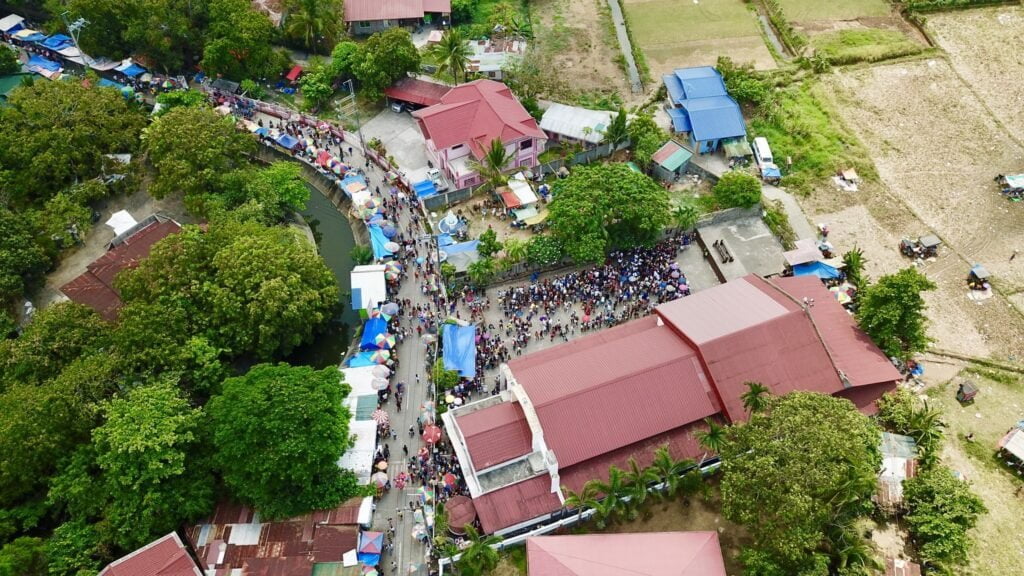
The image of the crucified Christ has been venerated by devotees for generations.
Kaut’s research from the 1960s already documented the importance of the Santo Cristo in Kapitangan. He described people traveling to the barrio throughout the year to seek or give thanks for cures associated with the patron Cristo. (Asian Studies, University of the Philippines)
Decades later, anthropologist Peter J. Bräunlein conducted field research in Kapitangan and documented the Santo Cristo devotion, pilgrimage, and healing traditions.
His research describes pilgrims seeking healing by touching the Santo Cristo and notes that during Holy Week, curing oil and perfumed water used in the ritual bathing of the image were distributed to devotees. (University of Tübingen)
The tradition is therefore not simply a modern attraction. It has been documented as part of Kapitangan’s religious life for decades.
For devotees, experiences of healing are matters of faith and personal religious belief.
The Santo Kristo Bathing Tradition
One of Kapitangan’s distinctive religious practices is the ritual bathing of the Santo Kristo.
Local research describes the bathing as an established tradition associated with the community’s Holy Week observances.
According to a local study based on interviews with residents and people involved with the chapel, the tradition of bathing the Santo Kristo is believed to be much older than the modern crucifixion rites.
The same research records local stories about the origin of the image and the succession of people who have cared for it over the years.
One important figure mentioned in the local tradition is Emiterio Caparas, who wrote a book about the Santo Kristo and became one of its caretakers.
The stories surrounding the image, its caretakers, and the bathing tradition remain an important part of Kapitangan’s religious heritage.
Local research on the Santo Kristo bathing tradition
Why Is Kapitangan Famous During Holy Week?
Kapitangan receives its greatest attention during Semana Santa, particularly on Good Friday.
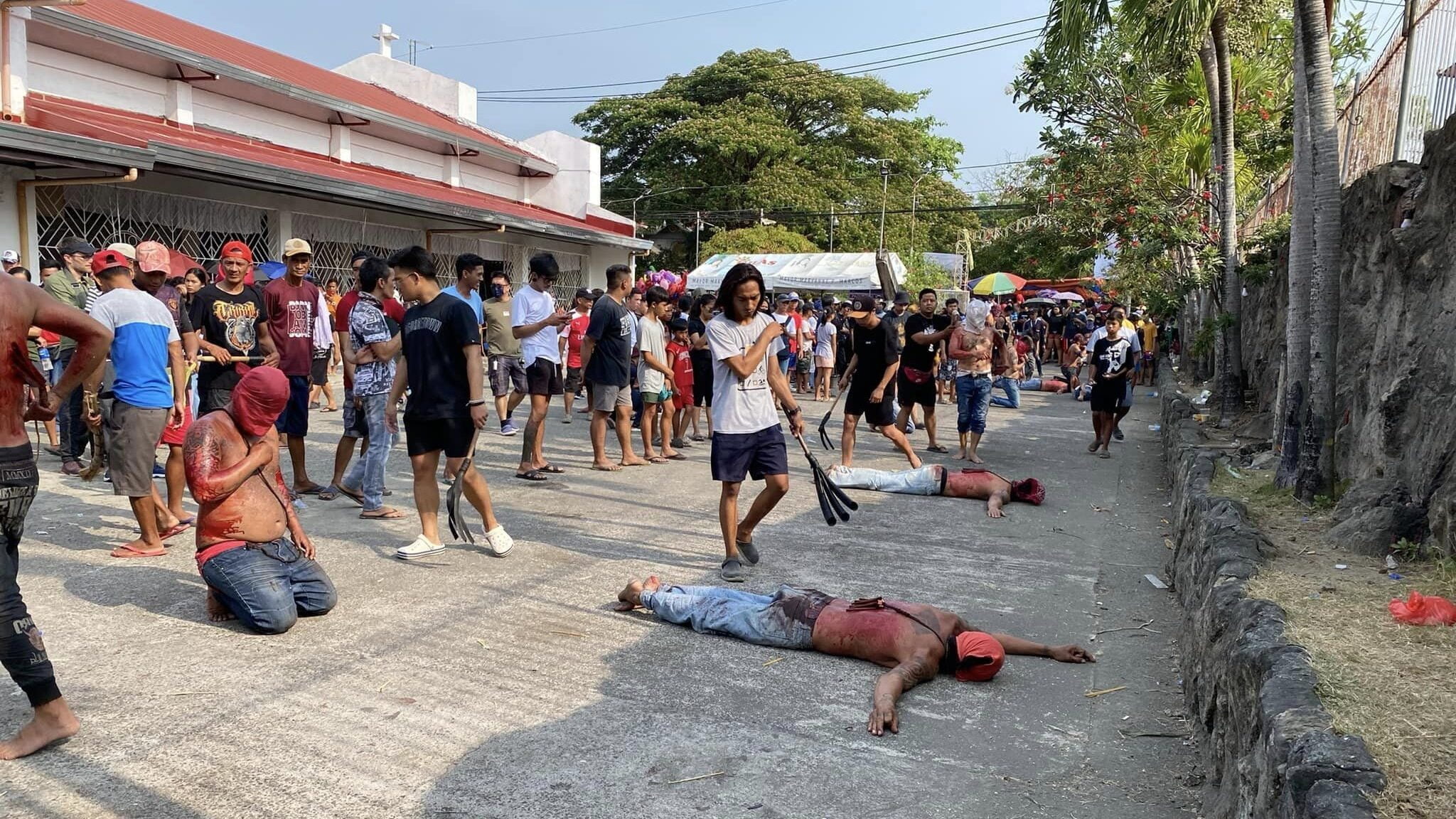
The Provincial Government of Bulacan describes the penitential tradition in Kapitangan as an act of repentance and sharing in the suffering of Christ.
The practices can include self-flagellation, carrying wooden crosses, and voluntary crucifixion.
Kapitangan is also locally known as a pilgrimage area associated with faith healers, and some penitents undergo crucifixion as part of their Holy Week devotion.
Academic research provides a detailed history of the modern crucifixion tradition.
Bräunlein’s study records that the local crucifixion practice began in 1977 with Lucy Reyes, who was 18 at the time. His research notes that her crucifixion was repeated for 13 consecutive years, after which other penitents followed. (University of Tübingen)
By the late 1980s and 1990s, Kapitangan had become known not only to devotees but also to journalists and visitors from outside the area.
A 2026 DZRH report on Semana Santa in Kapitangan documents that the tradition continues today.
What Happens During the Kapitangan Penitential Rites?
The practices vary from one devotee to another.
Some penitents engage in self-flagellation as part of a panata, or religious vow. Others carry wooden crosses or participate in Passion-related activities.
Some volunteers undergo crucifixion as part of their religious devotion.
A separate account published by Catholics & Cultures describes penitents being nailed to wooden crosses on a concrete platform behind the chapel, while mambabasa chant the Pasyon during the ceremony. (Catholics & Cultures)
For the participants, these acts are deeply personal religious practices rather than simply a spectacle for visitors.
Anyone attending should approach the ceremonies respectfully.
Chanting the Pasyon
The Pasyon is an important part of Filipino Holy Week tradition, and it has a visible place in Kapitangan’s penitential rites.
The Pasyon tells the story of Christ’s suffering, death, and resurrection and is traditionally chanted during Lent.
In Kapitangan, groups of mambabasa have been documented chanting the Pasyon as penitents carry crosses and undergo the rituals associated with Good Friday.
The chanting provides a religious and cultural context for the ceremonies and connects Kapitangan with the wider Filipino tradition of Pasyon recitation.
Kapitangan’s Santo Cristo Fiesta
The Santo Kristo tradition continues beyond Holy Week.
The Bulacan Provincial Development and Physical Framework Plan 2024-2036 lists the Feast of Sto. Cristo in Kapitangan every last Sunday of April. (Bulacan Provincial Government)
The fiesta brings together religious devotion and community celebration.
Local accounts also describe processions and gatherings associated with the feast.
Because event schedules and local arrangements can change, visitors planning around the fiesta should check current information before traveling.
Kapitangan and Agriculture
Agriculture has shaped Kapitangan for generations.
Kaut’s 1965 research describes the community as a wet-rice farming settlement, with residents living around rice paddies. His research also records the major agricultural changes that followed the construction of an irrigation system in 1926. (Asian Studies, University of the Philippines)
Later research describes the growth of turf production and selling as a significant source of income.
Paombong continues to identify grass planting among its major industries. (Provincial Government of Bulacan)
Local descriptions of Kapitangan also mention vegetable growing, fishing, poultry raising, landscaping, and other small agricultural activities.
The shift from traditional rice farming toward turf and other livelihoods reflects how the community has adapted as roads, employment opportunities, and the local economy changed.
Small Businesses and Everyday Life
Kapitangan is a working residential community as well as a religious destination.
Local accounts describe businesses such as sari-sari stores, carinderias, welding shops, vulcanizing shops, barber shops, and landscaping services.
Fishing, poultry raising, farming, and small-scale retail also contribute to everyday life.
Basketball is popular in the community, with courts around the barangay and at Kapitangan National High School.
Traditional Filipino games such as patintero, luksong tinik, luksong baka, tumbang preso, palosebo, and turumpo are also remembered as part of childhood and community recreation.
These details help show the everyday side of Kapitangan beyond its better-known religious events.
Schools in Kapitangan
Kapitangan has public schools serving local families.
The Bulacan Department of Education school directory lists:
Kapitangan Elementary School
School ID: 104988
Kapitangan National High School
School ID: 300744
Kapitangan National High School is listed with School ID 300744 and dates to 1968, according to local school history.

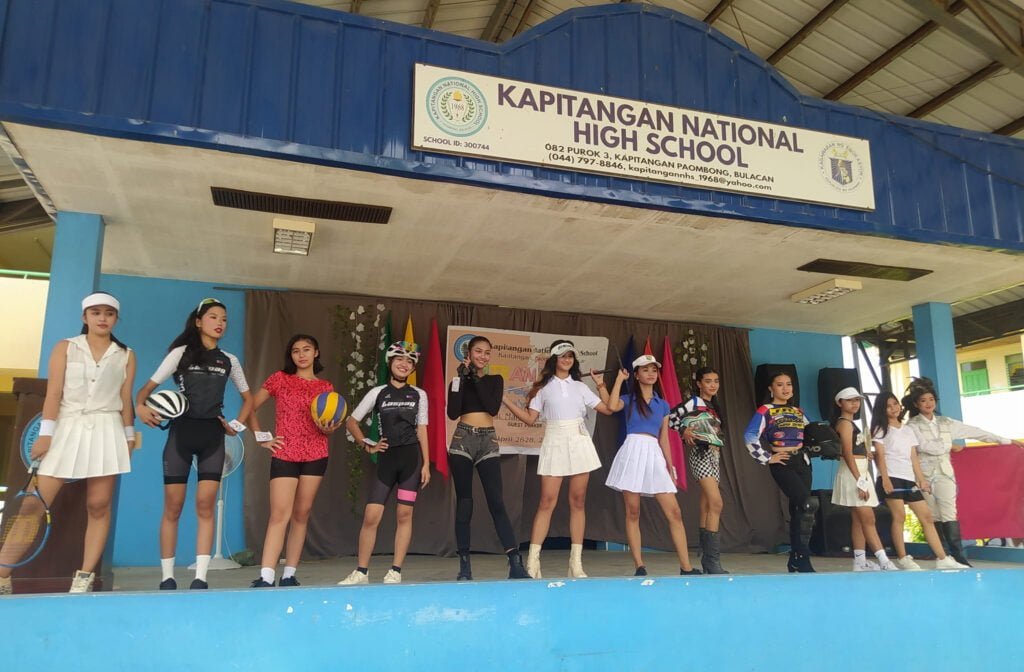
The two schools continue to serve the community today.
Kapitangan as a Religious and Cultural Heritage Site
Kapitangan’s religious traditions have become an important part of Paombong’s cultural identity.
The municipality’s heritage information recognizes the Senakulo in Barangay Kapitangan as part of Paombong’s religious and cultural heritage.
The province also identifies Kapitangan’s Lenten rites among Bulacan’s religious traditions.
Together, these sources reflect the long-standing importance of Kapitangan to the religious life of Paombong and the wider province.
Food and Street Life During Holy Week
Holy Week also changes the atmosphere around the chapel.
During busy religious periods, local accounts describe food vendors serving devotees and visitors near the chapel and along nearby roads.
Visitors may encounter familiar Filipino street foods such as kwek-kwek, okoy, buchi, karyoka, burgers, fries, suman, sapin-sapin, turon, balut, isaw, lumpia, and gulaman.
The exact vendors and food selection vary from year to year, but the temporary food stalls have become part of the Holy Week experience for many visitors.
Visiting Kapitangan
Kapitangan attracts visitors for several reasons.
During Holy Week, devotees and observers come because of the Santo Kristo and the barangay’s penitential traditions.
At other times of the year, visitors may come to see family and friends, explore Paombong, enjoy local food, or spend time at a private resort.
For readers looking specifically for swimming pools, private venues, and resorts, see our Kapitangan resorts guide.
That guide focuses on the individual resorts and their facilities, while this article looks at the wider history and culture of Kapitangan.
When Is the Best Time to Visit Kapitangan?
For people interested in Kapitangan’s religious traditions, Holy Week, particularly Good Friday, is the most significant period.
It is also when the barangay receives the largest number of visitors associated with the penitential rites.
The Feast of Sto. Cristo on the last Sunday of April is another important date in the community’s religious calendar.
For a quieter visit or a resort stay, another period of the year may be more suitable.
Anyone planning a visit around a religious celebration should check current local announcements because event schedules, traffic arrangements, and access can change.
Frequently Asked Questions About Kapitangan
Where is Kapitangan located?
Kapitangan is a rural barangay in Paombong, Bulacan, in Central Luzon, Philippines.
How many people live in Kapitangan?
The Philippine Statistics Authority recorded 4,788 residents in Kapitangan in the 2024 POPCEN.
What is Kapitangan known for?
Kapitangan is best known for its Santo Kristo devotion, Holy Week penitential traditions, agricultural history, and local oral traditions.
What does the name Kapitangan mean?
A longstanding local tradition connects the name Kapitangan with the words “kapit” and “tangan.”
Several versions of the story have been passed down through generations, including stories about people shouting “kapit-tangan” while trying to hold on during an incident on the water.
Is the Kapit Tangan story real?
It is a genuine local oral tradition that has been passed down through the community and documented through interviews with residents.
The exact historical origin of the place name is not established by a single definitive source, but the story itself is part of Kapitangan’s cultural history.
What is the Santo Kristo in Kapitangan?
The Santo Kristo is the venerated image of the crucified Christ associated with Kapitangan’s religious tradition.
Devotees have traditionally associated the image with healing and other spiritual experiences.
What happens during Holy Week in Kapitangan?
Holy Week observances can include self-flagellation, carrying wooden crosses, Passion-related activities, and voluntary crucifixion by some devotees.
When did the Kapitangan crucifixion tradition begin?
Academic research identifies 1977 as the beginning of the local crucifixion tradition documented in Kapitangan.
Who was Emiterio “Apo Terio” Bantigue?
Local historical accounts identify Mr. Emiterio “Apo Terio” Bantigue as an early teacher associated with Kapitangan Elementary School. Community history identifies him as the son of a former Cabeza de Barangay.
What schools are in Kapitangan?
The Department of Education lists Kapitangan Elementary School and Kapitangan National High School in the barangay.
Does Kapitangan have a fiesta?
Yes. The Bulacan Provincial Development and Physical Framework Plan lists the Feast of Sto. Cristo in Kapitangan every last Sunday of April.
Does Kapitangan have resorts?
Yes. The barangay has several private resorts and swimming-pool venues.
See our Kapitangan resorts guide for more information.
What is Kapitangan like outside Holy Week?
Outside the major religious celebrations, Kapitangan is a rural residential community with schools, agriculture, small businesses, community activities, and private leisure venues.
Final Thoughts
Kapitangan may be a small barangay, but it has a remarkably rich local history.
Its agricultural roots can be traced through historical research dating back to the community’s development in the late 19th and early 20th centuries. Its schools have their own stories, including the memory of early teacher Emiterio “Apo Terio” Bantigue.
The Kapit Tangan explanation for the barangay’s name is another important part of local memory. Passed down through generations, the story has several versions, but all preserve the same connection between the words “kapit” and “tangan” and a dangerous incident involving water.
The Santo Kristo has shaped Kapitangan’s identity for generations, while its Holy Week traditions have attracted devotees, researchers, journalists, and visitors from far beyond Paombong.
Just as important are the smaller stories: the old school, wartime memories, Pasyon chanting, local businesses, food stalls, traditional games, agriculture, and the stories residents continue to tell about their community.
Together, these documented facts and living traditions provide a fuller picture of Kapitangan, Paombong, Bulacan than a simple list of population statistics or tourist attractions can provide.
Sources and Further Reading
- Philippine Statistics Authority. Paombong barangays and 2024 population data
- Provincial Government of Bulacan. Paombong Profile
- Provincial Government of Bulacan. Festivals and Lenten Rites
- Provincial Government of Bulacan. Provincial Development and Physical Framework Plan 2024-2036
- Charles Kaut. The Principle of Contingency in Tagalog Society
- Peter J. Bräunlein. Negotiating Charisma: The Social Dimension of Philippine Crucifixion Rituals
Also Read: The 8 Best Resorts In Kapitangan, Paombong, Bulacan
I hope you enjoyed reading about “Kapitangan, Paombong, Bulacan: History, Culture and Holy Week Traditions“! What was your favorite part of the article?
Any thoughts or questions about this wonderful place? We would love to hear from you in the comments below.
To see more content like this check the travel section of Money For My Beer.

Chief Editor and Website Owner.
Hi, I’m Ryan. I write and edit everything on this site, which means I’m the last set of eyes on every post before it goes live. By day I’m a technical architect. I design and build enterprise systems, apps, websites, and the occasional game.
This site started because I wanted one place where money advice for regular people doesn’t read like it was written by a finance robot. My goal is simple: every article should be genuinely useful, actually tested against what real people are searching for, and written in plain English. No jargon, no “get rich quick,” no advice I wouldn’t follow myself.
You’ll see a lot of topics here that lean on my engineering background: software reviews, tools, and tech-adjacent money stuff. Where a topic needs real financial expertise, I say so plainly and point you to qualified sources rather than pretending.