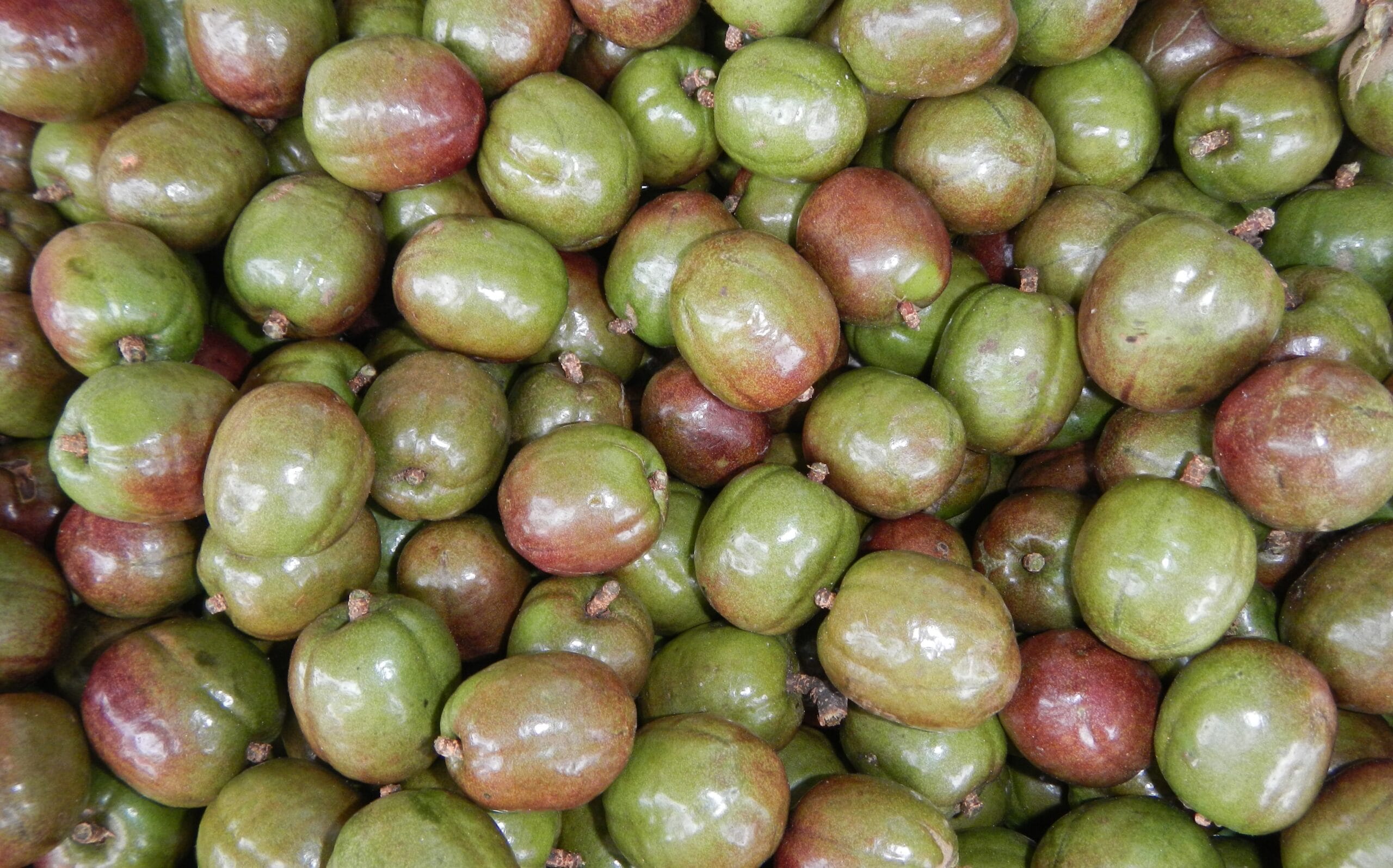
Sineguelas, scientifically known as Spondias purpurea L., is a small tropical fruit better known in English as Spanish plum, red mombin, or jocote. In the Philippines, sineguelas is a familiar seasonal fruit that is commonly eaten fresh for its sweet-and-sour flavor.
Besides being a popular Filipino summer fruit, sineguelas provides nutrients such as vitamin C, dietary fiber, and potassium. Researchers have also studied Spondias purpurea for its phenolic compounds and antioxidant activity. However, much of the research on its medicinal potential involves extracts, laboratory tests, or animal models rather than clinical studies in people.
In this guide, we look at the benefits of sineguelas, its nutrition, what it tastes like, how to eat it, its uses in the Philippines, the research behind its potential health effects, and important safety considerations.
Last reviewed: October 5, 2026
Quick Facts About Sineguelas
| Fact | Details |
|---|---|
| Scientific name | Spondias purpurea L. |
| Family | Anacardiaceae |
| Common English names | Spanish plum, red mombin, purple mombin, jocote |
| Philippine names | Sineguelas, siniguelas, seneguelas, serequelas, siriguelas |
| Native range | Mexico to northern Colombia |
| Philippines | Introduced and now widely cultivated |
| Fruit | Small edible drupe with juicy flesh and a hard endocarp |
| Season in the Philippines | Generally April to June, with May commonly being the peak |
| Nutrition per 100 g | 76 kcal, 3.9 g fiber, 248 mg potassium, and 27 mg vitamin C |
Kew’s Plants of the World Online recognizes Spondias purpurea as an accepted species and gives its native range as Mexico to northern Colombia. The Philippine seasonality and introduction history are also documented in agricultural and scientific sources.
What Is Sineguelas?
Sineguelas is the Filipino name commonly used for Spondias purpurea, a tropical fruit tree in the cashew family, Anacardiaceae.
The species is native to tropical regions of the Americas. Kew lists its native range from Mexico to northern Colombia and records the Philippines among the countries where the species has been introduced.
A 2023 Insecta Mundi paper on sineguelas in the Philippines describes Spondias purpurea as an economically significant fruit crop in the country. The paper notes that the species was introduced to the Philippines about 300 years ago and is grown in both commercial and backyard settings.
This also explains why sineguelas feels like such a familiar Philippine fruit even though the species is not native to the country.
What Is Sineguelas Called in English?
The most common English name for Spondias purpurea is Spanish plum. Other names include red mombin, purple mombin, and jocote.
Because local names vary by country and region, searches for jocote, Spanish plum, red mombin, and Spondias purpurea can all refer to the same species.
In the Philippines, spelling can also vary. You may see sineguelas, siniguelas, seneguelas, siriguelas, or serequelas.
What Does Sineguelas Look Like?
Sineguelas grows on a deciduous tropical tree that can reach around 15 meters in suitable conditions. The fruit is small and generally oval or ovoid, with thin skin surrounding juicy flesh and a relatively large, hard endocarp.
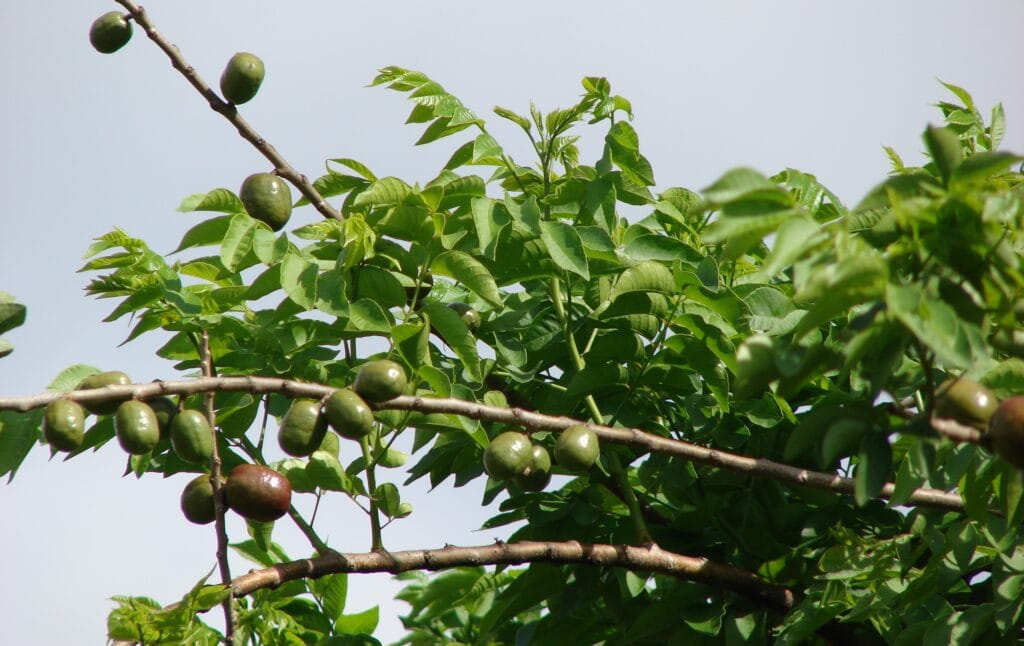
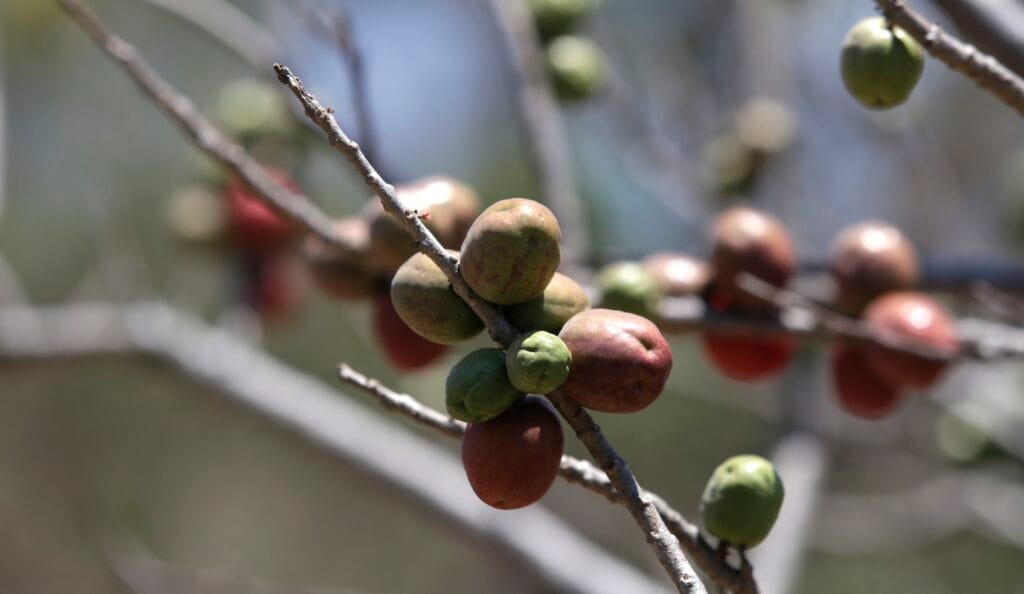
Depending on the type and stage of ripeness, the fruit can change from green or yellowish-green to reddish, purple, or reddish-purple tones.
The flavor also changes as the fruit ripens. Less-ripe sineguelas tends to be more tart, while ripe fruit is softer, sweeter, and juicier.
When Is Sineguelas Season in the Philippines?
Sineguelas is strongly associated with the Philippine summer fruit season. A 2025 U.S. Department of Agriculture Foreign Agricultural Service report on the Philippine fresh-fruit market lists sineguelas among the country’s seasonal fruits from April through July.
The exact timing can vary by location. A 2023 Philippine Journal of Science study reported that sineguelas fruits are particularly abundant during May and June in parts of Iloilo. Philippine food coverage has likewise described sineguelas as an April-to-June fruit that typically peaks in May.
This relatively short season is one reason sineguelas can suddenly become much easier to find in Philippine markets during the warmer months. Availability can vary depending on the growing location, weather, and local harvest conditions.
What Does Sineguelas Taste Like?
Sineguelas has a distinctive sweet-and-tart flavor. Green or less-ripe fruit is sharper and more acidic, while ripe fruit becomes sweeter and softer.
The thin skin can be eaten, although some people prefer to bite or peel around it depending on the ripeness. The large hard seed or endocarp inside the fruit should be removed.
In the Philippines, a simple and familiar way to eat sineguelas is fresh, sometimes with a little salt. Local cultural documentation from Antique also records the fruit being eaten with salt and vinegar.
Sineguelas Nutrition
Sineguelas is a relatively nutrient-rich tropical fruit. The Brazilian Food Composition Database (TBCA) lists the following values for 100 grams of raw Spondias purpurea edible portion:
| Nutrient | Per 100 g |
|---|---|
| Energy | 76 kcal |
| Carbohydrates | 18.9 g |
| Available carbohydrates | 15.0 g |
| Dietary fiber | 3.9 g |
| Protein | 1.4 g |
| Fat | 0.36 g |
| Potassium | 248 mg |
| Calcium | 27.4 mg |
| Magnesium | 18 mg |
| Phosphorus | 48.6 mg |
| Iron | 0.36 mg |
| Vitamin C | 27 mg |
These figures are for the edible portion of the Brazilian fruit sample in the database. Actual nutrient levels can vary according to cultivar, ripeness, growing conditions, and analytical method.
An older nutritional study of Spondias purpurea collected in northern Ecuador reported 74 kcal, 19.1 g of carbohydrates, 250 mg of potassium, and 49 mg of vitamin C per 100 g of edible portion. The study, published in Economic Botany in 1998, provides a useful comparison with newer food-composition data. Differences between datasets are a reminder that nutrient values can vary among samples, cultivars, growing conditions, and analytical methods.
Health Benefits of Sineguelas
The strongest evidence for the benefits of eating sineguelas comes from its nutritional composition. Scientific research has also identified potentially useful plant compounds, but those findings need to be interpreted carefully.
1. Sineguelas Provides Vitamin C
Vitamin C is one of the notable nutrients found in sineguelas. The TBCA database lists approximately 27 mg of vitamin C per 100 grams of raw edible fruit.
Vitamin C is an essential nutrient that acts as an antioxidant, helps the body produce collagen, supports wound healing, improves absorption of iron from plant foods, and contributes to normal immune function.
The NIH Office of Dietary Supplements vitamin C fact sheet provides more information about the nutrient and its functions.
It is more accurate to say that sineguelas provides vitamin C than to claim that the fruit “boosts immunity” or prevents infections. Adequate vitamin C is important for normal immune function, but eating one fruit does not make someone immune to illness.
2. Sineguelas Provides Dietary Fiber
TBCA lists about 3.9 grams of dietary fiber per 100 grams of raw sineguelas.
Fiber contributes to normal digestive function and can help support regular bowel movements. The National Institute of Diabetes and Digestive and Kidney Diseases recommends adequate dietary fiber and fluids as part of preventing and managing constipation.
This means sineguelas can be a useful source of fiber, but it should not be described as a cure for constipation or other digestive disorders.
3. Sineguelas Contains Potassium
According to TBCA, 100 grams of raw sineguelas contains about 248 mg of potassium.
Potassium is an essential mineral involved in normal nerve transmission, muscle contraction, and heart and kidney function. The NIH Office of Dietary Supplements explains the role of potassium in the body and its relationship to health.
Its potassium content is a nutritional advantage, but that does not mean eating sineguelas alone will lower blood pressure or prevent cardiovascular disease.
4. Sineguelas Contains Phenolic and Other Bioactive Compounds
Researchers have identified a variety of plant compounds in Spondias purpurea, including phenolic compounds and flavonoids.
A review of the genus Spondias reports compounds such as gallic acid, kaempferol, quercetin-related compounds, and other phenolics in S. purpurea fruit extracts. These compounds are of scientific interest because many have antioxidant activity in experimental systems.
However, finding a bioactive compound in a plant is not the same as proving that eating the fruit produces a specific medical benefit in humans.
5. Laboratory Research Has Found Antioxidant Activity
A 2018 study examined a hexane extract of Spondias purpurea fruit using laboratory antioxidant assays. The extract showed antioxidant activity in the tests used by the researchers.
The study also investigated antiglycation activity using a laboratory protein-and-glucose system. The researchers concluded that the fruit extract inhibited the glycation reaction under their experimental conditions and stated that further research was needed.
That is useful scientific evidence, but it is not a human clinical trial. It should not be interpreted as proof that eating fresh sineguelas treats diabetes or prevents diabetes complications.
You can read the study through PubMed or the open-access journal article.
What Does the Research Actually Say?
The research surrounding Spondias purpurea is interesting, but it is important to distinguish nutrition research from medicinal research.
Food-composition data show that the fruit provides vitamin C, fiber, potassium, carbohydrates, and other nutrients. Separate studies have identified phenolic compounds and investigated antioxidant activity in different parts of the plant.
For example, researchers have reported antioxidant and antiglycation activity in a fruit extract of Spondias purpurea. Other studies have examined phytochemicals and antioxidant activity in the leaves, while research has also investigated antioxidant and metabolic effects of bark extracts in mice. Earlier research has also reported phenolic compounds and antioxidant activity in seed and peel extracts.
These findings help explain why Spondias purpurea is being studied. They do not establish that eating fresh sineguelas prevents cancer, cures infections, treats ulcers, lowers cholesterol, or manages diabetes.
The distinction is especially important because plant extracts can contain concentrated amounts of compounds that are not equivalent to the amounts obtained from eating a normal serving of fresh fruit.
Eating a nutritious fruit and taking a concentrated plant extract are not the same intervention.
Sineguelas and Diabetes: What We Know
Sineguelas sometimes appears in discussions about diabetes because researchers have investigated the fruit for antioxidant and antiglycation activity.
A 2018 study found that a hexane extract of Spondias purpurea fruit inhibited protein glycation and showed antioxidant activity in laboratory tests. The experiment used a laboratory BSA/glucose model rather than people with diabetes, so it did not test whether eating fresh sineguelas improves blood glucose or diabetes outcomes.
Sineguelas also contains carbohydrates. The American Diabetes Association notes that carbohydrates in foods such as fruit can affect blood glucose, making the amount eaten and the overall meal important considerations for people managing diabetes.
Sineguelas should not be presented as a treatment or cure for diabetes. People with diabetes should follow the dietary and medical advice provided by their healthcare team.
Can Sineguelas Help With Digestion?
Sineguelas can contribute dietary fiber to the diet, with the TBCA database listing about 3.9 grams per 100 grams of edible fruit.
Dietary fiber supports normal digestive function, and adequate fiber intake is one part of preventing or managing constipation. However, eating a large amount of any unfamiliar or particularly tart fruit may cause temporary digestive discomfort in some people.
For digestive health, sineguelas is best viewed as one fiber-containing fruit among many rather than as a medicinal treatment.
Can Sineguelas Help With Weight Loss?
Sineguelas should not be described as a weight-loss food or fat-burning fruit.
At 76 kcal per 100 grams in the TBCA database, it can certainly fit into a balanced diet. It also provides dietary fiber, which is useful nutritionally. But there is no reason to claim that sineguelas itself causes weight loss.
Weight management depends on overall dietary intake, physical activity, sleep, health conditions, and other factors rather than a single fruit.
How Do You Eat Sineguelas?
Sineguelas is commonly eaten fresh. A simple way to prepare it is:
- Choose fruit that looks fresh and free from extensive bruising or spoilage.
- Wash the fruit thoroughly under running water.
- Eat the fruit fresh when it has reached your preferred level of ripeness.
- Remove and discard the hard seed or endocarp.
- Add a small amount of salt or use it in another preparation according to taste.
The U.S. Food and Drug Administration recommends washing fresh produce thoroughly under running water before preparing or eating it and advises against washing fruits with soap or household detergent. See the FDA guidance on selecting and serving fresh produce safely.
What Can You Make With Sineguelas?
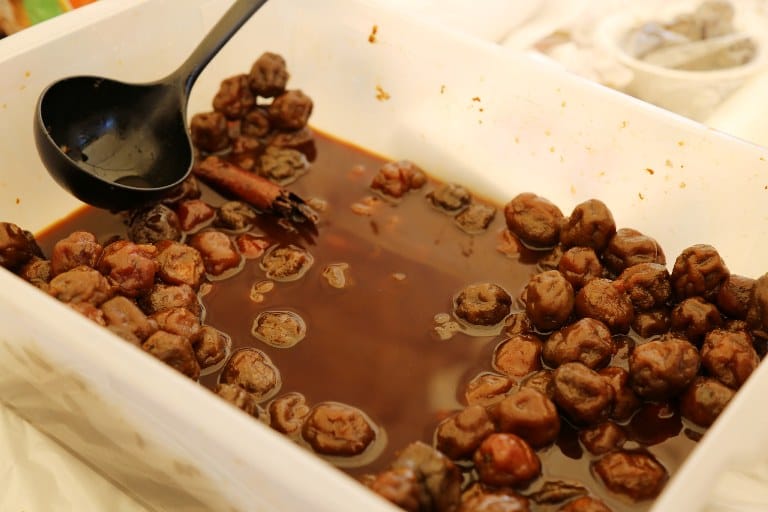
The sweet-and-sour fruit can be used in more than one way. In the Philippines and other tropical countries, sineguelas may be:
- Eaten fresh
- Served with salt
- Used in juices and other beverages
- Made into jams, jellies, marmalades, or preserves
- Pickled while still less ripe
- Used in selected savory preparations
Philippine food writing has also documented sineguelas being used in preparations such as kinilaw and sinigang in some regions. Local food traditions vary, so these are better understood as regional uses rather than universal Filipino recipes.
Sineguelas in Philippine Culture
Sineguelas has become part of Philippine seasonal fruit culture. Although Spondias purpurea originated in tropical America, the species has been cultivated in the Philippines for centuries.
The University of the Philippines Visayas Cultural Mapping of Panay and Guimaras documents serequelas, also known locally as Seneguelas or Spanish Plum Tree, in Barangay Balud, Tobias Fornier, Antique. The entry records the fruit as edible and traditionally eaten with salt and vinegar, while also documenting the continued local maintenance and propagation of the tree.
A 2023 Insecta Mundi study of Spondias purpurea in the Philippines describes the species as an economically significant fruit crop cultivated in the country for its edible fruits.
Together, these sources show that sineguelas is not simply a fruit grown in Philippine backyards. It also has a documented place in local food traditions and Philippine agricultural culture.
When Is Sineguelas Ripe?
Ripeness can be judged partly by color, firmness, and taste.
Green or yellowish-green fruit is generally firmer and more tart. As the fruit ripens, the skin may become reddish or purple depending on the type, while the flesh becomes softer and sweeter.
There is no need to wait until every fruit has exactly the same color. Different cultivars and growing conditions can produce different appearances, so texture and taste are useful additional indicators.
Can You Eat Sineguelas Skin?
Yes. The skin of sineguelas is edible. Wash the fruit thoroughly before eating, particularly when consuming it raw.
The main part to remove is the hard internal endocarp or seed. It is not part of the edible flesh and should be discarded.
Sineguelas vs. Golden Apple
These fruits are sometimes confused because both are associated with the genus Spondias and both have Philippine common names involving “sineguelas.” They are nevertheless different species.
| Fruit | Scientific name | Key difference |
|---|---|---|
| Red sineguelas | Spondias purpurea | Small fruit commonly becoming red or purple when ripe |
| Golden apple | Spondias dulcis | Different Spondias species with generally larger yellow-green fruit |
| Duhat | Syzygium cumini | Completely different species, commonly called Java plum |
| Tiesa | Pouteria campechiana | Different species and family, with dense yellow-orange flesh |
| Atis | Annona squamosa | Different species with segmented, custard-like flesh |
For more Philippine fruit guides, see our articles on tiasa or canistel, atis, and apple mango in the Philippines.
Sineguelas Tree: Growing and Propagation
Spondias purpurea is a tropical deciduous tree that can grow to around 15 meters. It is associated with seasonally dry tropical environments, according to Kew’s botanical database.
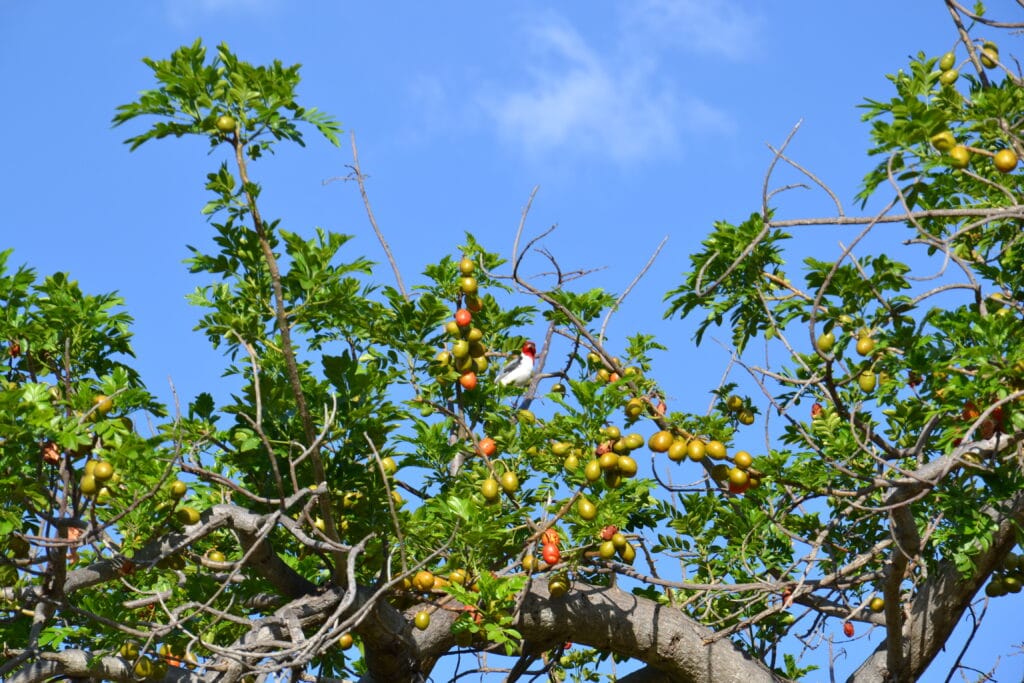
One notable feature of the species is its ability to be propagated vegetatively. Philippine research and botanical literature describe the tree as being grown in both backyard and commercial settings.
For homeowners interested in growing useful fruit trees and other tropical plants, our complete gardening guide is a useful starting point.
Is Sineguelas Safe to Eat?
For most people, fresh sineguelas can be enjoyed as an ordinary fruit. The practical precautions are straightforward: choose sound fruit, wash it thoroughly, and remove the hard seed.
There is an important difference between eating the fruit and using concentrated preparations made from leaves, bark, peel, seeds, or other parts of the plant. Scientific studies have investigated these extracts, but their experimental findings cannot automatically be applied to ordinary servings of fresh sineguelas.
Anyone considering a concentrated herbal preparation for a medical condition should discuss it with an appropriately qualified healthcare professional rather than treating research on plant extracts as a substitute for established treatment.
What the Research Does Not Prove
Online articles sometimes turn preliminary research on Spondias purpurea into broad medical claims. Research has found antioxidant, anti-inflammatory, antiulcer, and other biological activities. However, much of the evidence comes from concentrated extracts, laboratory tests, or animal studies rather than human clinical trials.
For example, a 2018 study found antioxidant and antiglycation activity from a hexane extract of Spondias purpurea fruit in laboratory tests. Another study investigated antioxidant and antiulcer effects of a leaf extract in an animal model. These findings are scientifically interesting, but they do not establish that eating fresh sineguelas produces the same effects in people.
Based on the evidence discussed in this article, fresh sineguelas should not be presented as a proven treatment or cure for:
- Diabetes. Laboratory antiglycation findings are not evidence that eating sineguelas treats diabetes or improves blood glucose in people.
- Cancer. Experimental activity of plant compounds or extracts does not establish that eating sineguelas prevents or treats cancer.
- Arthritis. Biological activity observed in laboratory or animal research does not establish a clinical benefit for people with arthritis.
- Bacterial or fungal infections. Laboratory antimicrobial findings, where reported for plant extracts, do not mean that eating the fruit can treat an infection.
- Ulcers. Animal research involving extracts should not be interpreted as proof that fresh sineguelas treats stomach or peptic ulcers.
- High cholesterol. Experimental findings involving extracts or animal models do not establish that eating fresh sineguelas lowers cholesterol in humans.
- Obesity or weight gain. Sineguelas can be part of a balanced diet, but there is no basis for describing it as a weight-loss or fat-burning treatment.
This distinction is especially important in health content because readers should be able to tell the difference between what the fruit contains, what researchers have observed experimentally, and what has actually been demonstrated in humans.
Promising laboratory or animal findings can justify further research, but they are not the same as clinical evidence. Eating a nutritious fruit and taking a concentrated plant extract are not the same intervention.
Frequently Asked Questions About Sineguelas
What is sineguelas?
Sineguelas is a Philippine name for Spondias purpurea, a tropical fruit tree also known as Spanish plum, red mombin, purple mombin, and jocote.
What is sineguelas called in English?
The most common English name is Spanish plum. Red mombin and jocote are also widely used common names.
What are the benefits of sineguelas?
Sineguelas provides vitamin C, dietary fiber, potassium, and other nutrients. Research has also identified phenolic compounds and antioxidant activity in experimental studies, although these findings do not establish that fresh sineguelas treats disease.
Is sineguelas high in vitamin C?
Sineguelas contains a useful amount of vitamin C. The TBCA database lists about 27 mg per 100 grams of raw edible fruit. An older Ecuadorian study reported 49 mg per 100 grams, illustrating that nutrient values vary between samples.
How many calories does sineguelas have?
The TBCA database lists approximately 76 calories per 100 grams of raw edible sineguelas.
Is sineguelas good for constipation?
Sineguelas provides about 3.9 grams of dietary fiber per 100 grams in the TBCA data. Fiber contributes to normal bowel function, but sineguelas should not be considered a medical treatment for constipation.
Can people with diabetes eat sineguelas?
Sineguelas contains carbohydrates and can be included in a diet depending on an individual’s dietary needs and blood-glucose management. Laboratory research on sineguelas extracts is not evidence that the fruit treats diabetes.
Can you eat sineguelas skin?
Yes. The thin skin is edible. Wash the fruit thoroughly before eating it and remove the hard internal seed or endocarp.
Is sineguelas the same as golden apple?
No. Red sineguelas is Spondias purpurea, while golden apple is generally Spondias dulcis, a different species.
When is sineguelas season in the Philippines?
Sineguelas is generally available from around April through June, with May commonly being the peak period. Availability varies by location and growing conditions.
The Bottom Line on Sineguelas Benefits
Sineguelas is a nutritious tropical fruit with a strong place in Philippine food culture. Spondias purpurea provides vitamin C, dietary fiber, potassium, and other nutrients, and its distinctive sweet-and-sour flavor makes it popular as a fresh seasonal snack.
Scientific research has also found antioxidant and other biological activities in Spondias purpurea extracts. Those findings are interesting, but many involve laboratory experiments or non-human models. They should not be presented as proof that eating fresh sineguelas cures or prevents specific diseases.
The most evidence-based way to think about sineguelas is simple: it is a nutritious fruit with promising areas of scientific research, not a proven medicinal cure.
For more tropical plant and food profiles, explore our guides to katuray, lemongrass, tiasa, and atis.
Sources and Further Reading
- Spondias purpurea L. – Plants of the World Online, Kew Science. Taxonomy, native range, introduced distribution, and botanical information.
- Brazilian Food Composition Database (TBCA) – Spondias purpurea. Nutritional values for the raw edible portion.
- Koziol & Macía (1998), Chemical composition, nutritional evaluation, and economic prospects of Spondias purpurea. Published nutritional analysis of the fruit.
- Antioxidant Activity and In Vitro Antiglycation of the Fruit of Spondias purpurea – PubMed. Laboratory study of fruit-extract antioxidant and antiglycation activity.
- Spondias purpurea L. (Anacardiaceae): Antioxidant and Antiulcer Activities of the Leaf Hexane Extract. Phytochemical and animal research involving leaf extract.
- Genus Spondias: A Phytochemical and Pharmacological Review. Review of phytochemicals, traditional uses, and experimental pharmacological research in the genus.
- Insecta Mundi: Biology of the sineguelas leaf beetle on Spondias purpurea in the Philippines. Philippine cultivation, distribution, introduction history, and agricultural context.
- University of the Philippines Visayas: Serequelas. Philippine cultural and local heritage information on the tree and fruit.
- USDA Foreign Agricultural Service: Fresh Fruit Market Brief – Philippines. Philippine seasonal availability of fresh fruits including sineguelas.
- NIH Office of Dietary Supplements: Vitamin C. Information about vitamin C and its roles in the body.
- NIH Office of Dietary Supplements: Potassium. Information about potassium and normal body function.
- NIH/NIDDK: Eating, Diet, & Nutrition for Constipation. Information about dietary fiber and digestive health.
- U.S. Food and Drug Administration: Selecting and Serving Produce Safely. Fresh-produce washing and handling guidance.
Evidence note: This article distinguishes nutritional information from traditional uses and experimental research. Findings from concentrated plant extracts, laboratory assays, or animal studies should not be interpreted as proof that eating ordinary servings of fresh sineguelas produces the same medical effects.
Also Read: Benefits of Tiesa (Pouteria campechiana) An In-Depth Look at Its History, Benefits, Uses, Facts, and Safety
Well, what do you think about the article?
Did you enjoy reading “Benefits of Sineguelas (Spondias purpurea) Exploring Its Uses, History, Benefits, and Safety“?
We really hope that you have found this article informative and engaging. If you have any thoughts or comments about this post, please feel free to share them in the comment section below. We appreciate your feedback and would be glad to hear from you.
To see more content like this check the gardening section of Money For My Beer.