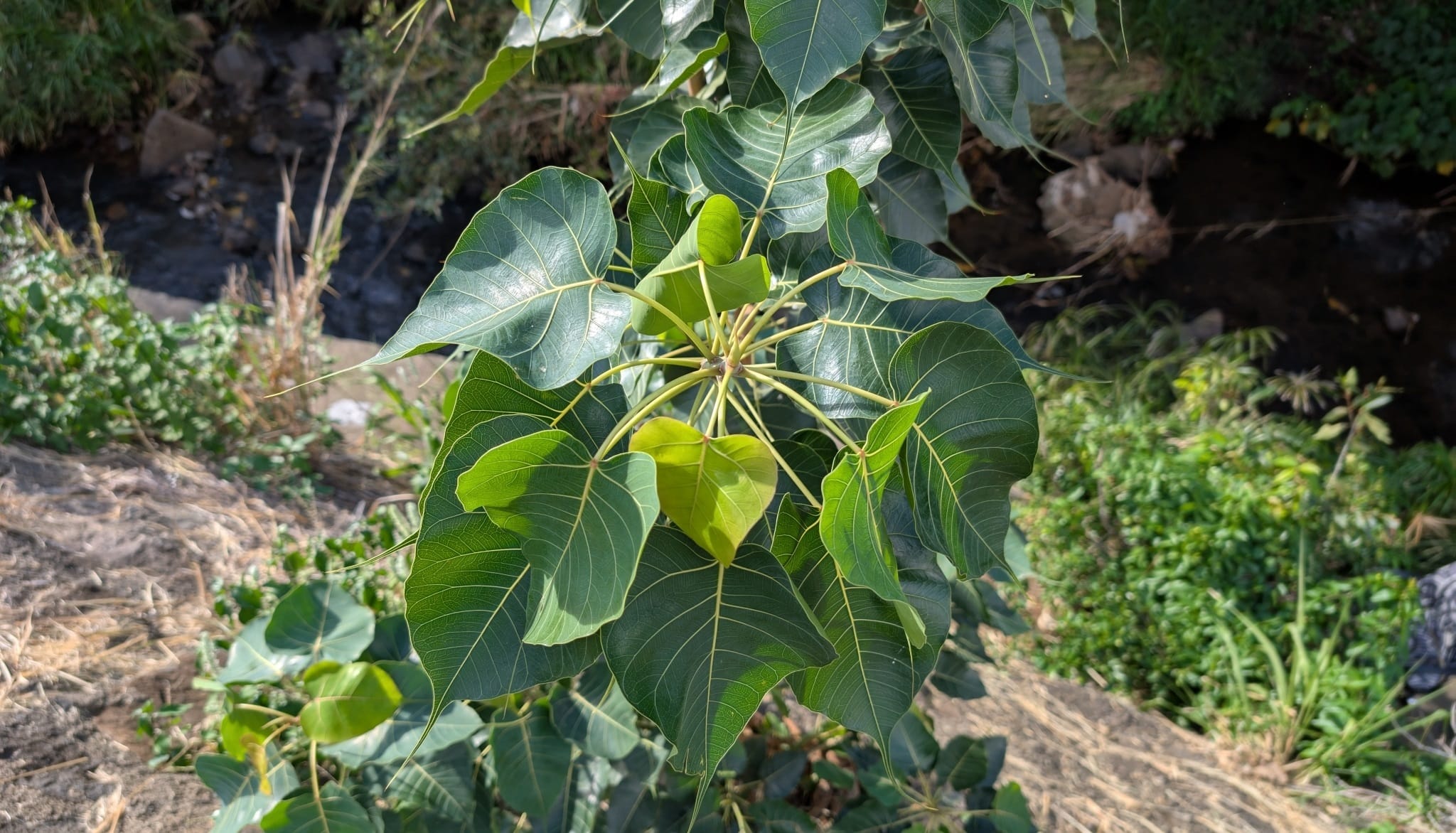
The Peepal tree, scientifically known as Ficus religiosa, is one of the most recognizable and culturally important trees in South Asia. It is also called the Sacred Fig, Bodhi Tree, Peepul, or Pipal.
People value the Peepal tree for several reasons. It can grow into a large shade tree, provides food and habitat for wildlife, has a long history of traditional medicinal use, and has deep religious significance in Hinduism and Buddhism.
However, some popular claims about Peepal go beyond the available evidence. The most famous example is the belief that the tree releases large amounts of oxygen throughout the night. Current scientific research does not establish that claim.
This guide explains the benefits of the Peepal tree, its traditional uses, important botanical characteristics, cultural significance, growing requirements, safety considerations, and what the evidence actually says about its supposed nighttime oxygen production.
Important: Traditional medicinal use should not be confused with proven medical treatment. Research on Ficus religiosa includes ethnobotanical reports, laboratory studies, animal studies, and some clinical research, but this does not establish that Peepal preparations can cure diseases or replace appropriate medical care.
Last reviewed: October 8, 2026
Peepal Tree Quick Facts
| Feature | Details |
|---|---|
| Scientific name | Ficus religiosa L. |
| Family | Moraceae |
| Common names | Peepal, Peepul, Pipal, Sacred Fig, Bodhi Tree, Bo Tree |
| Plant type | Large tropical tree and hemi-epiphyte |
| Typical mature height | About 25 to 35 meters under suitable conditions |
| Leaves | Heart-shaped with a distinctive long, narrow tip |
| Fruit | Small figs that mature from green to purple or black |
| Native range | South Asia and nearby parts of Asia |
| Growing conditions | Warm climate, good light, moderate water, and well-drained soil |
Ficus religiosa is an accepted species according to the Royal Botanic Gardens, Kew. Kew lists its native range from southeastern Pakistan through the Indian subcontinent toward Myanmar.
What Is a Peepal Tree?
The Peepal tree is a species of fig in the Moraceae family. Its scientific name is Ficus religiosa.
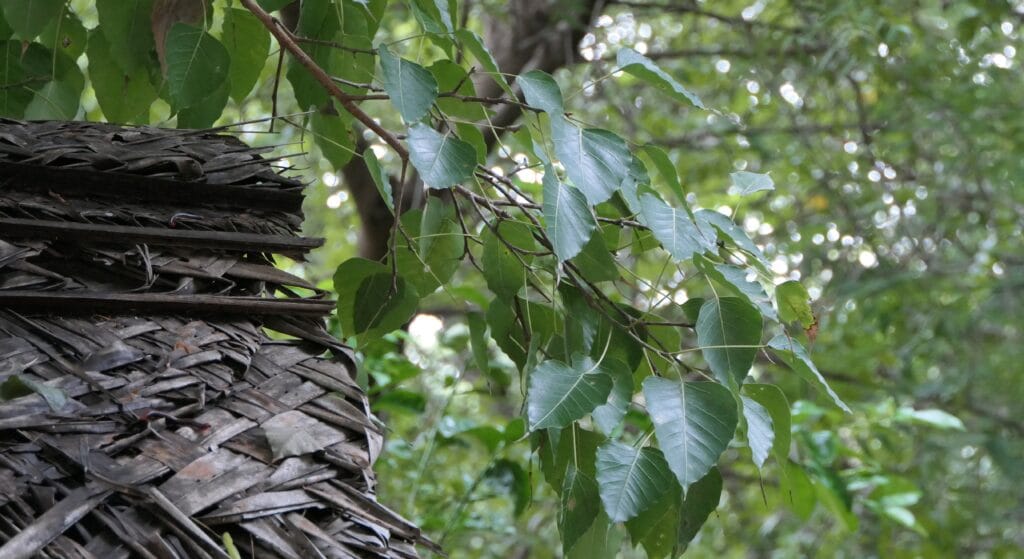
The tree is particularly easy to recognize because of its distinctive leaves. They are broadly heart-shaped and have a long, narrow tip that can extend several centimeters beyond the main leaf blade.
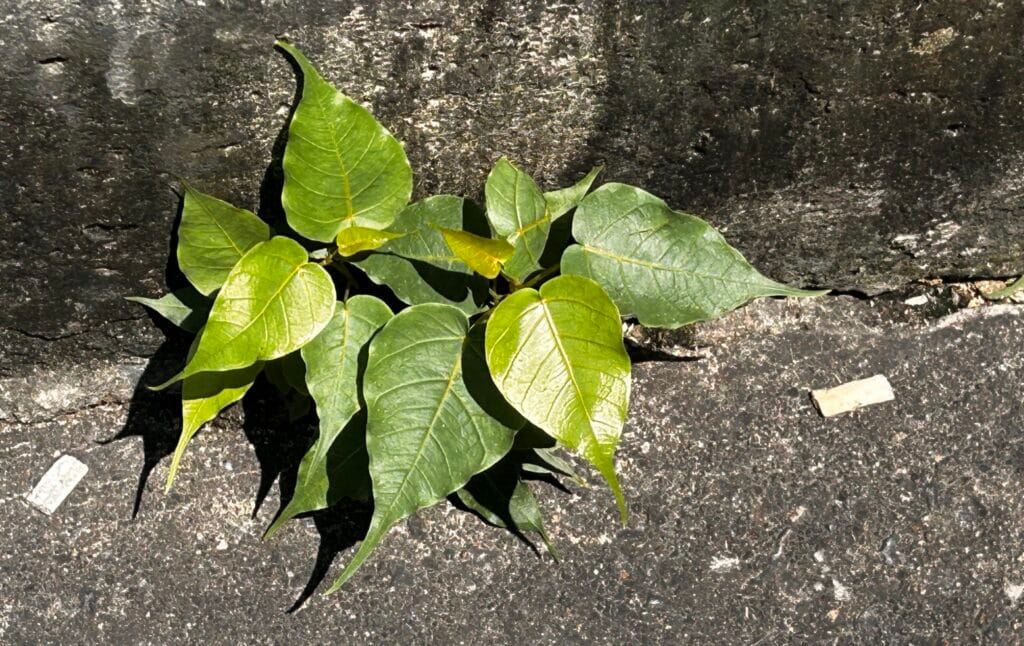
Peepal can become a very large tree. It can also have an unusual growth habit. It may begin life on another plant or elevated surface before developing roots that eventually reach the ground. This is one reason young Peepal trees sometimes appear growing from walls, buildings, or cracks in structures.
The Singapore National Parks Board describes Ficus religiosa as a tree or hemi-epiphyte that can reach roughly 25 to 35 meters tall. It also records the species as a bird-attracting plant and notes its importance in Hindu and Buddhist traditions.
What Are the Benefits of the Peepal Tree?
The benefits of the Peepal tree are not limited to medicine. Its value can be considered across several areas, including landscaping, wildlife, traditional knowledge, culture, and scientific research.
1. Provides Shade
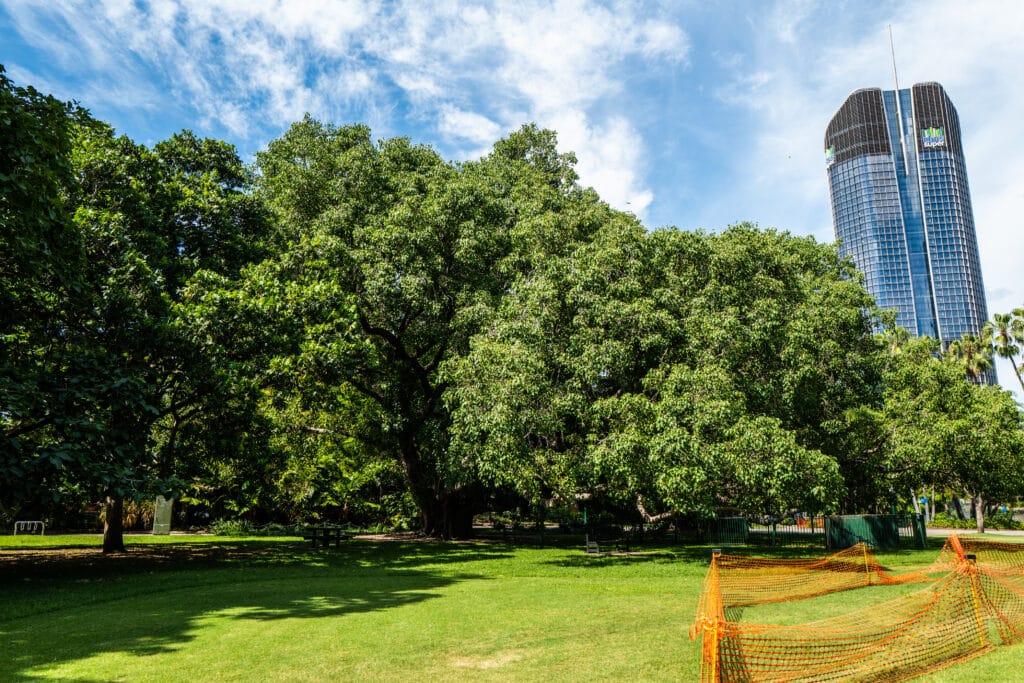
A mature Peepal can develop a broad canopy and provide substantial shade.
This makes it potentially useful in sufficiently large gardens, parks, temple grounds, institutional landscapes, and other open areas where there is room for a large tree to mature.
Its eventual size is important, though. A Peepal is not a good choice for every small residential yard.
2. Supports Wildlife
Peepal is part of a wider ecological relationship between fig trees and animals.
The tree produces small figs that can be eaten and dispersed by birds and other animals. Singapore’s National Parks Board records the species as a bird-attracting plant and lists birds and small mammals among animals that feed on its fruit.
This means a mature Peepal can contribute to biodiversity in an appropriate landscape, particularly where other plants and natural habitat are also available.
3. Stores Carbon as It Grows
Like other woody trees, a growing Peepal stores carbon in its wood, roots, branches, and other plant material.
That does not make Peepal uniquely capable of solving air pollution or climate change, but large trees are an important component of green infrastructure and can provide shade and vegetation in urban and rural landscapes.
4. Has Major Cultural and Religious Importance
The cultural importance of the Peepal tree is one of its strongest and best-established attributes.
In Buddhism, Ficus religiosa is closely associated with the Bodhi Tree and the traditional account of Siddhartha Gautama attaining enlightenment at Bodh Gaya.
UNESCO’s description of the Mahabodhi Temple Complex at Bodh Gaya identifies the sacred Bodhi Tree as one of the important features of the site and notes its direct association with the Buddha’s enlightenment.
The tree is also sacred in Hindu traditions and is commonly cultivated around temples and other religious sites.
5. Has a Long History of Traditional Medicinal Use
Different parts of Peepal have been used in traditional medicine for generations.
Published reviews describe traditional applications involving the bark, leaves, roots, fruits, and other plant material. Reported traditional uses include preparations associated with digestive, respiratory, skin, inflammatory, metabolic, and other conditions.
Modern researchers have also investigated extracts of Ficus religiosa for biological activities such as antioxidant, anti-inflammatory, antimicrobial, antidiabetic, and other effects.
These findings are scientifically interesting, but they need to be interpreted correctly. An effect observed in a laboratory experiment or animal model is not the same as demonstrating a treatment works in humans.
The 2024 review of the ethnomedicinal, phytochemical, and pharmacological profile of Ficus religiosa documents the plant’s traditional uses and research history while highlighting the need for further investigation.
Does Peepal Tree Really Produce Oxygen at Night?
No reliable evidence currently establishes that Peepal produces a meaningful amount of oxygen throughout the night.
This is one of the most frequently repeated claims about the tree. You may see websites and social media posts stating that Peepal is unusual because it supposedly continues producing oxygen after sunset.
A 2023 study published in BMC Genomics examined Ficus religiosa using genome and transcriptome sequencing, including leaf samples collected during both day and night. The researchers were interested in the species’ daytime and nighttime biology, including the scientific context surrounding claims about Peepal’s ability to produce oxygen at night. The full study in BMC Genomics provides the underlying genomic and transcriptomic analysis.
The researchers identified nighttime physiological and metabolic activity in Peepal leaves. However, this does not establish that the tree produces and releases a meaningful amount of oxygen throughout the night.
In fact, the authors noted that, to their knowledge, there was no reported scientific evidence establishing nighttime oxygen production by Peepal. This is an important distinction because a plant remaining metabolically active at night is not the same as demonstrating that it provides a significant nighttime oxygen source.
So while Peepal is an interesting species from a plant-biology perspective, the evidence does not support describing it as a special nighttime oxygen-producing tree.
Why Does the Myth Continue?
Plants remain biologically active after sunset, and research has found interesting nighttime activity in Peepal leaves. These observations may have helped encourage claims that the tree has an unusual ability to release oxygen throughout the night.
But the scientific evidence does not justify turning those findings into a general health claim.
The most accurate conclusion is that Peepal should not be promoted as a special nighttime oxygen source.
For readers who want to examine the research directly, see the peer-reviewed 2023 BMC Genomics study on Ficus religiosa.
Traditional Medicinal Uses of Peepal
Peepal has a substantial history in South Asian traditional medicine, particularly Ayurveda.
Traditional literature describes the use of different plant parts for a wide range of health complaints. These uses have been documented in ethnobotanical research and summarized in scientific reviews.
Some laboratory and animal studies have also reported biological activity from Peepal extracts. Research has explored areas including:
- Antioxidant activity
- Anti-inflammatory activity
- Antimicrobial activity
- Antidiabetic activity in experimental models
- Wound-related research
- Gastrointestinal and anti-ulcer research
- Other pharmacological effects
These findings should not be interpreted as proof that a Peepal tea, leaf preparation, bark extract, or other homemade remedy can treat the corresponding disease.
The evidence base is also complicated by differences in plant parts, extraction methods, concentrations, study models, and experimental conditions.
For that reason, it is more accurate to say that Peepal has a long history of traditional medicinal use and remains a subject of pharmacological research than to describe it as a clinically proven cure.
Uses of the Peepal Tree
Peepal has several documented uses outside traditional medicine.
Religious Uses
The tree is cultivated and respected at religious sites, particularly in Hindu and Buddhist communities.
Its association with the Bodhi Tree gives it special significance in Buddhist history and pilgrimage.
Shade and Landscape Planting
Peepal can be grown as a large ornamental or shade tree in warm climates where sufficient space is available.
It is more appropriate for large landscapes than small gardens because of its eventual height, canopy, and root development.
Traditional Material Uses
The species has also been associated with practical traditional uses. NParks records the use of the bark for tanning leather, dyeing cloth, and making paper, while the wood has been used for products such as packing cases and matches.
Kew also records food, fuel, animal-food, environmental, social, and medicinal uses for the species.
Wildlife Habitat
Because its fruit is used by birds and other animals, a mature Peepal can play a role in supporting local wildlife.
It is particularly valuable when considered as part of a broader planting strategy that includes different types of trees, shrubs, flowers, and other habitat plants.
Peepal Tree Characteristics
Several features can help identify Ficus religiosa.
- Leaves: Broadly heart-shaped with an unusually long, narrow tip.
- Fruit: Small rounded figs that mature from green to purple or black.
- Bark: Gray and relatively smooth when younger, becoming more fissured with age.
- Sap: White sap or latex is released when parts of the plant are injured.
- Growth habit: It can begin life as a hemi-epiphyte and develop roots toward the ground.
- Mature size: Approximately 25 to 35 meters under suitable conditions.
The species can be evergreen in some cultivated climates while showing more seasonal leaf behavior in its native monsoon environments. It is therefore better to avoid describing Peepal as universally evergreen or universally deciduous.
How to Grow a Peepal Tree
Peepal is best considered a large landscape tree, not a small garden plant.
Choose a Suitable Location
Give the tree plenty of room to develop. Avoid planting it immediately beside buildings, walls, narrow pathways, drainage infrastructure, or other structures.
Its ability to develop vigorous roots and its potential to begin growth in elevated cracks or structures make location especially important.
Provide Plenty of Light
Peepal grows well with strong light. NParks lists both full sun and semi-shade among its light preferences.
For outdoor cultivation, a location with good sunlight is generally the better choice where climate and site conditions permit.
Use Well-Drained Soil
Good drainage is important. NParks lists well-drained and fertile loamy soils among suitable root-zone conditions.
Do not keep the root zone continuously saturated. Watering requirements will depend on climate, soil, plant age, and whether the tree is grown in the ground or in a container.
Water Young Trees Consistently
Newly planted trees generally need more regular watering while establishing their root systems.
Once established, watering should be adjusted to local conditions rather than following a rigid daily schedule. The goal is to avoid prolonged drought while also avoiding constantly waterlogged soil.
Consider Mature Size Before Planting
This is one of the most important Peepal tree growing tips.
A tree that looks manageable as a young plant can eventually become 25 to 35 meters tall. The mature canopy and root system need to be considered before choosing a permanent planting site.
For more advice on choosing plants, managing soil, watering, sunlight, and planning a home garden, see our Complete Gardening Guide.
Can Peepal Be Grown in a Pot?
Yes. Young Peepal trees can be grown in containers, and Ficus religiosa is also grown as a bonsai.
The Missouri Botanical Garden lists the species as suitable for container culture in appropriate conditions. Container-grown plants need a suitable potting medium, adequate light, regular watering, and good drainage.
Growing Peepal in a container can also make sense when the goal is to maintain a much smaller specimen rather than establish a full-sized landscape tree.
However, container growing does not eliminate the need for long-term root and canopy management. As the plant develops, the root system can become crowded and the tree may require pruning, repotting, or other management.
Is Peepal Tree Good for a Home Garden?
It depends largely on the amount of space available.
A Peepal can be an impressive choice for a large property, open garden, park, temple ground, or other spacious landscape.
For a small residential yard, however, its mature size can become a problem. A young sapling may look harmless, but the long-term planting decision should be based on the size and growth habit of the mature tree.
For a smaller garden, consider species selected specifically for the available space. Our Gardening section covers a wide range of tropical trees, fruit plants, herbs, ornamentals, and other garden species.
Peepal Tree Safety and Precautions
Peepal’s traditional medicinal history does not mean that every part of the tree is automatically safe to consume.
NParks notes that the plant produces white sap when injured and specifically advises readers that its ethnomedicinal information is not a substitute for medical advice or treatment.
The main practical precautions are straightforward:
- Do not use homemade Peepal preparations as a substitute for medical treatment.
- Do not assume that a traditional remedy has the same safety or effectiveness as a standardized medicine.
- Use care when handling injured plant material and its sap.
- Seek qualified medical advice before using herbal preparations for an illness or ongoing health condition.
These precautions are especially relevant because research on Ficus religiosa uses different plant parts and extracts, and results from one preparation cannot automatically be applied to another.
Peepal Tree vs. Neem Tree
Peepal and Neem are both important South Asian trees, but they have very different botanical identities and practical uses.
Peepal (Ficus religiosa) is especially known for its religious significance, large size, distinctive leaves, figs, wildlife value, and traditional medicinal history.
Neem (Azadirachta indica) is a different species with a particularly strong history of agricultural, pest-management, cosmetic, and traditional medicinal applications.
Read our Neem tree guide for a closer look at its uses and characteristics.
You can also compare Peepal with other major tree species in our guides to Teak and Kamagong.
Frequently Asked Questions About Peepal Trees
What is the scientific name of the Peepal tree?
The scientific name of the Peepal tree is Ficus religiosa L. It belongs to the Moraceae family.
What are the main benefits of the Peepal tree?
The main benefits of Peepal include providing shade, supporting wildlife, storing carbon as it grows, contributing to green landscapes, and serving an important cultural and religious role. The tree also has a long history of traditional medicinal use and remains a subject of scientific research.
Does Peepal tree produce oxygen at night?
The popular claim that Peepal produces significant amounts of oxygen throughout the night is not established by current scientific evidence. A 2023 genomic and transcriptomic study examined the species specifically in relation to the claim and stated that there was no reported scientific evidence establishing nighttime oxygen production.
Why is the Peepal tree called the Bodhi Tree?
The term Bodhi Tree is associated with the Buddhist tradition that Siddhartha Gautama attained enlightenment while meditating beneath a tree identified as Ficus religiosa at Bodh Gaya.
What are the medicinal uses of Peepal?
Traditional medicinal literature describes the use of Peepal for a wide range of conditions, including some digestive, respiratory, skin, inflammatory, and metabolic complaints. Research has also investigated various biological activities of Peepal extracts.
However, traditional use and laboratory research do not by themselves prove that Peepal can treat or cure those conditions in humans.
Can Peepal fruit be eaten?
Kew records food uses for Ficus religiosa, while NParks documents its figs as food for birds and other animals. Traditional food uses vary by region, so the presence of a documented food use should not be taken as a recommendation to consume unidentified or improperly prepared plant material.
How tall can a Peepal tree become?
Peepal can become a very large tree. NParks gives a maximum height of approximately 25 to 35 meters under suitable conditions.
Can Peepal be grown in a pot?
Yes. Young Peepal plants can be grown in containers, and the species is also used for bonsai. Container-grown plants need suitable potting media, adequate light, careful watering, and good drainage.
Is Peepal a good tree to plant near a house?
It is usually better suited to locations with plenty of open space. Because it can become a large tree and has a vigorous growth habit, planting it immediately beside buildings or other structures is generally not a good long-term plan.
Where is Peepal native?
Kew lists the native range of Ficus religiosa from southeastern Pakistan through parts of India, Nepal, Bangladesh, the eastern Himalayas, and Myanmar. It has also been introduced into several other tropical and subtropical regions.
Why is the Peepal tree important in Buddhism?
Peepal is revered as the Bodhi Tree because of its traditional association with the Buddha’s enlightenment. The sacred Bodhi Tree is a central feature of the Mahabodhi Temple Complex at Bodh Gaya, one of Buddhism’s most important pilgrimage sites.
Final Thoughts on Peepal Tree Benefits
The Peepal tree (Ficus religiosa) is an important species with a remarkable combination of cultural, ecological, horticultural, and traditional medicinal significance.
Its large canopy can provide shade, its figs support wildlife, and its presence in religious landscapes has connected the species to human communities for centuries.
Its traditional medicinal history is also extensive. Modern research has identified a range of potentially interesting biological activities, but that evidence is still very different from having clinically established treatments.
The same careful approach is useful when considering the famous nighttime oxygen claim. Peepal is an interesting plant with documented nighttime physiological activity, but current research does not provide a sound basis for saying that it supplies meaningful amounts of oxygen throughout the night.
For gardeners, the most practical lesson is to respect the tree’s eventual size. Peepal can be an excellent choice for an appropriately large landscape, but a small garden may not provide enough room for a mature specimen.
For more tree, plant, and gardening information, explore our Gardening section or continue to the Complete Gardening Guide.
Sources and Further Reading
- Royal Botanic Gardens, Kew: Ficus religiosa L.
- Singapore National Parks Board: Ficus religiosa
- Missouri Botanical Garden: Ficus religiosa Plant Finder
- UNESCO World Heritage Centre: Mahabodhi Temple Complex at Bodh Gaya
- Ashalatha, Arunkumar & Gowda (2023): Genomic and transcriptomic analysis of sacred fig (Ficus religiosa), BMC Genomics
- Phytopharmacology of Ficus religiosa, Pharmacognosy Reviews
- Comprehensive review on ethnomedicinal, phytochemistry and pharmacological profile of Ficus religiosa
Also Read: Benefits of Neem Tree (Azadirachta indica) Uncovering Its History, Benefits, Uses, Facts, and Safety
Well, what do you think about the article?
Did you enjoy reading “Peepal Tree Benefits, Uses, Facts, and Safety (Ficus religiosa)“?
We really hope that you have found this article informative and engaging. If you have any thoughts or comments about this post, please feel free to share them in the comment section below. We appreciate your feedback and would be glad to hear from you.
To see more content like this check the gardening section of Money For My Beer.