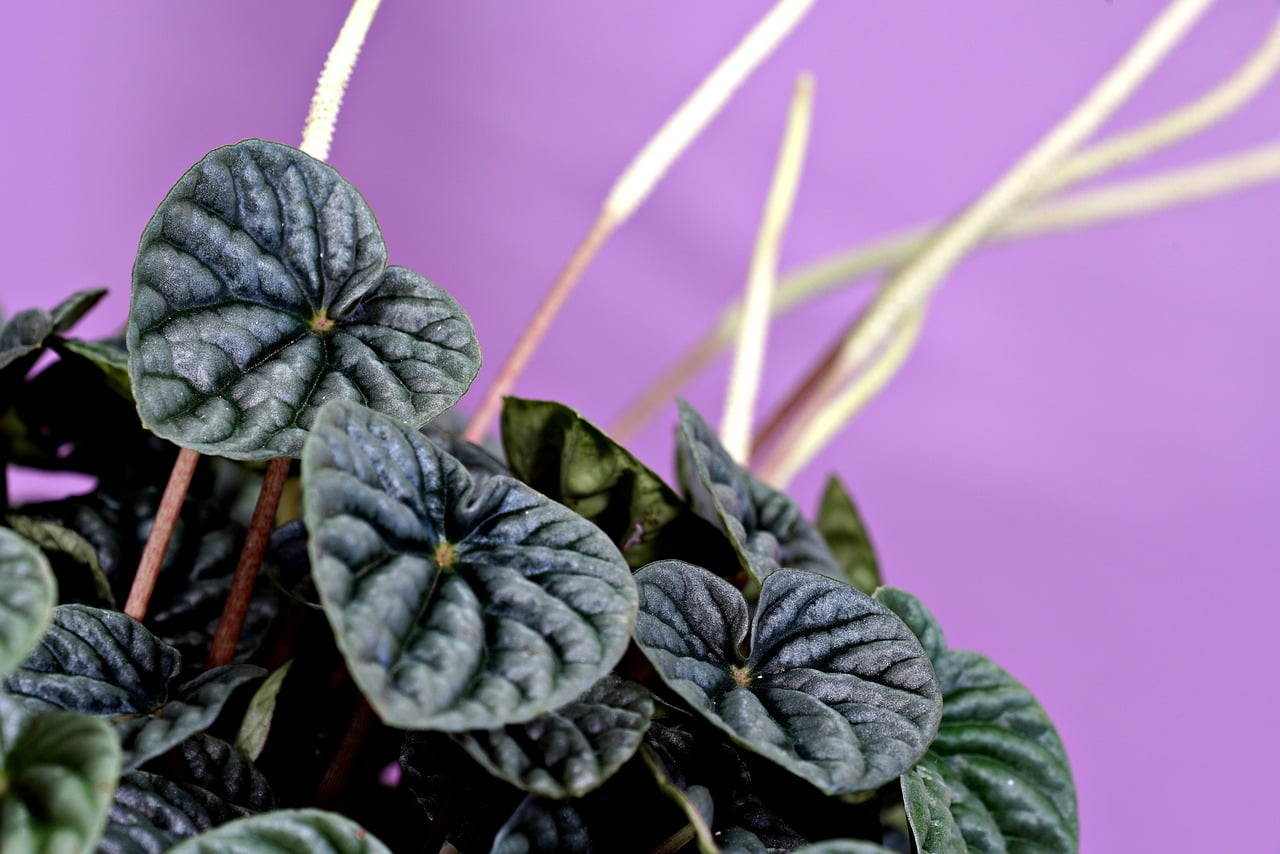
Peperomia plants are compact houseplants valued for their interesting leaves, varied colors, and relatively easy care. They work well on desks, shelves, windowsills, hanging baskets, and other indoor spaces where a large plant may not fit.
Peperomia is a large genus in the pepper family, Piperaceae. Different species can look very different, ranging from upright plants with broad leaves to trailing types with tiny patterned foliage. That variety is one reason Peperomia remains popular with beginners and houseplant collectors.
This guide covers the most useful Peperomia plant care questions, including popular types, light requirements, watering, soil and drainage, humidity, fertilizing, propagation, common problems, flowering, and pet safety.
Research checked: October 5, 2026.
Quick Answer: How Do You Care for Peperomia?
Most Peperomia plants do well with bright, indirect light, a well-draining potting mix, and watering only after the growing medium has dried appropriately between waterings. Many have fleshy leaves that can store water, so keeping the soil constantly wet is usually a bigger concern than allowing the plant to become slightly dry.
| Care Need | Practical Guideline |
|---|---|
| Light | Bright, indirect light is a good general target. Many Peperomia tolerate lower light, but growth may be slower. |
| Water | Let the potting mix dry between waterings. Avoid prolonged soggy conditions. |
| Soil | Choose a loose, well-draining houseplant or cactus potting mix. |
| Pot | Use a container with drainage holes and avoid unnecessarily oversized pots. |
| Humidity | Average household humidity is often adequate. Very dry homes may benefit from additional humidity. |
| Fertilizer | Feed lightly while the plant is actively growing. |
| Propagation | Stem cuttings, leaf cuttings, division, or water propagation may work depending on the species. |
What Is a Peperomia Plant?
Peperomia is a genus of flowering plants in the family Piperaceae, the same family that includes true black pepper, Piper nigrum.
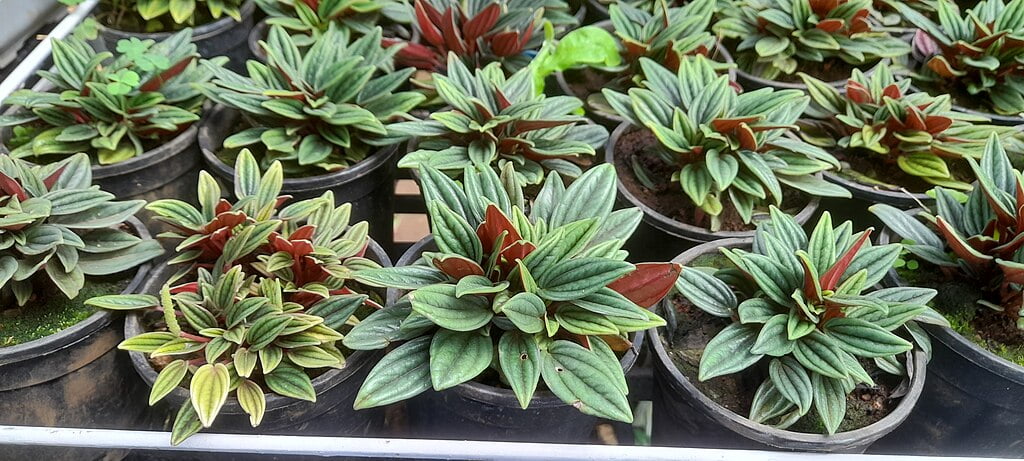
Peperomia are found across tropical and subtropical regions, and the genus contains a very large number of species. NC State Extension describes the genus as having more than 1,000 species, while Kew’s Plants of the World Online currently lists 1,447 accepted species. Taxonomic databases can change as names are reviewed, so older sources may give different numbers.
The plants range from compact, upright forms to trailing and creeping species. Many have thick or fleshy leaves, and their foliage may be green, silver, burgundy, striped, rippled, or variegated.
NC State Extension describes Peperomia as popular houseplants because of their compact size, ornamental foliage, and relatively easy care. Some species are particularly suited to desks and tabletops, while trailing forms work well in hanging baskets or terrariums.
For a broader look at growing plants at home, see our complete gardening guide.
Popular Peperomia Types and Varieties
There are many Peperomia species and cultivars, but several are especially common in houseplant collections. Their growing habits differ, so it is useful to identify the plant before following care advice intended for another type.
Watermelon Peperomia (Peperomia argyraea)
Watermelon Peperomia has rounded, fleshy leaves marked with alternating green and silvery stripes that resemble the rind of a watermelon. It has a compact, upright growth habit and is a popular desktop or tabletop plant.
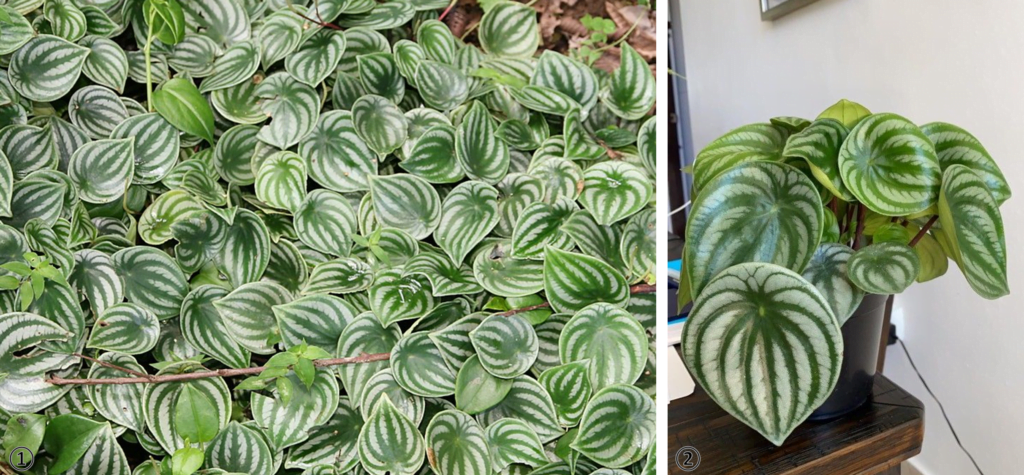
② Peperomia argyreia in a plastic black pot. © Franqui Migdalia (cc-by-sa) – May 1, 2020 / Pl@ntNet
Peperomia argyraea is the currently accepted name in Kew’s Plants of the World Online. The name Peperomia argyreia is also common in gardening references and appears as a synonym in Kew’s database, so both spellings may appear when searching for this plant.
NC State Extension recommends bright indirect light and warns that both overwatering and excessive dryness can cause problems. The plant also prefers protection from cold drafts.
Raindrop Peperomia (Peperomia polybotrya)
Raindrop Peperomia is recognizable by its glossy, fleshy, teardrop-shaped leaves. It forms a compact, upright plant and is often grown as a houseplant in containers.
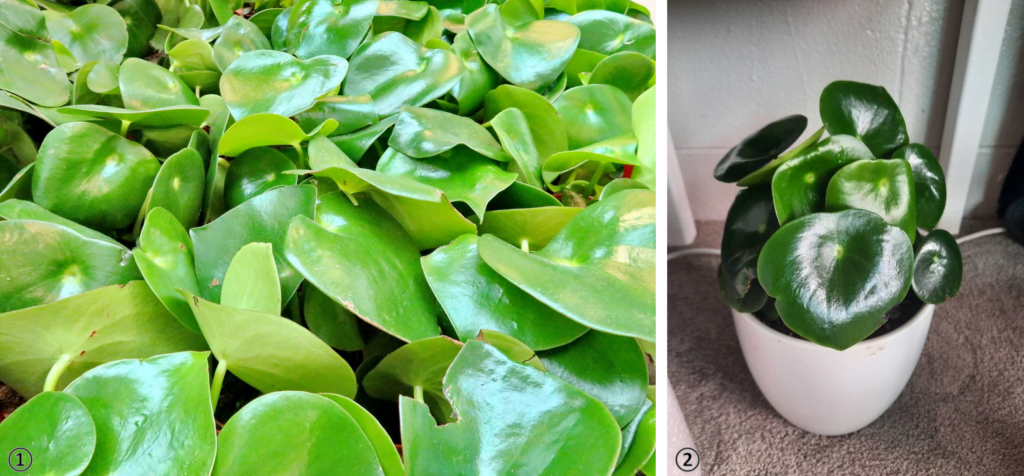
② Peperomia polybotrya in a glazed white pot. © Karina Maru (cc-by-sa) – Nov 22, 2021 / Pl@ntNet
NC State Extension reports that it can grow to around 1 foot tall and wide. It prefers bright, indirect light and well-drained soil, and common problems include root rot caused by overwatering and pests such as spider mites, mealybugs, scale, and fungus gnats.
Ripple Peperomia (Peperomia caperata)
Ripple Peperomia is known for deeply ridged or wrinkled, heart-shaped leaves. Cultivars can range from green to burgundy or purple-toned foliage.

② Peperomia caperata ‘Schumi Red’ has rich deep purple-reddish leaves. © Lazaregagnidze, CC BY-SA 4.0, via Wikimedia Commons
NC State Extension lists Peperomia caperata as an easy-to-grow houseplant that tolerates indoor conditions well. It prefers filtered or indirect light, good drainage, and soil that dries between waterings.
Peperomia ‘Rosso’
‘Rosso’ is a cultivar of Peperomia caperata, not a separate Peperomia species. It has narrow, pointed leaves with dark green upper surfaces and red undersides.
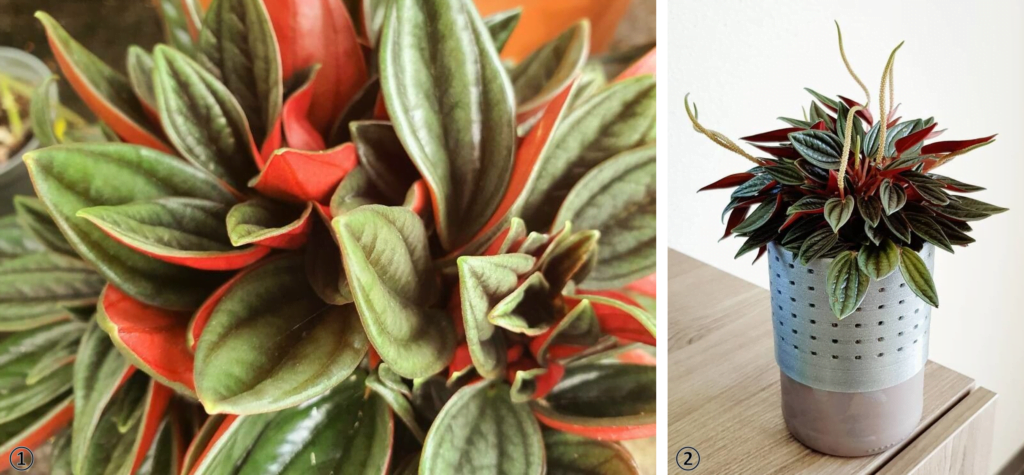
② Beautiful Peperomia caperata ‘Rosso’ with flowers resembling long narrow white stalks. © dragonink (cc-by-sa) – May 30, 2020 / Pl@ntNet
Keeping the cultivar name attached to Peperomia caperata helps avoid a common identification mistake when searching for care information.
Baby Rubber Plant (Peperomia obtusifolia)
Baby Rubber Plant has thick, glossy leaves and a compact form. Both green and variegated forms are commonly grown as houseplants.
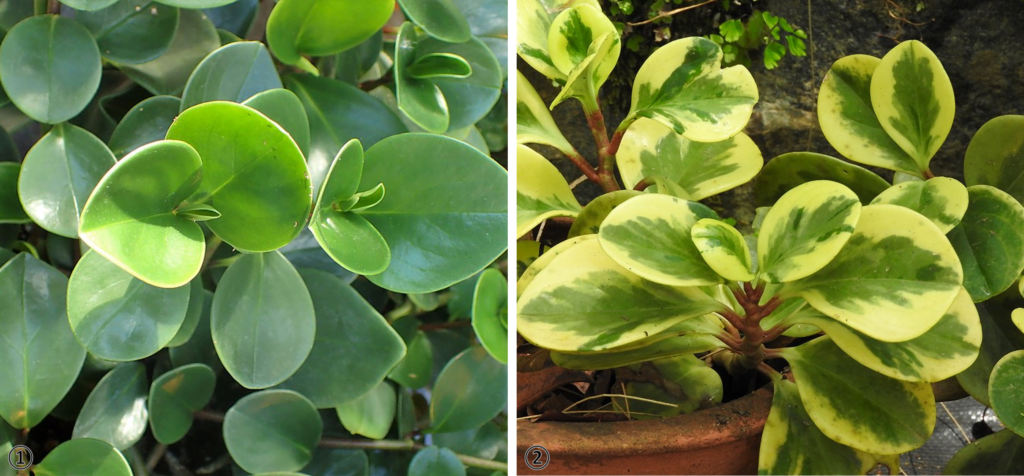
② Piperaceae-leaves light green variegated with milky green and margin inward, broad area of creamy white. © Yercaud-elango, CC BY-SA 4.0, via Wikimedia Commons
NC State Extension lists Peperomia obtusifolia among the common Peperomia grown indoors and notes that the species has a succulent-like appearance. It can tolerate lower light for periods, although bright indirect light is generally preferable.
Red-Edge Peperomia (Peperomia clusiifolia)
Red-Edge Peperomia has thicker, elliptical leaves with contrasting coloration around the margins. Some cultivars have pink, cream, red, or green tones.
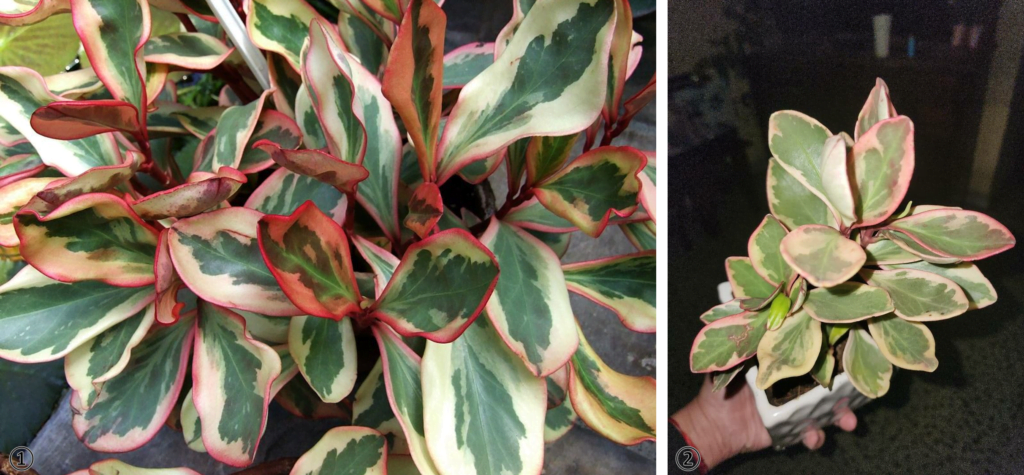
② Showing the cream and pink hues of the leaves of Peperomia clusiifolia ‘Rainbow’, also called peperomia ginny, in a square glazed pot. © Javier Castro (cc-by-sa) – Dec 13, 2022 / Pl@ntNet
Peperomia clusiifolia is an accepted species in Kew’s Plants of the World Online, with Jamaica listed within its native range.
Ruby Glow Peperomia (Peperomia graveolens)
Ruby Glow is valued for its unusual V-shaped, fleshy leaves with red undersides and red stems. NC State Extension lists ‘Ruby Glow’ as a cultivar of Peperomia graveolens.

② Piperaceae-leaves light green variegated with milky green and margin inward,broad area of creamy white. © Yercaud-elango, CC BY-SA 4.0, via Wikimedia Commons
Kew recognizes Peperomia graveolens as an accepted species native to Ecuador.
String of Turtles (Peperomia prostrata)
String of Turtles is a trailing Peperomia with small, patterned leaves that resemble miniature turtle shells. Its trailing habit makes it especially suitable for hanging containers and shelves.
Variegated Peperomia
Variegation occurs in several Peperomia species and cultivars, rather than representing one botanical type. Common examples include variegated forms of Peperomia obtusifolia and cultivars of Peperomia caperata.
Variegated plants generally benefit from adequate light because they contain less green tissue available for photosynthesis. At the same time, strong direct sunlight can scorch foliage, so bright filtered or indirect light is usually a better choice.
Popular Peperomia Types at a Glance
| Type | Key Feature | Growth Habit |
|---|---|---|
| Watermelon Peperomia | Silver-green striped leaves | Compact and upright |
| Raindrop Peperomia | Glossy teardrop-shaped leaves | Compact and upright |
| Ripple Peperomia | Deeply ridged leaves | Compact and bushy |
| Peperomia ‘Rosso’ | Dark green leaves with red undersides | Compact |
| Baby Rubber Plant | Thick, glossy leaves | Upright or mounding |
| Red-Edge Peperomia | Contrasting leaf margins | Upright and mounding |
| Ruby Glow | Red undersides and fleshy leaves | Compact |
| String of Turtles | Small turtle-shell-like leaves | Trailing |
Peperomia Care Guide
Peperomia care becomes much easier when you pay attention to the plant’s growing conditions instead of following a rigid watering calendar.
The key combination is simple: enough light, good drainage, and careful watering. Many Peperomia have fleshy foliage and do not respond well to constantly wet soil.
Your indoor conditions matter. A Peperomia beside a bright window may dry much faster than one several feet from a window. A small pot with a fast-draining mix may also require more frequent watering than a large container with dense soil.
For comparison, our Calathea guide covers plants that generally need a different moisture approach, making it useful when comparing indoor plant care requirements.
How Much Light Does Peperomia Need?
Bright, indirect light is the best general starting point for Peperomia. Place the plant near a bright window where sunlight is filtered rather than exposing it to intense midday sun for long periods.
Many Peperomia tolerate lower light, but tolerance is not the same as ideal growth. In insufficient light, plants may grow more slowly, become stretched, or lean toward the nearest window.
Variegated varieties may need particularly good ambient light to maintain strong color contrast. However, more light is not always better. Direct, intense sunlight can scorch Peperomia leaves.
Clemson Extension recommends indirect light and notes that Peperomia can tolerate somewhat lower light. NC State Extension gives similar advice and notes that direct sunlight can scorch the foliage.
Signs Your Peperomia May Need More Light
- Long, widely spaced growth.
- Slow or weak new growth.
- The plant leaning strongly toward a window.
- Variegated foliage becoming less pronounced.
How Often Should You Water Peperomia?
There is no reliable watering schedule that works for every Peperomia. Check the growing medium before watering.
Peperomia generally prefer to dry between waterings. When the soil has dried appropriately, water thoroughly and allow excess water to drain from the bottom of the container.
Do not leave the pot sitting in standing water. Constantly wet soil limits the root zone’s access to air and increases the risk of root problems.
Clemson Extension specifically recommends letting Peperomia dry between waterings and warns that overwatering can lead to leaf drop and root problems.
Signs of Overwatering
- Yellowing leaves.
- Soft or collapsing stems.
- Unexpected leaf drop.
- Potting mix that remains wet for a long time.
- Root deterioration.
Signs of Underwatering
- Wrinkled or limp leaves.
- Very dry potting mix.
- Drooping associated with prolonged dryness.
The goal is not to keep the plant completely dry. It is to avoid the extremes of prolonged drought and prolonged saturation.
Best Soil and Pots for Peperomia
Choose a well-draining potting mix that does not stay saturated for long periods. Clemson Extension recommends a well-drained houseplant or cactus potting mix for Peperomia.
If your usual potting mix holds too much water, adding an aerating amendment such as perlite can improve drainage. There is no single perfect recipe because the right mix depends on the plant, container, watering habits, and local conditions.
The container should have drainage holes. Decorative pots without drainage can make moisture management much harder.
Peperomia also generally do not need frequent repotting. Clemson Extension notes that they can remain in the same pot for several years when the plant is growing well.
Our cactus and succulent care guide has more background on choosing fast-draining growing media for plants with similar concerns about excess moisture.
Temperature and Humidity
Peperomia are generally suited to warm indoor conditions and should be protected from cold drafts and sudden temperature changes.
Humidity requirements vary between species, but many Peperomia adapt to average household humidity. NC State Extension notes that the genus generally tolerates the humidity found in most homes.
Very dry indoor air can still stress some plants. In that situation, improving ambient humidity may help, particularly during prolonged dry periods.
Avoid using frequent misting as a substitute for correct watering. The moisture level of the growing medium is much more important to root health.
For a specific example, NC State Extension reports that Peperomia polybotrya does well around 65–75°F indoors while tolerating average household humidity.
Fertilizing Peperomia
Peperomia do not require heavy feeding. Clemson Extension recommends fertilizing while the plant is actively growing, using a low-strength liquid fertilizer occasionally or an appropriate slow-release fertilizer.
Follow the fertilizer manufacturer’s directions for dilution and frequency. Applying more fertilizer than recommended does not necessarily produce faster or healthier growth and can contribute to nutrient buildup.
If the plant is stressed from poor drainage, root damage, or another environmental problem, correct the growing conditions before trying to solve the problem with fertilizer.
Pruning and Repotting Peperomia
Pruning
Pruning is useful for removing damaged leaves and shaping the plant. To encourage branching and a fuller appearance, a healthy stem can be pruned above a leaf node.
Clemson Extension specifically recommends pruning a stem above a leaf node when a fuller plant is desired.
Repotting
Peperomia are relatively compact and usually do not need frequent repotting. Consider repotting when the plant is clearly root-bound, the growing medium has broken down, or drainage has become poor.
Use a container only slightly larger than the current one rather than moving a small root system into a very large pot. Oversized containers can hold more moisture than the plant uses.
How to Propagate Peperomia
Peperomia can often be propagated vegetatively, but the best method varies by species and cultivar. Common approaches include stem cuttings, leaf cuttings, division, and water propagation.
NC State Extension lists leaf cuttings, stem cuttings, and division among the propagation methods used for Peperomia. Clemson Extension also documents stem and leaf propagation as well as water propagation for certain types.
For general houseplant propagation principles, Penn State Extension’s propagation guide recommends starting with healthy, unstressed plants, using clean tools and suitable propagation media, and providing bright indirect light.
Stem Cuttings
Stem cuttings are one of the most useful propagation methods for Peperomia.
- Choose a healthy stem with suitable leaves.
- Make a clean cut using a sharp, clean tool.
- Place the cutting in an appropriate propagation medium or water, depending on the species and method.
- Keep the medium moist enough for rooting without making it saturated.
- Provide bright, indirect light and warm conditions.
- Pot the cutting once a healthy root system has developed.
Leaf Cuttings
Some Peperomia can be propagated from leaves. The exact procedure depends on the species, so a leaf-cutting method should not automatically be assumed to work equally well with every Peperomia.
For example, NC State Extension specifically lists leaf cutting as a recommended propagation strategy for Peperomia caperata and Peperomia polybotrya.
Water Propagation
Water propagation can work for some Peperomia. Clemson Extension specifically identifies water propagation as an option for Peperomia obtusifolia.
Water roots are formed under different conditions from roots developed in potting media, so once a cutting is established, it may need gradual adjustment when moved into soil.
Common Peperomia Problems
When a Peperomia starts looking unhealthy, check the growing conditions before treating the visible symptom. Water, drainage, light, temperature, and pests can all affect leaf appearance.
Yellow Leaves
Yellow leaves can have several causes, but overwatering is an important one to investigate. Check whether the soil remains wet for too long, whether the container drains properly, and whether the plant is receiving suitable light.
Brown or Scorched Leaves
Brown or scorched patches can occur after exposure to strong direct sunlight. Moving the plant to brighter filtered or indirect light can help prevent additional damage.
Drooping Leaves
Drooping does not automatically mean the plant needs more water. Both excessive moisture and prolonged dryness can cause stress. Check the growing medium before watering.
Root Rot
Root rot is commonly associated with prolonged excessive moisture. Poor drainage and repeated overwatering are especially important conditions to correct.
If roots are damaged, remove clearly rotten tissue with clean tools, move the plant into fresh, well-draining medium, and correct the watering and drainage problem that caused the excess moisture.
Pests
Peperomia can be affected by common houseplant pests including mealybugs, spider mites, aphids, scale, fungus gnats, and whiteflies. NC State Extension recommends monitoring plants regularly for these problems.
Inspect the undersides of leaves, stems, and the growing medium when something looks wrong. Isolate a plant with an obvious infestation when practical, and use a treatment appropriate for the identified pest while following the product label.
Leaf Curling
Curling leaves can be associated with watering stress or other growing problems. NC State Extension notes that yellowing or curling leaves can indicate overwatering in Peperomia, so check the roots and growing medium before assuming the plant needs more moisture.
Is Peperomia Safe for Cats and Dogs?
Several commonly grown Peperomia species are listed as non-toxic to cats and dogs, but pet safety should be checked by botanical identity rather than assumed for every plant carrying the Peperomia name.
The ASPCA lists Baby Rubber Plant, Peperomia obtusifolia, as non-toxic to dogs and cats. The ASPCA also lists Watermelon Peperomia, Peperomia argyreia, and Emerald Ripple Peperomia, Peperomia caperata, as non-toxic.
“Non-toxic” does not mean a plant should be treated as food. Pets can still have digestive upset after chewing or eating plant material. When a plant’s identity is uncertain, verify its scientific name before relying on a pet-safety listing.
Is Peperomia the Same as Pansit-Pansitan?
Pansit-pansitan is Peperomia pellucida, so it is indeed a member of the Peperomia genus. However, it is a different species from the ornamental Peperomia commonly sold as Watermelon Peperomia, Baby Rubber Plant, Ripple Peperomia, or String of Turtles.
This distinction matters because Peperomia pellucida is often discussed in the Philippines in connection with traditional uses and health research, while most ornamental Peperomia articles focus on houseplant care.
Money For My Beer covers that plant separately in our Pansit-Pansitan (Peperomia pellucida) guide.
Where to Get Peperomia Plants
Peperomia are widely sold through local nurseries, garden centers, specialty plant shops, online sellers, and plant exchanges. Clemson Extension also notes that Peperomia are widely available from retailers that sell houseplants.
When buying one, inspect the foliage and stems for visible pests or serious damage. Avoid plants sitting in persistently saturated soil, especially when the container has poor drainage.
It is also worth checking the botanical name on the plant label. Common names can overlap, while scientific names make it easier to find care and identification information for the exact species or cultivar.
For more ideas when choosing plants for different indoor spaces, see our guide to best tall indoor plants.
Peperomia FAQs
Is Peperomia easy to care for?
Yes. Many Peperomia are considered relatively low-maintenance houseplants. The main challenge is usually balancing adequate light with careful watering and good drainage.
Does Peperomia need direct sunlight?
Usually no. Bright, indirect light is a better general target. Strong direct sunlight can scorch Peperomia leaves.
How often should I water Peperomia?
Water when the growing medium has dried appropriately between waterings. There is no universal weekly schedule because drying time changes with light, pot size, soil, temperature, and airflow.
Can Peperomia grow in low light?
Many Peperomia tolerate lower light, but growth may be slower and less compact. Bright indirect light is generally a better starting point.
Why are my Peperomia leaves turning yellow?
Overwatering is one possibility, particularly when the potting mix stays wet for a long time. Check moisture, drainage, light, roots, and overall plant condition before changing the care routine.
Why are my Peperomia leaves falling off?
Leaf drop can happen when a plant is overwatered or otherwise stressed. Check the growing medium first, then consider recent changes in light, temperature, watering, or root health.
Can Peperomia be propagated in water?
Some species can. Clemson Extension specifically identifies water propagation as an option for Peperomia obtusifolia. Other Peperomia may be better suited to leaf or stem cuttings.
Does Peperomia flower?
Yes. Peperomia can produce narrow flower spikes, usually made up of many tiny flowers. The blooms are generally much less showy than the foliage, and many houseplants rarely flower indoors.
Is Peperomia safe for cats and dogs?
Several common species are listed as non-toxic to cats and dogs by the ASPCA, including Peperomia obtusifolia, Watermelon Peperomia, and Peperomia caperata. Check the exact species when identification is uncertain.
Is Peperomia a succulent?
Some Peperomia have fleshy, water-storing leaves and are often described as succulent-like or semi-succulent. However, Peperomia is a genus in the pepper family, Piperaceae, rather than a cactus genus or a separate succulent family.
How big do Peperomia plants get?
Size varies considerably by species. Many common indoor Peperomia remain compact, often around 6 to 12 inches tall and wide, while trailing forms spread rather than grow upright. Individual species can differ, so check the botanical name when choosing a plant for a specific space.
Final Thoughts on Peperomia Plants
Peperomia are versatile indoor plants with a wide range of leaf shapes, colors, textures, and growth habits. They are especially appealing when you want ornamental foliage without the maintenance demands of some more sensitive tropical houseplants.
The most important Peperomia care principle is to avoid treating every plant the same. Start with bright indirect light, a well-draining pot, and careful watering. Then adjust based on the species, the potting mix, and how quickly your plant dries.
With the right conditions, even a small Peperomia can become a long-term houseplant that fits comfortably into a desk, shelf, windowsill, or hanging planter.
Sources and Further Reading
The plant-care and identification information in this guide was checked against university extension services, a botanical taxonomy database, and the ASPCA’s pet-safety listings.
- Clemson University Extension: Peperomia Indoor Plant Care and Growing Guide
- NC State Extension: Peperomia
- NC State Extension: Peperomia polybotrya
- NC State Extension: Peperomia caperata
- NC State Extension: Watermelon Peperomia
- Kew Science: Plants of the World Online, Peperomia
- Kew Science: Peperomia argyraea
- Penn State Extension: Propagating Houseplants
- ASPCA: Blunt Leaf Peperomia
- ASPCA: Watermelon Peperomia
Also Read: Elevate Your Space: A Guide to Best Tall Indoor Plants
Well, what do you think about the article?
Did you enjoy reading “Peperomia Plant Care: Types, Watering, Light & Propagation“? We really hope that you have enjoyed this article. If you have any thoughts or comments about this post, please feel free to share them in the comment section below. We appreciate your feedback and would be glad to hear from you.
To see more content like this check the gardening section of Money For My Beer.

Lara is a freelance content writer and a cat mom to three furbabies, Mizu, Haru and Sora.
She graduated with a Bachelor’s Degree in Architecture and is a registered and licensed Architect. Aside from writing, she is fond of growing cacti and succulents and is a DIY type of girl.
During her free time, she engages herself in water-colouring and crocheting, while catching-up with an old tv series she just discovered. Lara loves to explore new places, but most of the time stays in her hometown province, reading historical romance novels over a cup of coffee – or matcha.